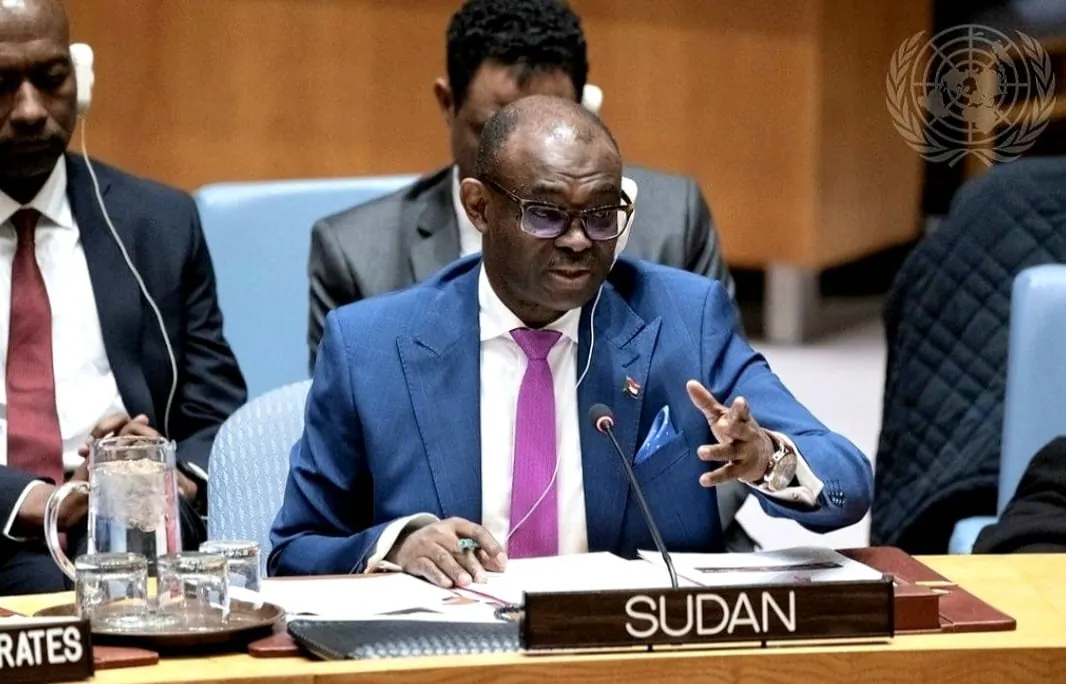
Sudan has accused the United Arab Emirates of exacerbating the war in the Northeast African country through its alleged support for the Rapid Support Forces. Ambassador Al-Harith Idriss Mohamed, Sudan's Representative to the United Nations, made the allegations during the 81st Session of the UN General Assembly. He rejected the UAE's statement on its "neutrality and innocence" and claimed the UAE is "in a bloodied partnership with the RSF."
Idriss alleged that the UAE was spearheading a global campaign against the Sudanese Armed Forces, despite the military's efforts to repel offensives by mercenaries. He claimed Emirati support for the rebel militia extends beyond arms procurement to active measures aimed at subverting the Sudanese government and destabilising the region. The ambassador also accused the UAE of stoking sectarian tensions and hatred while seeking to undermine Sudan's standing in international organisations.
According to Idriss, the campaign includes efforts to damage Sudan's relations with neighbouring states through media campaigns, artificial intelligence, and the suppression of the Sudanese people. The diplomat also alleged that critical infrastructure had been targeted, citing repeated attacks on water, power and energy networks, as well as dams and food warehouses. These actions have worsened the humanitarian situation in the country.
The Rapid Support Forces, established in 2013 by then-President Omar al-Bashir, has about 100,000 fighters and is currently led by General Mohamed Hamdan Dagalo, popularly known as Hemedti. The paramilitary group and its leaders are under sanctions imposed by the United States and the United Kingdom. Both countries have also imposed sanctions on senior Sudanese Armed Forces figures.
Idriss advised the UAE to reform its political system and become true representatives of the Emirati people, "instead of being a familial governing regime headed by military officials." This statement highlights the complexities of the conflict and the involvement of various regional and international actors. Sudan's accusations against the UAE have added a new layer to the ongoing conflict.
The conflict in Sudan has resulted in significant humanitarian suffering, with many civilians caught in the crossfire. The Sudanese government has been working to repel RSF offensives, but the alleged support from the UAE has complicated these efforts. The international community is closely watching the situation, with many calling for a peaceful resolution to the conflict.
The situation in Sudan remains volatile, with the conflict showing no signs of abating. The accusations against the UAE have raised concerns about the role of external actors in the conflict and the potential for further escalation. The international community will be watching closely for any developments in the region.
Key points
- Sudan's UN representative accuses UAE of supporting Rapid Support Forces
- UAE allegedly supports RSF through arms procurement and active measures
- Conflict in Sudan results in significant humanitarian suffering