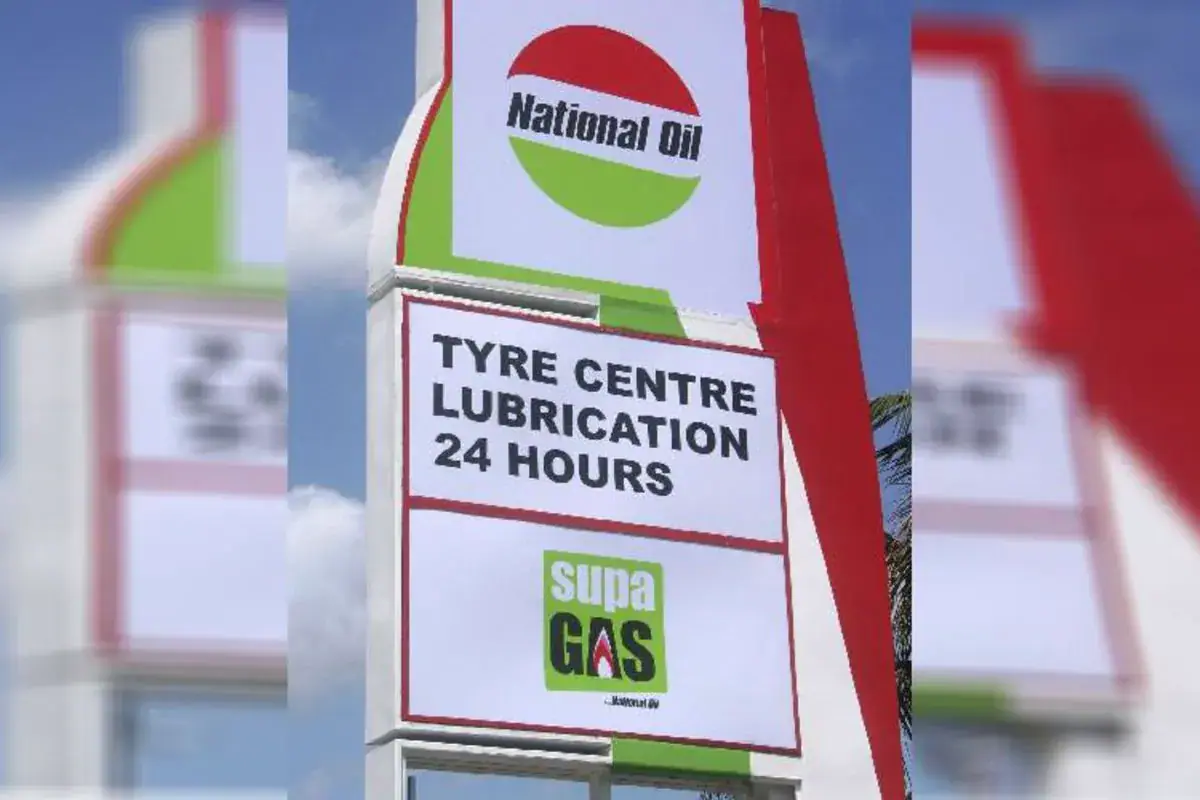
A joint venture between the State-owned National Oil Corporation of Kenya (Nock) and Rubis worth Sh6 billion has been cancelled. The deal was meant to revive Nock, which has been struggling with funding woes and dilapidated fuel stations. Rubis had agreed to inject Sh6 billion into Nock for working capital and revamping retail stations. However, the deal was pegged on Nock clearing a Sh2.1 billion loan owed to Stanbic Bank, which was to be sourced from the fuel subsidy kitty.
The fuel subsidy kitty was depleted due to steep subsidies since the start of the Middle East conflict. This denied Treasury and Nock the money that Parliament had approved for settlement of the loan. A source close to the matter revealed that Rubis pulled out after Nock failed to clear the loan. The source stated that the money was to come from the Petroleum Development Levy (PDL) kitty, but the steep subsidy due to the Middle East conflict exhausted the money.
The subsidy kitty is funded by PDL of Sh5.40 per litre of petrol and diesel and Sh0.40 from a litre of kerosene that consumers pay at the pump. The State has applied a subsidy of as high as Sh108.10 and Sh34.07 per litre of kerosene and diesel respectively to cushion consumers since the start of the Middle East war. This has led to a significant depletion of the kitty, leaving Nock’s fortunes hanging in the balance.
Nock had borrowed Sh4.69 billion from KCB Group and Sh1.3 billion from Stanbic Bank more than a decade ago to fund operations. Mounting losses forced it to rely on the Treasury to repay the two loans. The Treasury last year withdrew Sh4.2 billion from the PDL kitty and fully cleared the KCB Group loan. However, the money was withdrawn in two tranches of Sh1.215 billion and Sh3 billion.
The collapsed deal has dashed hopes of reviving Nock and compounded its struggles in a market where multinationals and well-oiled fuel firms are rapidly expanding. Vivo Energy, TotalEnergies Marketing Kenya, and Rubis are the three biggest oil marketers in Kenya, while Hass Petroleum, Galana, and Stabex are some of the leading local-owned firms. Nock, at its prime in the 1990s, had over 100 fuel stations across Kenya but years of losses and underfunding pushed it to near oblivion.
Nock’s struggles are a stark contrast to its peers in the region, who are currently importing refined fuel for their countries through Government-to-Government deals. Uganda National Oil Company rolled out a five-year deal with Vitol Bahrain, while Rwanda National Energy Company was recently formed to import fuel in a deal with OQ Trading, owned by the Sultanate of Oman. This highlights the challenges faced by Nock in the regional market.
The collapse of the deal has significant implications for Nock’s revival plans. The company had agreed to clear a Sh4.2 billion loan owed to KCB Group and a Sh2.1 billion loan owed to Stanbic Bank as part of the deal. Without the funding from Rubis, Nock’s future remains uncertain.
Key points
- The deal was cancelled due to the depletion of the fuel subsidy kitty.
- Nock had agreed to clear a Sh4.2 billion loan owed to KCB Group and a Sh2.1 billion loan owed to Stanbic Bank as part of the deal.
- The collapse of the deal has significant implications for Nock’s revival plans.
Reporting sources
- Subsidy drain kills Sh6bn Rubis deal to rescue National Oil · Business Daily Africa