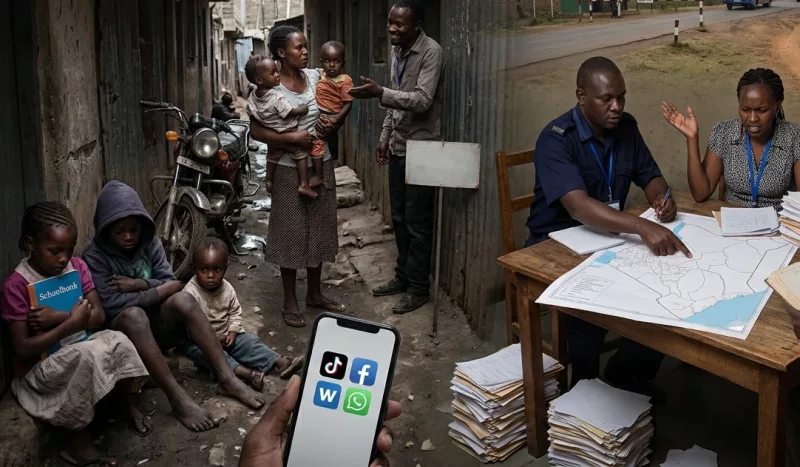
A recent study conducted by the National Crime Research Centre (NCRC) has found that child trafficking is on the rise in Kenya, despite existing laws and programmes aimed at protecting children from exploitation. The study, which examined child trafficking in 13 counties identified as hotspots, found that poverty, family instability, displacement, and online grooming are major drivers of child trafficking. The study warns that the true scale of child trafficking remains unclear due to inconsistencies in data held by government agencies.
The study, which involved 390 participants, including government officials, security agencies, civil society organisations, and community leaders, found that most respondents believed child trafficking had become more prevalent in recent years. The study identified different trafficking risks based on the age and gender of children, with boys aged between one and five reported to be particularly vulnerable to illegal adoption, while older boys were increasingly exposed to labour exploitation and recruitment into criminal activities.
Girls aged between five and 17 were found to be disproportionately affected by sexual exploitation, domestic labour, and forced marriage. Children with disabilities were identified as particularly vulnerable to forced begging, especially in urban centres such as Nairobi, Kiambu, and Kisumu. Overall, the researchers found that girls were disproportionately affected by trafficking across most regions. The study also identified Kiambu, Nairobi, Narok, Kilifi, Kwale, Migori, Kajiado, and Nakuru as major destination areas for child trafficking.
The study found that child trafficking networks operate across county and international borders, with some counties serving simultaneously as sources, transit points, and destinations. Garissa, Wajir, Kisumu, and Kakamega were identified as key source areas, with poverty, drought, limited economic opportunities, displacement, and high numbers of out-of-school children contributing to vulnerability. Migori, Narok, and Kajiado were identified as important transit corridors, particularly due to their proximity to Tanzania.
Poverty emerged as one of the principal drivers of child trafficking, with traffickers exploiting economically vulnerable families through promises of employment, education, better living conditions, and financial support. Other risk factors include family instability, parental absence, neglect, inadequate supervision, negative peer influence, and disability. The study also identified climate-related migration, drought, communal conflict, forced evictions, and displacement as factors that weaken family and community protection systems.
The study found that technological developments have created new avenues for traffickers to identify, groom, and recruit children, with Facebook, TikTok, Instagram, and WhatsApp identified as platforms increasingly being used in online grooming and recruitment. Financial gain was identified as the main motivation behind child trafficking, with sexual exploitation identified as a major form of trafficking, particularly affecting girls aged between 13 and 17.
The study recommends that prevention measures address both physical and online environments, and that efforts be made to understand the problem and develop effective responses. The study also identified reported cases of trafficking for ritualistic purposes and allegations that children with albinism had been moved across borders for exploitation linked to ritual beliefs.
Key points
- Child trafficking in Kenya is driven by poverty, family instability, displacement, and online grooming.
- Girls aged between five and 17 are disproportionately affected by sexual exploitation, domestic labour, and forced marriage.
- Trafficking networks operate across county and international borders, with some counties serving as sources, transit points, and destinations.