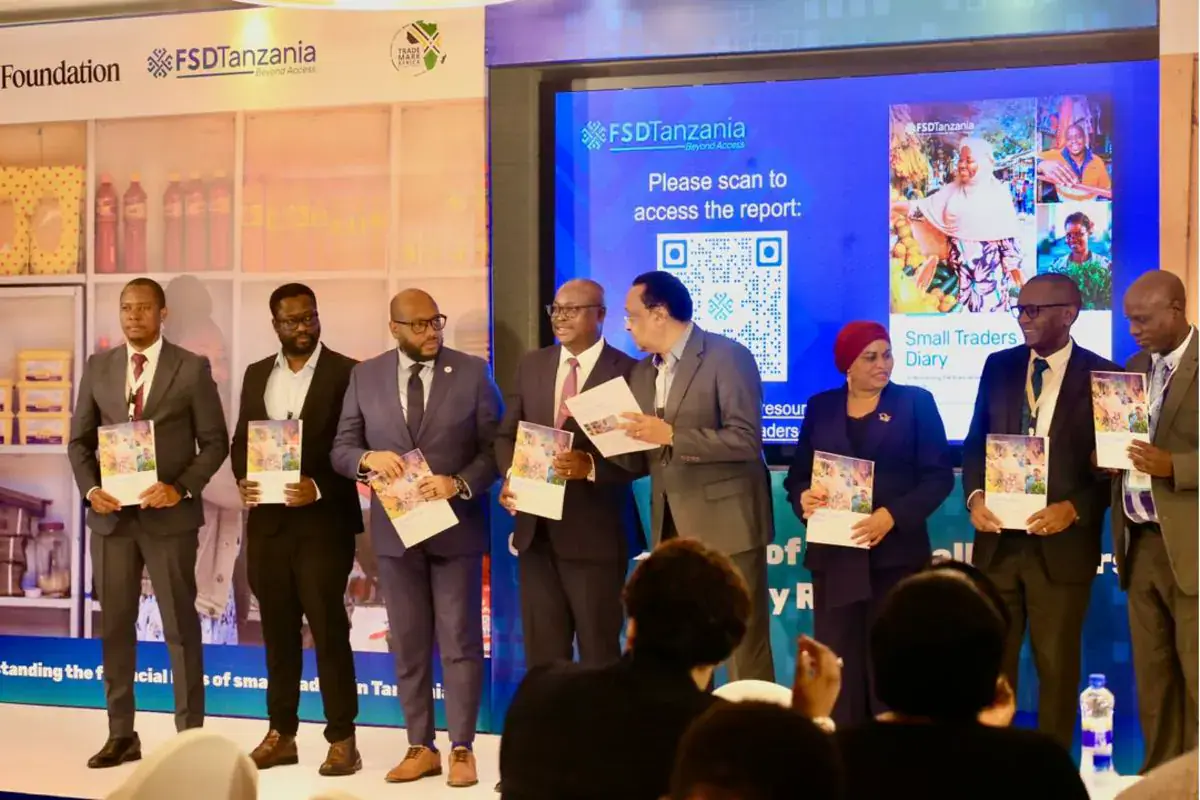
A recent study in Tanzania has found that many small traders in the country are financially vulnerable despite generating positive operating margins. The Small Traders Financial Diaries Longitudinal Study, launched in Dar es Salaam on November 20, 2026, tracked 350 traders across five regions between July 2025 and July 2026. The study found that 95 percent of participating traders recorded positive cumulative operating margins. However, a quarter had less than six days' worth of business expenses in reserve.
The study, funded by the Gates Foundation and supported by TradeMark Africa, found that traders recorded median monthly revenue of about Sh1.9 million ($716) and median business expenses of Sh870,000 ($328). The median operating margin was Sh663,000 ($250). About 85 percent of their spending went towards productive inputs, including stock, raw materials, wages, and equipment. Despite holding an average financial buffer equivalent to 32 days of expenses, many traders remained vulnerable to financial shocks.
When faced with cash shortfalls, 38 percent of traders used household savings, while 34 percent reduced business operations. About a third of the traders also conducted cross-border business, mainly with Kenya and Zambia. The study identified traders' main business priorities, with 81 percent seeking to increase profitability, 66 percent aiming for greater stability, 53 percent planning to expand their product ranges, and 22 percent hoping to employ more workers.
Deputy Minister for Industry and Trade Dennis Londo said the findings highlighted the need for tailored financial products, improved market access, better infrastructure, and expanded digital services. He noted that although 65 percent of traders had business bank accounts and 60 percent used mobile money, cash accounted for 87 percent of all transactions by volume. Only 29 percent relied on banks and 15 percent on mobile money for at least a quarter of their transaction value.
Financial Sector Deepening Tanzania chief executive officer Eric Massinda said operating a profitable business did not automatically guarantee resilience against financial shocks. He urged financial institutions to develop practical and affordable products suited to traders' irregular incomes. The study also found that digital channels accounted for 36 percent of incoming transaction value and 62 percent of outgoing value, highlighting their importance in handling larger payments.
The findings of the study will help policymakers develop responsive economic interventions, according to Ministry of Finance Assistant Commissioner for Policy Analysis Dr Remidius Ruhinduka. TradeMark Africa Gender Manager Scholastica Haule said the findings would strengthen inclusive trade programmes, particularly those targeting women traders. The study also found that more than eight in 10 participants had gained financial knowledge through keeping the diaries.
The study's results are expected to have a positive impact on small traders in Tanzania, with nine in 10 participants pledging to continue applying the financial practices they learned. The study's recommendations will likely inform the development of new financial products and services tailored to the needs of small traders. Key stakeholders will likely use the study's findings to improve the business environment for small traders in Tanzania.
Key points
- Small traders in Tanzania face financial vulnerability despite generating positive operating margins.
- The study recommends tailored financial products, improved market access, and expanded digital services to support small traders.
- Digital channels play a crucial role in handling larger payments for small traders in Tanzania.