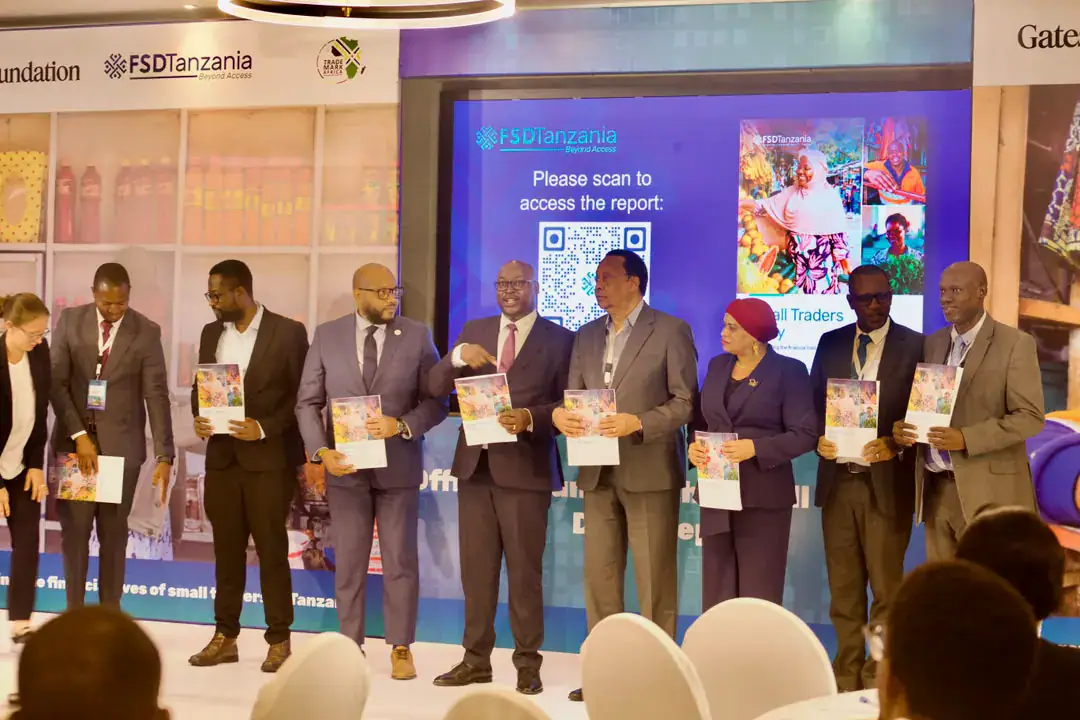
A recent study commissioned by the Financial Sector Deepening Trust (FSDT) has shed light on the financial struggles of small-scale traders in Tanzania. The study followed 350 traders over 14 months, documenting their business and household financial transactions. The findings highlight the need for more affordable financial services, improved digital financial literacy, and flexible financing arrangements to help small businesses grow and contribute to the national economy.
Deputy Minister for Industry and Trade Denis Londo presented the study's findings, emphasizing their importance in developing interventions to address challenges facing micro, small, and medium enterprises (MSMEs). The study revealed that 38% of traders rely on personal savings to finance their businesses, while 33% depend on relatives and friends. This limited access to financing options hinders the growth of small businesses.
The study found that approximately 70% of transactions were conducted in cash, despite 65% of traders having access to bank accounts. Moreover, over 80% of traders do not extensively use digital transactions, citing high costs and limited experience as major obstacles. These findings underscore the need for financial institutions to develop products that respond to the actual circumstances of small traders.
The study also highlighted significant gender disparities in business performance. Male-owned enterprises recorded average profits approximately 73% higher than those owned by women. Addressing these inequalities requires deliberate efforts to improve women's access to affordable financing, business development services, and financial education.
FSDT Chief Executive Officer Eric Massinda explained that the study aimed to provide a more accurate understanding of the financial realities of small traders. The research followed traders operating in various environments, including Namanga, Mutukula, Tunduma, Kahama, and Karagwe. The approach allowed researchers to examine actual financial behavior, including how traders received money, made payments, and managed household expenditure.
The study's findings have significant implications for policymakers, regulators, and financial service providers. The research provides an opportunity to better understand the financial behavior of small businesses and design interventions based on evidence rather than assumptions. The study's results are expected to contribute to discussions on improving financial inclusion, strengthening MSME development, and creating a more supportive environment for small businesses.
The study's demographic profile showed that women account for 61% of participants, while 43% are aged between 25 and 34. However, the research also exposed broader vulnerabilities within the sector, including limited access to social security, insurance, pension arrangements, and formal employment contracts. The findings emphasize the need for a more supportive environment to help small businesses grow and contribute to Tanzania's economic transformation agenda.
Key points
- The study recommends more affordable financial services, improved digital financial literacy, and flexible financing arrangements to help small businesses grow.