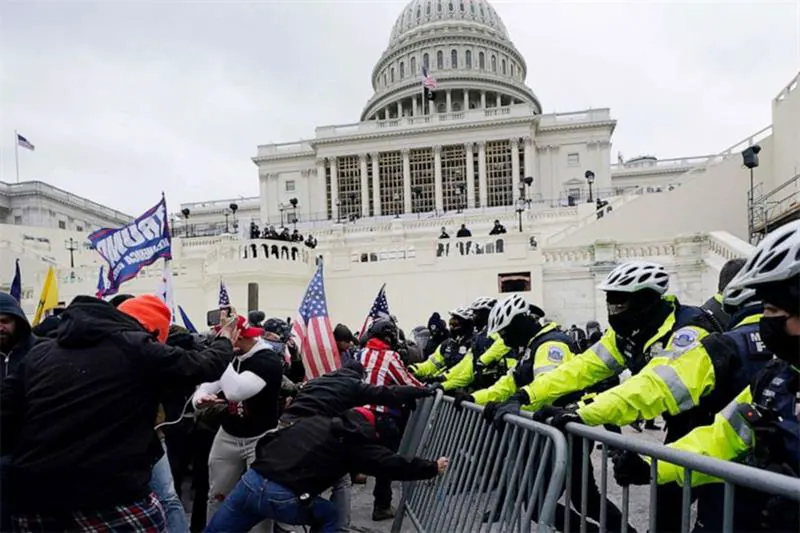
A recent study by Ibrahim Arafat, published in Al-Ahram, examines the global rise of ultra-conservatism and its strategic fallout. The study notes that the January 6, 2021, storming of the US Capitol by conspiracy theorists, white supremacists, and militant groups exposed the fragility of democratic institutions in the United States. This event revealed one expression of a wider political transformation unfolding across continents: the growing influence of far-right ideas, movements, and parties.
The study highlights that the historical roots of the contemporary surge in ultra-conservatism date back to the reaction against the Enlightenment, the French Revolution, and the spread of universalist ideas concerning citizenship, equality, and individual rights. Conservative and counter-revolutionary thinkers challenged the political implications of popular sovereignty and universal equality during the nineteenth century. The decisive historical rupture came in the first half of the twentieth century with the emergence of fascism in Italy and National Socialism in Germany.
The study notes that the later revival of far-right politics was accelerated by a combination of economic, demographic, and political developments. Globalization and deindustrialization generated insecurity among sections of the population, while the 2008 financial crisis deepened distrust in political and economic elites. Immigration and demographic change became powerful political flashpoints, frequently framed by nationalist movements as threats to cultural identity or national sovereignty.
The digital revolution has added another layer to the rise of ultra-conservatism. Social media platforms have enabled the rapid circulation of conspiracy theories, inflammatory narratives, and political propaganda. Digital technologies have also made it easier for far-right actors to mobilize supporters, exchange ideas, and normalize rhetoric that was once confined to political margins.
The study observes that far-right politics today is no longer confined to a particular region or political tradition. Its manifestations can be observed across Europe, North and South America, parts of Asia, and several countries in Africa. The scale and institutional influence of the phenomenon vary substantially, however, and electoral success should not automatically be equated with control of government.
In some countries, parties and movements associated with radical-right politics have secured substantial electoral support and, in some cases, entered government. The United States has witnessed the transformation of conservatism through the MAGA movement, while European countries have experienced the growth of parties advocating restrictive immigration policies, cultural nationalism, and opposition to aspects of European integration. In India, Hindu nationalism has fundamentally reshaped Indian governance under the leadership of the Bharatiya Janata Party (BJP).
The study concludes that understanding the differences in the far-right phenomenon is essential, not only for interpreting the transformation of global politics but also for assessing its consequences for international security, human rights, and the Middle East. The far right takes different forms, emerges from distinct historical conditions, and operates through different political institutions.
Key points
- The global rise of ultra-conservatism is a complex phenomenon with diverse forms and impacts.
- The far right has secured substantial electoral support and, in some cases, entered government in various countries.
- Understanding the differences in the far-right phenomenon is essential for interpreting its consequences for international security, human rights, and the Middle East.