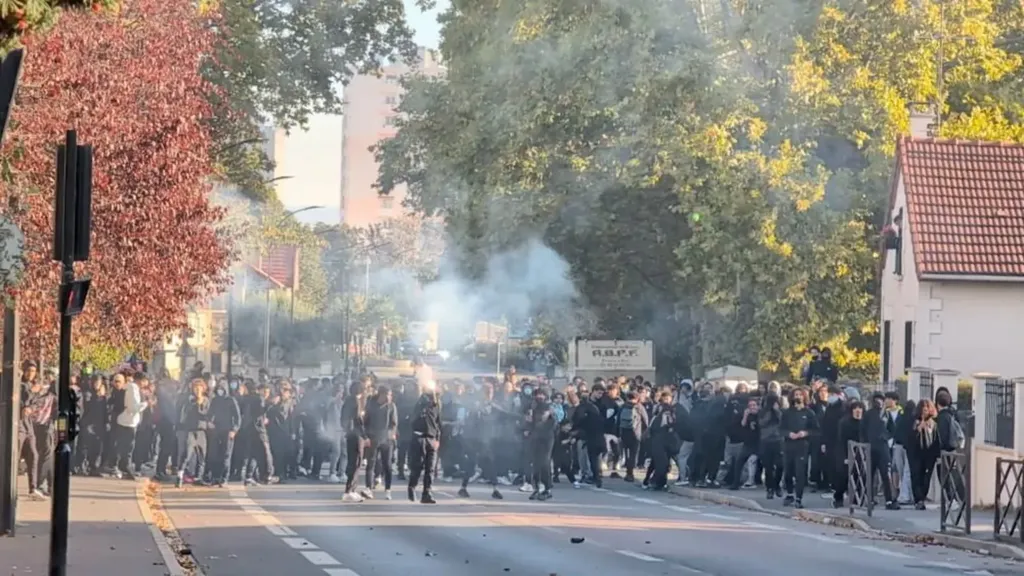
France is experiencing its largest wave of student protests in decades, with widespread demonstrations and disruptions across the country. The protests, which began at a high school north of Paris on September 21, have grown into a nationwide movement involving students, teachers, and trade union representatives. Authorities have taken over 5,000 people into police custody, and more than 100 high schools have been damaged. The unrest has resulted in injuries to students, teachers, and police officers.
The protests have drawn significant participation, with authorities estimating around 256,000 people attended demonstrations across France on Tuesday, including 56,000 in Paris. However, the Union Syndicale Lycéenne, a student organization involved in organizing the protests, put the nationwide turnout at approximately 450,000. The demonstrations have spread to cities including Lille, Marseille, Lyon, and Tours, with students blocking entrances to schools and clashing with riot police.
The protests began at Saint-Exupéry High School in a Paris suburb, where students and teachers demanded more staff and resources. Although additional staff were eventually sent to the school, the protest quickly spread to other schools. Student leader Manès Nadel described the growth of the movement as unprecedented, accusing France's Education Ministry of being "totally overwhelmed by the crisis."
At the heart of the protests are complaints about overcrowded classrooms, inadequate resources, and staff shortages. Students have reported situations where classes are cancelled due to absent teachers not being replaced, and some schools struggle to provide enough desks and chairs. A rise in secondary school enrollments following an increase in births in 2010 has added pressure to an education system that has experienced years of reduced funding.
The education system faces significant challenges, with secondary schools now having fewer teachers than in 2008 despite having around 250,000 more students. In the public sector, approximately 70% of classrooms have more than 30 students. Students say their demands focus on basic learning conditions rather than broader political issues.
The French government has faced mounting pressure over its handling of the protests, particularly following a surge in violence late last week. Around 2,000 people were taken into custody in a single day as authorities warned that the unrest was shifting from student demonstrations towards wider urban violence. Education Minister Edouard Geffray met student leaders on Friday, but the talks failed to produce an agreement.
The protests have raised concerns over the police response, with footage emerging of clashes between officers and protesters. In Paris, riot police used tear gas as clashes broke out with some protesters, while bins, school furniture, and other objects were set on fire. Student leaders have called for a larger turnout for future demonstrations, as the movement shows no signs of slowing down.
Key points
- Over 5,000 people have been taken into police custody during the protests.
- The protests have disrupted hundreds of schools across France.
- Students are demanding improved learning conditions, including reduced class sizes and increased resources.