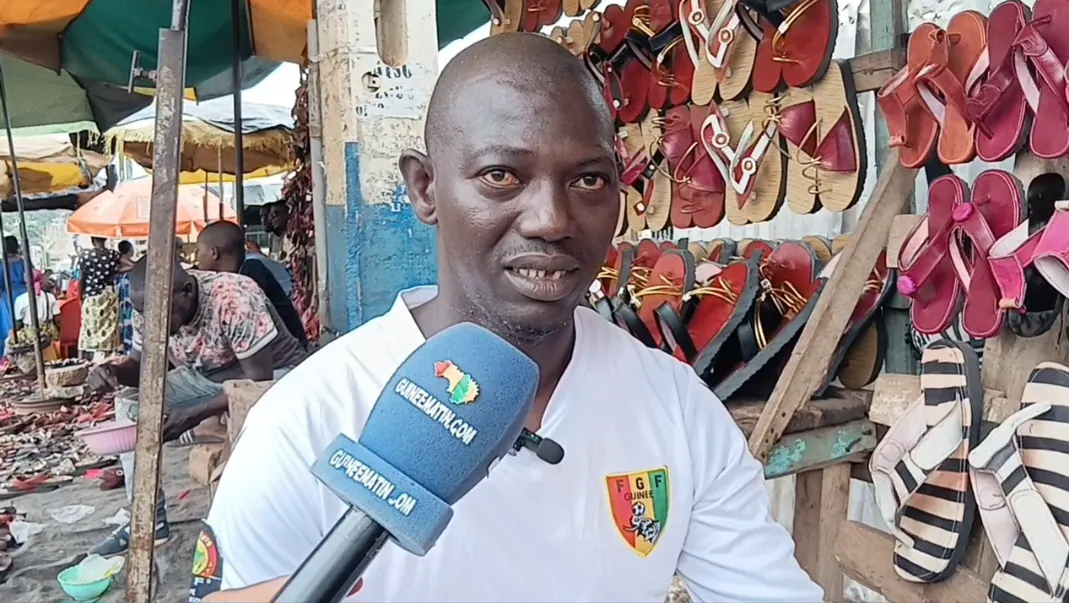
Alphadjo Barry, a cordonnier from Guinea, has been living in Côte d'Ivoire since 1994. He moved to Daloa, a city in the center-west of the country, in 1995, where he inherited the cordonnerie trade from his parents. Barry's family has been in the business for generations, and he learned the skills from a young age. He offers a variety of shoe models for both men and women, using animal hides as the primary material.
The cordonnerie trade, once a thriving business, has been facing significant challenges in recent years. Barry attributes the decline to an oversaturation of cordonniers in the area, with too many practitioners competing for a dwindling customer base. This has led to a decrease in sales, making it difficult for Barry to sustain his business. He also mentions that the cost of materials has increased substantially, further exacerbating the problem.
The high cost of materials is a significant burden for Barry and other cordonniers. He cites the example of glue and gum from Burkina Faso, which has increased in price from 200 FCFA to 2,500 FCFA. Similarly, a packet of animal hides that cost 15,000 FCFA is now selling for 18,000 FCFA. These rising costs, combined with poor sales, have made it challenging for Barry to make a profit.
Barry's daily routine involves producing shoes, but he often struggles to sell them. He reveals that some days, he may not sell even two pairs of shoes, which can cost between 2,500 and 5,000 FCFA per unit. With a packet of hides yielding 25-30 pairs of shoes, depending on the design, Barry finds it difficult to make ends meet. He hopes to find an alternative occupation that can provide a more stable income.
Despite the challenges, Barry remains optimistic about his situation. He believes that with patience, things will improve over time. He continues to work hard, producing high-quality shoes in the hope that customers will return. Barry's resilience is a testament to the determination of many artisans who face similar challenges in their traditional trades.
The decline of the cordonnerie trade in Daloa has implications for the local economy and the artisans who depend on it. Many cordonniers, like Barry, are struggling to adapt to the changing market conditions. The situation highlights the need for innovative solutions to support traditional trades and help artisans like Barry sustain their businesses.
Barry's story is a reflection of the broader challenges faced by many small-scale entrepreneurs in Côte d'Ivoire. The country's economy has been growing, but many artisans and small business owners continue to struggle. As the government and international organizations look for ways to support economic development, stories like Barry's highlight the need for targeted interventions to help traditional trades and small businesses thrive.
Key points
- The cordonnerie trade in Daloa, Côte d'Ivoire, is facing significant challenges due to high material costs and a decline in customers.
- Alphadjo Barry, a cordonnier in Daloa, is struggling to sustain his business due to the challenging market conditions.
- The decline of the cordonnerie trade has implications for the local economy and the artisans who depend on it.