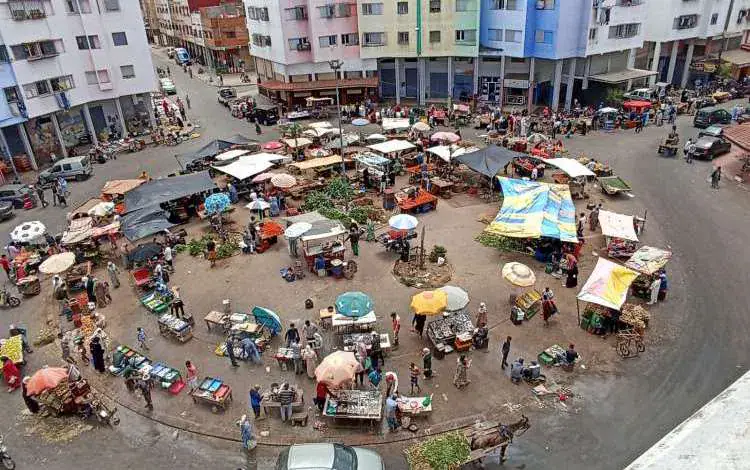
The streets and neighborhoods of Salé, Morocco, are witnessing a surge in informal vendors, who display their goods on sidewalks and alongside roads. This phenomenon has reignited concerns about public space occupation and the challenges of regulating unstructured commercial activities. The situation affects traffic flow and citizens' mobility, particularly in areas with high daily foot traffic. Residents and commuters face difficulties navigating through crowded sidewalks and roads.
The proliferation of carts and makeshift tables in urban areas raises questions about the effectiveness of measures taken to regulate informal trade. Despite efforts to organize commercial activities, the persistence of informal vending highlights the complexities of balancing economic needs with public space management. The issue also underscores the need for authorities to address the root causes of informal vending and find sustainable solutions.
The situation has significant implications for pedestrian safety and accessibility. Sidewalks, intended for pedestrian use, have become impromptu marketplaces, forcing pedestrians, especially seniors, people with disabilities, and parents with strollers, to navigate around vendor stalls. This can lead to increased pressure on traffic flow, particularly during peak commercial periods.
Authorities face challenges in striking a balance between preserving public space and addressing the socio-economic needs of informal vendors. Abdellah Chafik, a member of the Salé Citizenship and Human Rights Association, advocates for a comprehensive approach that designates specific areas for informal trade, establishes clear regulations, and enforces monitoring to prevent sidewalk and road occupation.
Chafik emphasizes the need for alternative solutions for informal vendors, taking into account available resources and neighborhood needs. This approach aims to reduce disorderly vending while acknowledging the socio-economic dimensions of the phenomenon. Effective management of informal trade requires collaboration between local authorities, vendors, and community stakeholders.
The situation in Salé highlights broader concerns about urban planning and management. The city's experience underscores the importance of coordination among stakeholders, sustained monitoring efforts, and a clear strategy for addressing informal vending. Residents and authorities alike stress the need for a balanced approach that accommodates both commercial activities and citizens' rights to safe and organized public spaces.
The debate surrounding informal vending in Salé has sparked discussions about the role of local governance in addressing urban challenges. As the city continues to grapple with the complexities of informal trade, stakeholders are calling for a more nuanced understanding of the issues and a collaborative approach to finding solutions that balance economic, social, and environmental needs.
Key points
- Informal vendors are overwhelming streets and sidewalks in Salé, Morocco, causing traffic congestion and pedestrian difficulties.
- Authorities face challenges in regulating informal trade while addressing the socio-economic needs of vendors.
- A comprehensive approach is needed to balance public space management with economic and social considerations.