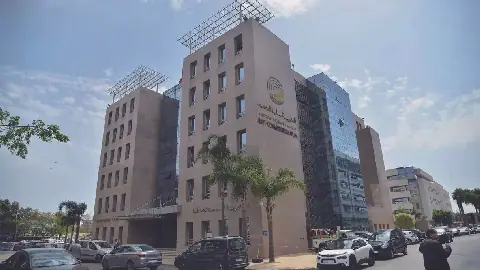
Stellantis, one of the world's largest automobile manufacturers, has designated Algiers as the central hub for a new operational territory covering ten African markets. The move positions Algeria as a key player in the region, extending its role beyond a local market. The newly created territory includes Algeria, Tunisia, Libya, Mauritania, Senegal, Benin, Burkina Faso, Chad, Niger, and Mali. This strategic decision is expected to have a significant impact on the Algerian automotive industry in the coming years.
The decision to establish the regional hub in Algiers was announced as part of Stellantis' revised organizational structure in Africa. The company's fourth-largest global market will now be managed from a single operational base in Algiers. Raoui Beji, who has been serving as the Chairman of Stellantis' Board of Directors in Algeria since June 2024, will oversee the new entity, with his expanded role taking effect on November 1.
The selection of Algiers as the regional hub underscores the importance of the Algerian market to Stellantis' African strategy. The country is no longer just a sales or assembly site but has become a gateway to the Sahel and West Africa. This development is built on concrete achievements, including the growth of Stellantis' manufacturing operations in Algeria. The company's plant in Tafraoui, near Oran, has made significant progress in 2026.
The Tafraoui plant has achieved several industrial milestones, including the transition to Complete Knock-Down (CKD) production for the locally manufactured Fiat Grande Panda. This process involves more comprehensive assembly compared to pre-fabricated module assembly. The plant's progress has also led to the establishment of an ecosystem of local subcontractors, with around 15 Algerian companies integrated into the supply chain.
Stellantis aims to increase the local integration rate, a crucial factor in making vehicles competitive against imports. To achieve this, the company is fostering partnerships with major Algerian public players. A meeting between Raoui Beji and the head of Naftal, Algeria's oil distributor, in mid-October, explored potential cooperation areas between the two entities.
The growing collaboration between Stellantis and Algerian authorities reflects the country's increasing significance in the company's African operations. By strengthening its presence in Algeria, Stellantis is poised to capitalize on the country's strategic location and industrial capabilities. This development is expected to have a positive impact on Algeria's economy and automotive sector.
The new regional hub in Algiers will enable Stellantis to streamline its operations across the ten African markets, leveraging the city's strategic location and existing infrastructure. With Raoui Beji at the helm, the company is well-positioned to drive growth and expansion in the region. As the Algerian automotive industry continues to evolve, Stellantis' investment is likely to play a significant role in shaping the country's economic future.
Key points
- Stellantis designates Algiers as the regional hub for ten African markets, including Tunisia, Libya, and Mali.
- The company's plant in Tafraoui, Algeria, has transitioned to Complete Knock-Down (CKD) production for the Fiat Grande Panda.
- Stellantis aims to increase the local integration rate in Algeria to make vehicles more competitive against imports.