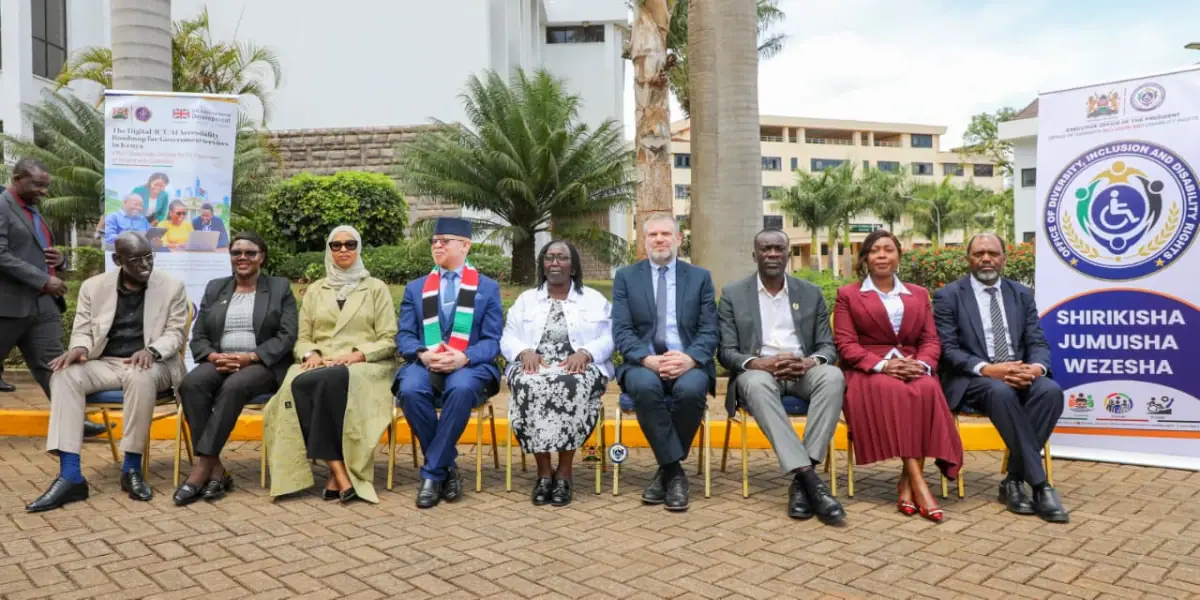
The Kenyan government has been urged to prioritize inclusivity in its digital transformation agenda, particularly for persons with disabilities. Cabinet Secretary for Gender, Culture and Children Services Hannah Wendot, representing Chief of Staff and Head of Public Service Felix Koskei, emphasized that inclusivity must be central to Kenya's digital transformation agenda. She cited the Persons with Disabilities Act, 2025, as a legal framework for advancing disability rights.
Wendot warned that poorly designed digital platforms could deny persons with disabilities employment opportunities, delay access to government services, and force them to depend on others to complete routine transactions. This could compromise their privacy and independence. She urged government agencies to incorporate inclusive design into digital platforms and factor the needs of persons with disabilities into their planning, budgeting, and procurement processes.
The Head of Diversity, Inclusion and Disability Rights, Isaac Mwaura, highlighted that inaccessible government communication prevents persons with disabilities from participating in public life. This includes accessing job opportunities, state tenders, and information on essential services. Mwaura disclosed that his office is developing guidelines requiring government institutions to provide sign-language interpretation, captioning, accessible digital documents, voice narration, and simplified information formats.
National Council for Persons with Disabilities (NCPWD) Chief Executive Officer Dr. Munene Michael challenged government agencies to move beyond policy commitments and take practical steps to remove existing barriers. He proposed appointing an accessibility focal person at director level, conducting audits of websites, digital platforms, and physical facilities, and developing funded plans to address identified gaps.
Dr. Munene Michael offered the council's technical support to institutions undertaking the assessments, urging them to document their progress and submit regular reports. He warned that audits would have little impact without funds to implement the recommended changes. Principal Secretary for Gender, Culture and Children Services Karen Ageng'o welcomed the proposed assessments, disclosing that the State Department for Children Services had already audited its website.
Karen Ageng'o stressed the need to ensure children with disabilities are not excluded from essential protection and support services because of communication barriers. British Deputy High Commissioner Dr. Ed Barnett reaffirmed the United Kingdom's commitment to supporting Kenya in developing safe, accountable, and inclusive digital systems. He called for continued collaboration to translate policy commitments into practical results.
The government's digital service delivery agenda must ensure persons with disabilities are not disadvantaged as more services move online. Principal Secretary for Immigration and Citizen Services Dr. Belio Kipsang noted that technology should simplify access to public services rather than create additional obstacles, particularly for citizens who rely on assistive technologies.
Key points
- Government institutions in Kenya must prioritize inclusivity in their digital transformation agenda.
- The Persons with Disabilities Act, 2025, provides a legal framework for advancing disability rights in Kenya.
- Government agencies must allocate funds to remove barriers preventing persons with disabilities from accessing public information and essential services.