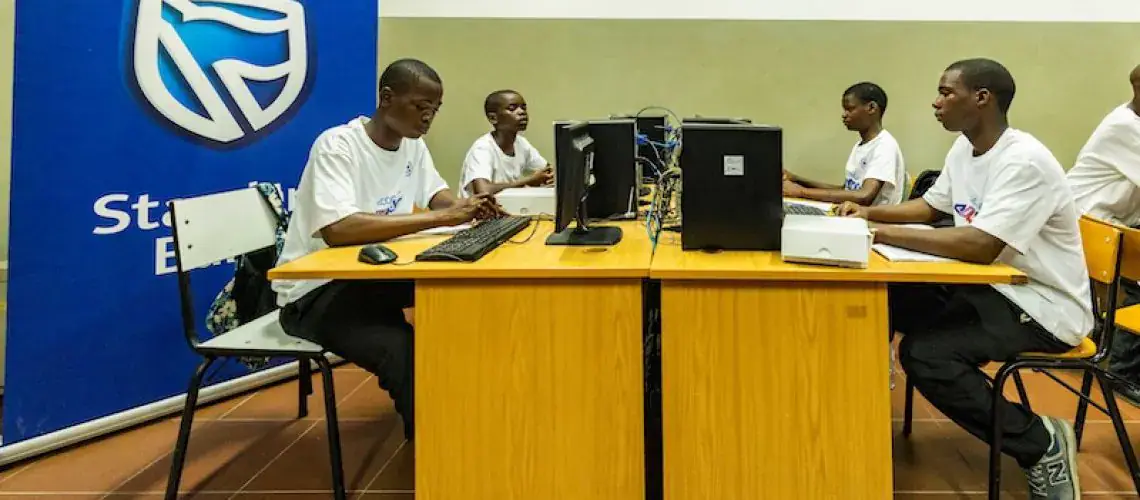
The Standard Bank recently hosted a Coding for Kids session in Maputo, benefiting 40 students from Escola Básica Unidade 10. The program, part of the bank's social responsibility initiatives, aims to promote education and digital inclusion. During the two sessions, participants learned basic programming concepts, including flowchart creation, through interactive activities led by bank collaborators.
The Coding for Kids program seeks to bring programming education closer to institutions, encouraging students to acquire technological skills, stimulate creativity, and explore digital tools. According to Açucena Tafula, the program's goal is to facilitate access to technological learning, equipping participants with skills that can influence their academic and professional choices.
The program's importance was emphasized by Mário Chirindza, a teacher at Escola Básica Unidade 10, who praised the initiative for contributing to the students' learning experience. Chirindza expressed hope that the program would continue, allowing more students to benefit. The teacher encouraged students to deepen and share their knowledge with peers who did not participate.
Student Estevão Dima, who participated in the program, expressed satisfaction with the experience, stating that he learned more about computers, programming, and flowcharts. Dima emphasized the importance of utilizing the internet for personal benefit. Another participant, Augusto Manhique, also learned about programming and digital tools, and suggested that the initiative be expanded to reach more students.
The Standard Bank's initiative aligns with its goal of promoting education and digital inclusion in Mozambique. By introducing students to programming concepts at a young age, the bank aims to empower them with skills that can shape their future. The program's impact is expected to be long-term, influencing the students' academic and professional paths.
The Coding for Kids program is part of Standard Bank's efforts to bridge the technology gap in Mozambique. By providing access to technological learning, the bank contributes to the development of a more digitally literate population. The program's success may lead to its expansion, reaching more students and institutions across the country.
The participants' feedback highlights the program's potential to make a positive impact on their lives. As they continue to develop their skills, they may become role models, inspiring others to pursue careers in technology and programming. The Standard Bank's initiative demonstrates its commitment to social responsibility and education, setting a positive example for other organizations to follow.
Key points
- The program aims to facilitate access to technological learning, equipping participants with skills that can influence their academic and professional choices.