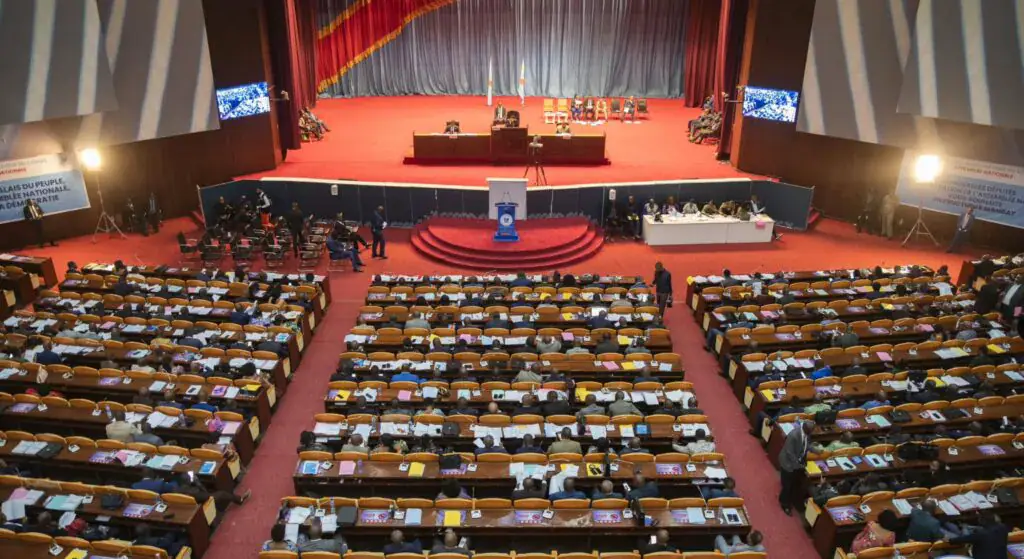
The President of the National Assembly, Aimé Boji, has called on lawmakers to remain mobilized and available to respond to a summons from the head of state at any moment. This move comes as the country considers a possible referendum, with Boji announcing that the parliamentary session in March 2027 will be dedicated to the referendum. The current ordinary session is set to end on December 15, according to the constitutional calendar.
Ahead of the parliamentary recess, Boji asked lawmakers to popularize the new referendum law in their respective constituencies. They will reportedly receive financial means to carry out this campaign. This approach goes beyond a simple information exercise for voters, placing lawmakers at the heart of preparations for a potential popular consultation. The debate on a new Constitution continues to divide the country's political class.
The reference to a Constituent Assembly deserves particular attention. It is not an extraordinary session of the National Assembly, but rather a different institutional mechanism. The Constituent Assembly is tasked with examining and adopting a draft Constitution or a referendum bill on certain constitutional provisions. Its composition includes members of the National Assembly, Senate, provincial assemblies, and urban, communal, sectoral, and customary councils.
The process for a referendum is outlined in the law promulgated on November 9 and published in the Official Journal on November 12, 2026. This text replaces the 2005 law that framed the constitutional referendum that led to the adoption of the current fundamental law. The main innovation is the expansion of the referendum field to include the adoption of a new Constitution or constitutional changes that fall outside the competence of the constituted powers.
The law provides for a national multidisciplinary reflection commission to identify matters that can be submitted to a referendum. When adopting a new Constitution or modifying provisions that escape the powers constituted, its establishment is subject to a petition from 250,000 Congolese citizens addressed to the President of the Republic. The commission has thirty days to submit its conclusions and, if applicable, a draft Constitution.
President Boji's announcement that the next parliamentary session in March will be dedicated to the referendum provides a first indication of the calendar envisaged by the majority. He cited the transfer of waters from the Congo River to Chad to justify the recourse to a popular consultation. He also advocated for a reduction in the prerogatives of provincial deputies, whom he holds responsible for the instability of provincial institutions.
The promulgation of the referendum law does not mean that a poll is already programmed. The law outlines the different possible sources of the referendum initiative, while reserving the decision to convene the referendum to the President of the Republic by ordinance. The Electoral Commission then intervenes to convene the electorate. The closure of the ordinary session on December 15 does not constitute an obstacle to a possible installation of the Constituent Assembly.
Key points
- The Democratic Republic of Congo's parliament is preparing for a possible referendum with a view to adopting a new Constitution or making constitutional changes.
- President Aimé Boji has urged lawmakers to stay mobilized and available for an Assembly that would examine and adopt a draft Constitution or referendum bill.
- The process for a referendum is outlined in a law promulgated on November 9, 2026, which provides for a national multidisciplinary reflection commission and a Constituent Assembly.