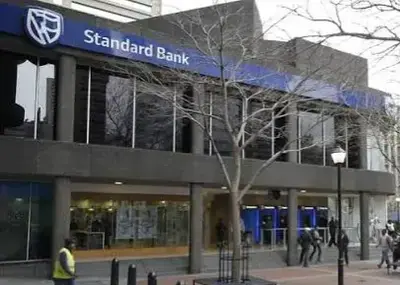
A greenwashing complaint has been lodged against Standard Bank with the Advertising Regulatory Board (ARB) by Fossil Free South Africa (FFSA) and the StopEACOP Coalition. The complaint argues that the bank's public claims about its sustainability credentials and climate commitments are misleading in light of its financing of the East African Crude Oil Pipeline (EACOP). The complaint challenges Standard Bank's sustainability advertising and net-zero commitments.
The East African Crude Oil Pipeline (EACOP) is a 1,443km heated pipeline designed to transport crude oil from Lake Albert in western Uganda to the port of Tanga in Tanzania for export. According to estimates, the pipeline could emit up to 34 million tonnes of carbon dioxide equivalent a year at peak production, with total emissions of 379 million tonnes over its 25-year lifespan. The complaint cites concerns about the pipeline's route through the Lake Albert and Lake Victoria basins, affecting 158 wetlands in Uganda alone.
Standard Bank states in its 2025 Report to Society that it undertook extensive due diligence over several years before committing to finance the project, including environmental and social impact studies, human rights due diligence, climate risk assessments, and stakeholder engagement. However, the complaint argues that the bank's repeated claims about its climate leadership, sustainable finance, and renewable-energy investment create "a broad and unqualified impression" of its environmental performance.
The complaint points out that Standard Bank's involvement in EACOP sets it apart from other major lenders, with four of South Africa's largest banks — Absa, FirstRand, Nedbank, and Investec — confirming they will not finance the pipeline. More than 40 international banks and 30 insurers have also refused to fund it. Standard Bank is one of only four financial institutions globally that agreed to finance the project.
The complaint challenges Standard Bank's presentation of its renewable-energy partnerships, including a prominent wind-turbine image on the cover of the 2025 Report to Society, which features the Ummbila Emoyeni project developed in partnership with Seriti Green. However, the complaint notes that Seriti Green is a wholly owned subsidiary of Seriti Holdings, a major coal producer.
The complaint identifies nine areas in which it believes the bank's advertising may contravene the ARB Code, including sustainability leadership, net-zero commitments, and renewable-energy financing. It asks the ARB to require the bank to provide documentary evidence substantiating its claims about climate alignment, fossil fuel reduction, and environmental risk management.
Standard Bank said it was aware of reports that FFSA might have lodged a complaint with the ARB but had not received or seen it and was therefore not commenting further. The bank's 2025 Report to Society states that more than 8,000 Ugandan and Tanzanian citizens are employed on the project and that more than 400,000 hours of training have been provided. The complaint argues that these claims do not adequately account for the environmental risks associated with EACOP.
Key points
- Standard Bank's financing of EACOP has sparked a greenwashing complaint over its sustainability claims.
- The complaint challenges the bank's climate leadership and renewable-energy investment claims.
- The East African Crude Oil Pipeline could emit up to 34 million tonnes of carbon dioxide equivalent a year at peak production.