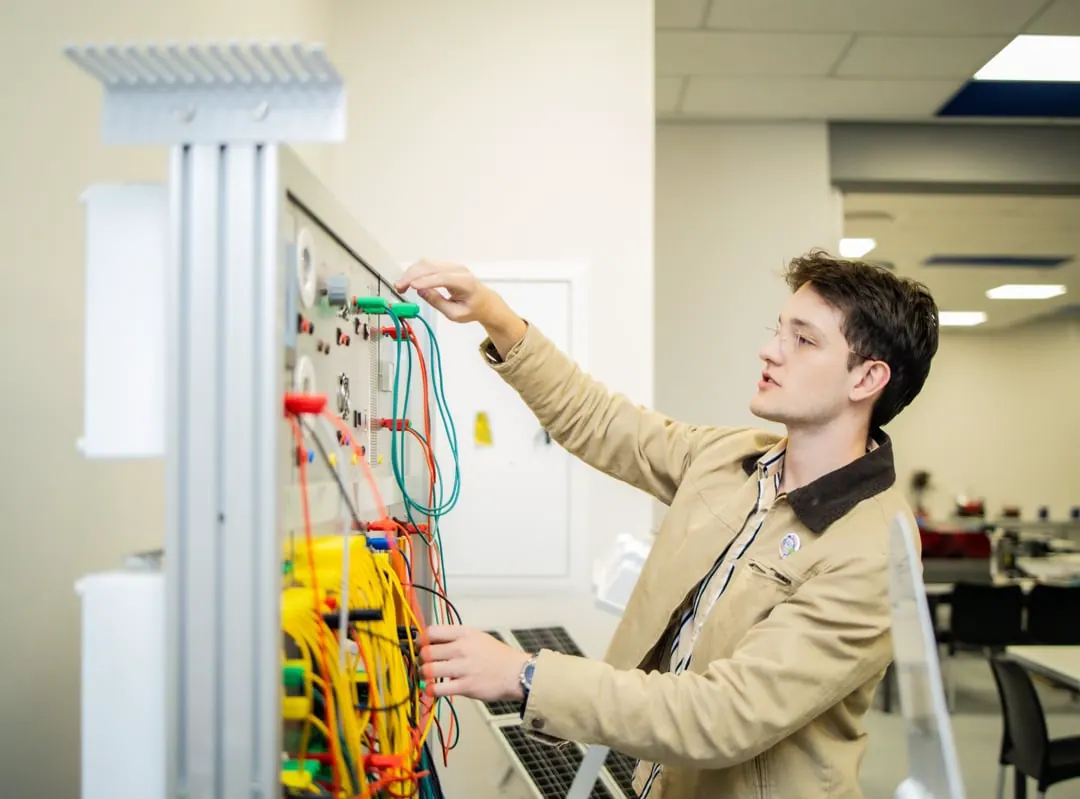
STADIO, a South African tertiary education institution, has launched a new engineering degree program designed to prepare students for a rapidly changing technological landscape. The Bachelor of Engineering in Electrical Engineering, set to commence in 2027 at STADIO's Durbanville campus, aims to equip students with the skills and knowledge required to succeed in a field where technology is constantly evolving. This program will enable students to obtain a National Qualification Framework (NQF) level 7 qualification in just three years.
The program's curriculum is designed to reflect both the fundamental principles of electrical and electronic engineering and the changing technological environment in which graduates will work. Students will study core subjects, including engineering mathematics and physics, electrical technology, digital electronics, and electrical machines. Additionally, they will explore topics such as engineering programming, machine learning applications, renewable energy technologies, and energy management. This comprehensive approach will ensure that graduates are well-rounded and prepared to tackle complex engineering problems.
According to Prof. Herman Vermaak, Head of STADIO's School of Engineering and Architecture, the program's focus on strong foundational knowledge and adaptability is crucial in today's rapidly changing technological landscape. "In the engineering disciplines, the ongoing and rapid development of complex technology necessitates higher levels of conceptual understanding and problem-solving skills," he explains. "Adaptability to new technologies largely relies on the ability to apply fundamental conceptual knowledge when addressing modern engineering challenges."
The program is designed to prepare graduates for careers as engineering technologists in the field of electrical engineering. The qualification will equip them with the knowledge, practical skills, and professional competencies required to solve broadly defined engineering problems. STADIO's goal is to produce engineering technologists who can function in a developing technological environment and contribute to socio-economic development in South Africa. The program is accredited by the Engineering Council of South Africa (ECSA) and provides a foundation for registration as a professional engineering technologist.
One of the key areas where the need for adaptable technical skills is already evident is in South Africa's changing energy landscape. The growth of renewable energy has created a demand for professionals who can work across the value chain, from installation and maintenance to network integration, monitoring, and energy storage. As these systems become more sophisticated, technical professionals will need to understand how different technologies interact and work together.
STADIO's new qualification is designed to serve the electrical, electronic, energy, and automation industries, providing graduates with a foundation for careers in areas such as electrical, automated, and robotic systems, instrumentation and control, and testing and design technology roles. The program also forms part of a broader engineering education pathway at STADIO, allowing students who have completed the Higher Certificate in Renewable Energy Engineering or Mechatronic Engineering to progress to the degree program.
As technology continues to evolve, South Africa's engineering challenges will also change. STADIO believes that preparing individuals to address these challenges requires more than just knowledge of current technologies. The program aims to develop the foundational knowledge, practical skills, critical thinking, and problem-solving abilities required to continue learning as the world around them evolves.
Key points
- STADIO's new engineering program is designed to equip students with adaptable skills for a rapidly changing technological landscape.
- The program's curriculum reflects both fundamental principles and the changing technological environment.
- The qualification is accredited by the Engineering Council of South Africa (ECSA) and provides a foundation for registration as a professional engineering technologist.