The situation in Lebanon is becoming increasingly complicated as Israel's continued military operations in the south and the presence of Hezbollah's armed groups hinder the state's efforts to assert its authority. According to Eslam El-Maraghy, an expert on Lebanese affairs at the National Center for Middle East Studies, Lebanon is trapped in a vicious cycle. The French government, which has historically been involved in Lebanese affairs, is now seeking a more direct role in the country's security and strategic landscape.
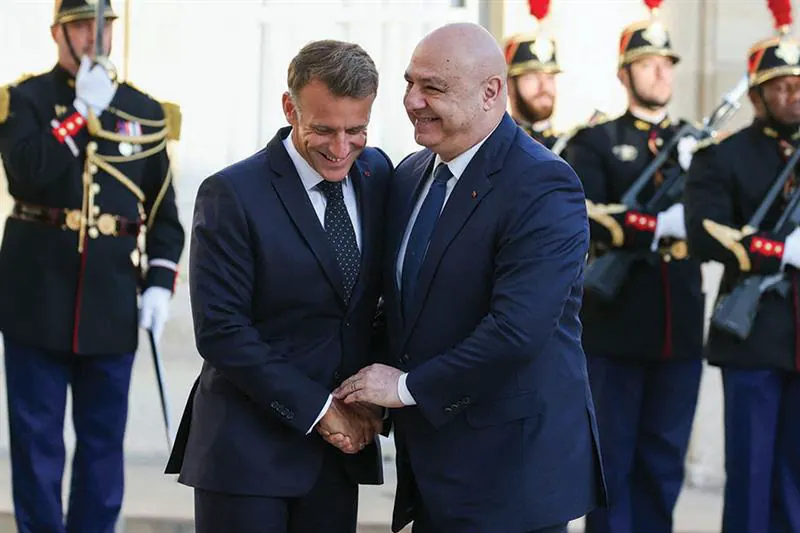
El-Maraghy notes that France's new approach involves supporting the Lebanese army and engaging in discussions about the post-FINUL era. The French President, Emmanuel Macron, has met with his Lebanese counterpart, Joseph Aoun, and Jordan's King Abdallah II to discuss the Lebanese army's needs and enhance military cooperation. This move is part of France's efforts to preserve its influence in the region and prevent a security vacuum after the withdrawal of the United Nations Interim Force in Lebanon (FINUL).
The Lebanese army faces significant challenges in assuming full control over the country's security, particularly in the south. El-Maraghy highlights that while the army can deploy forces, it lacks the necessary capabilities to take over the responsibilities of FINUL entirely. The UN resolution provides for the end of FINUL's operations by December 31, 2026, followed by a gradual withdrawal in 2027. The goal is for the Lebanese government to become the sole authority responsible for security in the south, with continued international support for the army.
El-Maraghy emphasizes that the international community does not consider the Lebanese army a direct substitute for FINUL but rather a pivotal element in a transition phase that will require ongoing international support. The army faces financial, logistical, and operational challenges, including equipment and intelligence shortages, as well as political and security constraints. The presence of Israeli forces in the south and ongoing tensions further complicate the situation.
A critical issue is the relationship between the Lebanese army and Hezbollah, particularly regarding the latter's arsenal. El-Maraghy notes that strengthening the army's capabilities is closely tied to the state's ability to assert its control over all military decisions. The French approach advocates for a solution led by Lebanese authorities and the army, with modalities defined through dialogue and political and security arrangements.
However, the continued Israeli military presence and operations in the south hinder the process of establishing state control over arms. El-Maraghy points out that this situation fuels Hezbollah's narrative that arms are necessary for protection, making it politically challenging to disarm the group and undermining the state's ability to convince its population that it can ensure security.
El-Maraghy outlines three possible scenarios for the south: a return to negotiations that could lead to gradual security arrangements, a "neither war nor peace" situation, or a generalized escalation, particularly as the end of FINUL's mandate approaches. The vicious cycle Lebanon finds itself in is characterized by the need for a strong army to impose state control over arms, which is difficult to achieve while the border remains unstable and Israeli operations continue.
Key points
- France seeks to preserve its influence in Lebanon by supporting the Lebanese army.
- The Lebanese army faces significant challenges in assuming full control over the country's security.
- Israel's continued military presence in the south complicates Lebanon's efforts to assert its authority.