The South Sudan Opposition Alliance (SSOA) has expressed concerns over unilateral amendments to the Revitalized Agreement on the Resolution of the Conflict in South Sudan (R-ARCSS), Transitional Constitution, and the National Elections Act. In a statement, the alliance said these changes undermine the spirit of the peace agreement and should not be undertaken without consultation among its signatories. The SSOA emphasized that the parties to the peace agreement had previously agreed to use dialogue to determine which provisions of the R-ARCSS and related laws should be amended to facilitate the planned December 2026 elections.
According to the SSOA, the Expanded Meeting of the Presidency held on December 10, 2025, agreed in principle to delink the permanent constitution-making process and the National Population and Housing Census from the elections. The meeting also agreed that the parties signatory to the R-ARCSS should engage in dialogue to identify the provisions requiring amendment and reach consensus on matters that would be deferred until after the elections. However, the SSOA alleged that despite the failure of the dialogue mechanism to meet, the SPLM-IG and its allies proceeded with amendments to the R-ARCSS, the Transitional Constitution, and the National Elections Act.
The SSOA argued that the R-ARCSS is a negotiated political agreement among its signatories, and its implementation, amendment, and interpretation must therefore be approached in accordance with its provisions and through the mechanisms agreed upon by the parties. The alliance said that President Salva Kiir Mayardit subsequently issued Republican Order No. 01/2026 on January 10, 2026, establishing a leadership body of R-ARCSS signatories and other stakeholders to address election-related issues. However, the SSOA claimed that this process was inconsistent with the decision of the Expanded Meeting of the Presidency, which required consultation and dialogue among the parties.
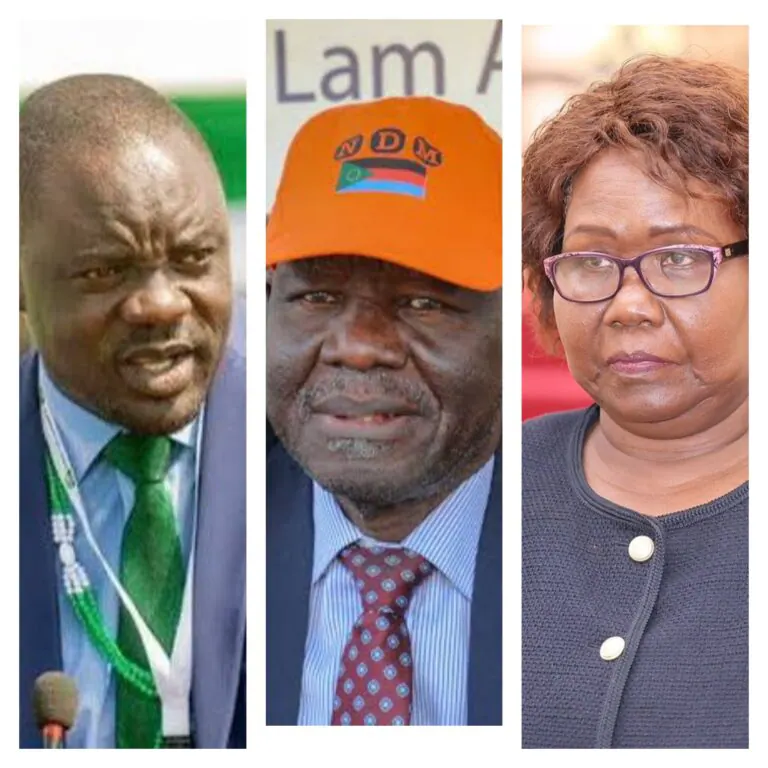
The SSOA statement was signed by several leaders, including Josephine Lagu, representing the People’s Democratic Movement, and Dr. Costello Garang Ring, representing the National People’s Movement of South Sudan. Others who signed the statement include Dr. Lam Akol Ajuen, head of the National Democratic Movement, and Julius Tabuley Daniel, head of the National Salvation Front. The alliance emphasized that any amendments to the R-ARCSS should follow the procedures provided for in the agreement and involve its signatories.
The SSOA expressed concerns that the unilateral pursuit of these amendments undermines the spirit and purpose of the Expanded Meeting of the Presidency’s decision. The group also raised questions about the value of establishing an inter-party dialogue mechanism if one party can proceed to take decisions on the very matters that the mechanism was established to address. The SSOA called for the parties to the peace agreement to engage in dialogue and reach a common understanding on the provisions to be amended.
The amendments to the R-ARCSS, Transitional Constitution, and the National Elections Act have raised concerns among some stakeholders that they may affect the credibility of the planned December 2026 elections. The SSOA's statement highlights the need for consultation and dialogue among the parties to the peace agreement to ensure that any amendments are undertaken in a transparent and inclusive manner. The alliance emphasized that the peace agreement is a negotiated political agreement among its signatories, and its implementation must be approached in accordance with its provisions.
The situation in South Sudan remains fragile, and the implementation of the peace agreement is crucial to ensuring stability and peace in the country. The SSOA's concerns over the unilateral amendments to the R-ARCSS and related laws highlight the need for continued dialogue and consultation among the parties to the peace agreement. The international community has also been closely monitoring the situation in South Sudan and has expressed concerns over the delays in implementing the peace agreement.
Key points
- The South Sudan Opposition Alliance criticizes unilateral changes to the peace agreement, citing inconsistency with agreed-upon processes.
- The changes aim to facilitate the planned December 2026 elections but were made without consultation among signatories.
- The SSOA emphasizes the need for dialogue and consultation to ensure the amendments are undertaken in a transparent and inclusive manner.