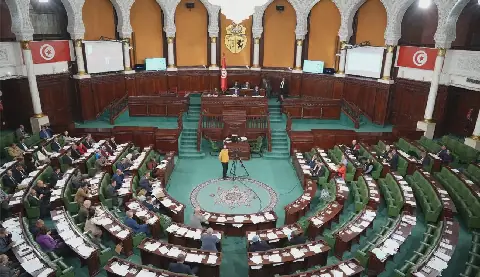
Leader of the Opposition Joel Ssenyonyi has called on Parliament to extend proposed censure powers beyond the Opposition, suggesting that the Vice President, Prime Minister, and ministers should also face similar accountability measures. This move comes in response to the Administration of Parliament (Amendment) Bill, 2026, introduced by Buyaga West MP Denis Namara. Ssenyonyi argued that the current arrangement gives the appointing authority the final say, even after MPs have voted against a minister.
Ssenyonyi questioned why Parliament should create a specific mechanism to censure the Opposition Leader when there is no equivalent provision for the Vice President or Prime Minister. He emphasized that the Constitution, existing laws, and Parliament’s Rules of Procedure do not provide for the censure of those two senior government officials. Ssenyonyi also wants Parliament to reconsider how ministers are censured, arguing that the current arrangement gives the appointing authority the final say.
The proposed law, introduced by Namara on November 11, seeks to change how the Opposition Leader is selected and introduces grounds under which the Opposition Leader can be censured, including physical or mental incapacity, misconduct, misbehaviour, and incompetence. For the censure to pass, the Bill proposes a parliamentary resolution supported by more than half of all MPs. Namara’s Bill had earlier faced a hurdle after the Minister of Finance failed to issue a certificate of financial implications.
Ssenyonyi also pointed to the case of former State Minister for Lands Persis Namuganza, who was censured by Parliament in January 2023 but remained in Cabinet after President Yoweri Museveni declined to remove her. Under Article 118 of the Constitution, Parliament can censure a minister and forward its resolution to the appointing authority as a recommendation. Ssenyonyi wants this arrangement changed so that Parliament’s decision carries greater weight.
The Bill also seeks to compel the Opposition Leader to consult other opposition parties represented in Parliament when appointing the shadow Cabinet and allocating opposition positions on parliamentary committees. It further proposes consultations when nominating opposition representatives to the Parliamentary Commission, Pan-African Parliament, and East African Legislative Assembly. Speaker Jacob Oboth referred the Bill to the Committee on Legal and Parliamentary Affairs for scrutiny.
Ssenyonyi accused the NRM legislator behind the Bill of concentrating on the Opposition’s accountability while overlooking similar gaps on the government side. He emphasized that progress should be for the entire Parliament, not just one side of Parliament. The proposed changes could reshape the relationship between the different opposition parties in Parliament while introducing a new mechanism for holding the Leader of the Opposition accountable.
The Administration of Parliament (Amendment) Bill, 2026, has sparked debate on the accountability of senior government officials and the Opposition Leader. As Parliament considers the Bill, it remains to be seen whether the proposed changes will be implemented. The outcome will likely have significant implications for the balance of power within Parliament and the accountability of those in leadership positions.
Key points
- Ssenyonyi wants Parliament to extend proposed censure powers to the Vice President, Prime Minister, and ministers.
Reporting sources
- Ssenyonyi wants Museveni, Nabbanja also subjected to censure · 100.2 Galaxy FM