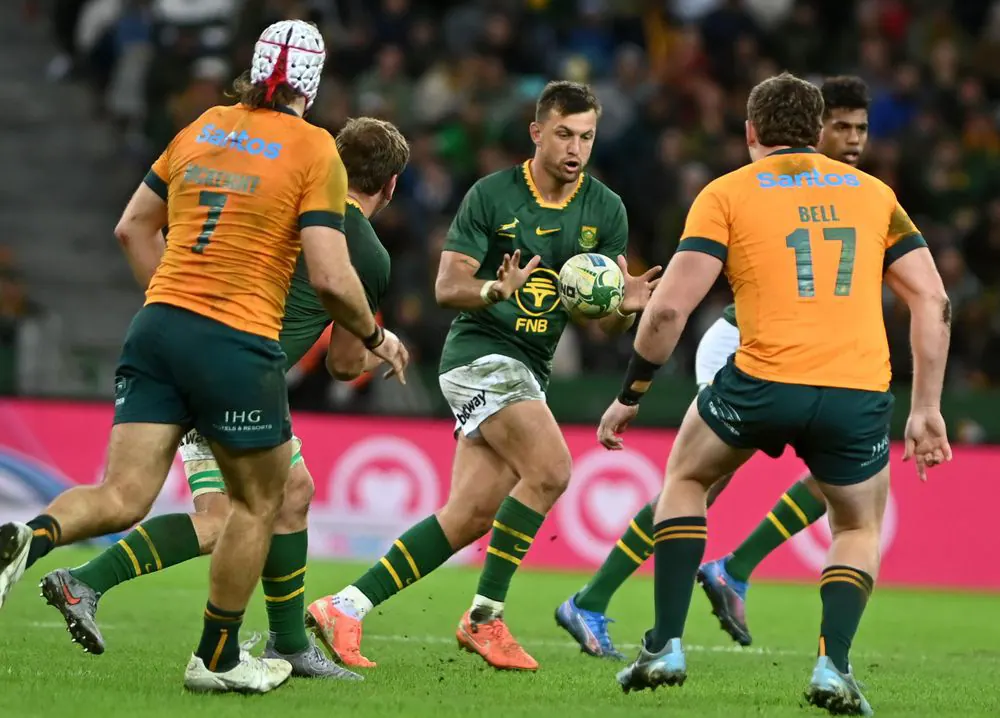
The Springboks are set to face the Wallabies at Optus Stadium in Perth this Sunday, still reeling from the aftermath of their 38-22 defeat at Ellis Park last year. This match remains one of the most disappointing chapters in recent South African rugby history, where they squandered a 22-0 lead. For Rassie Erasmus and his team, the lessons learned from that collapse are crucial in their preparation for the upcoming match.
During the first 19 minutes of the Ellis Park match, the Springboks appeared dominant, slicing through Australian defenses with ease, thanks to quick ball and the effective halfback pairing of Manie Libbok and Grant Williams. However, as the initial onslaught slowed, South Africa fell into the trap of overplaying, forcing passes in high-risk zones instead of managing the game. This shift in strategy allowed the disciplined Wallabies to absorb the pressure, make their tackles, and capitalize on mistakes.
A significant turning point in the match came when a telegraphed Libbok intercept pass led to a series of Australian counter-attacks, completely reversing the momentum. The Wallabies' ability to capitalize on South Africa's errors, particularly in terms of ball security under pressure, was a decisive factor in their victory. The statistics from Ellis Park were stark: 17 turnovers conceded over 80 minutes, which world-class opposition will inevitably punish.
The Springboks' set-piece execution was another uncharacteristic weakness during the Ellis Park defeat. The lineout, typically a strong platform for launching attacks and setting up their maul, struggled significantly in the second half. Losing primary possession deprived the Boks of their safety valve when the game began to slip away. To succeed in Perth, the South African pack must dominate at lineout and scrum time to control the match tempo.
With the Wallabies eager to replicate their tactical success on home soil, the Springboks must avoid another loss of composure. If South Africa can combine their explosive attacking threats with ruthless set-piece control and breakdown security, similar to their recent victories against the All Blacks, they will likely overcome the ghosts of Johannesburg. Failure to do so may allow the Wallabies to capitalize on any mistakes.
The task ahead for the Springboks in Perth is clear: they need to blend their attacking prowess with defensive solidity. Handre Pollard will likely play a crucial role in directing the team. The Springboks have shown resilience and adaptability in recent matches, and a strong performance in Perth could set the tone for their future matches, including the 2027 Rugby World Cup.
As the Springboks prepare to face the Wallabies, they will focus on refining their strategies, particularly in managing high-pressure situations and maintaining defensive cohesion. The lessons from last year's defeat will serve as a critical guide for Rassie Erasmus and his squad as they seek to make amends in Perth.
Key points
- Springboks must avoid overplaying and manage the game effectively against the Wallabies.
- Securing the breakdown and improving set-piece execution will be crucial for South Africa's success.
- The Springboks need to blend their attacking threats with defensive solidity to overcome the Wallabies.