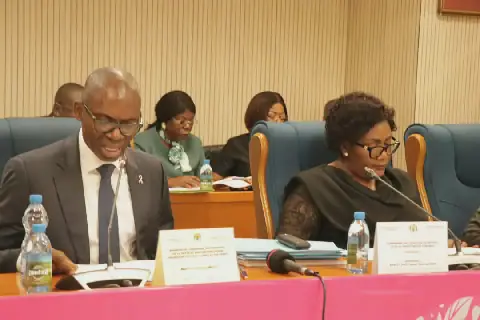
On October 8, 2026, several speakers addressed the UN General Assembly's Fourth Committee, criticizing the Polisario Front's ties to terrorist groups in the Sahel and Sahara regions. They warned of growing risks to regional stability and security. Souleymane Satigui Sidibe, head of the Coastal Institute for Research and Analysis for Conflict Transformation, stated that the issue of links between the Polisario Front and extremist groups has garnered increasing attention in the United States.
Sidibe noted a significant shift in the international community's perception of the Polisario Front, with many viewing it as a terrorist organization. He cited ongoing legislative efforts in the US Congress to classify the Polisario Front as a terrorist organization, driven by concrete evidence of its involvement in terrorist activities. These efforts have been led by around twenty prominent Republican and Democratic lawmakers.
Mohamed Ziade Al-Jaabari, representing the Moroccan-Palestinian Friendship Association, highlighted several indicators of cooperation between the Polisario Front and terrorist organizations in the Sahel region. He cited the activities of Adnan Abu Walid Al-Sahrawi within groups affiliated with the Islamic State, as well as reports of separatist elements involved in recent attacks in the Middle East.
Speakers also raised concerns about the recruitment of children and young people in Tindouf camps for extremist agendas. Abdel Basit Batinnathar, representing the World Humanitarian Drive, called on the international community to pay greater attention to the links between separatism, terrorism, and transnational crime in fragile regions. He emphasized the need to protect humanitarian areas from militarization, exploitation, or extremist influence.
Amal Jbour, speaking on behalf of the Jordanian Philosophical Association, expressed growing concern about the connections between the Polisario Front and terrorist networks in the Sahel region. She noted that these concerns have prompted some US lawmakers to demand that the Polisario Front be classified as a terrorist organization. Jbour argued that the ongoing situation in Tindouf camps, where residents have been trapped for decades under Polisario rule, contributes to escalating security risks in the region.
Other speakers, including Mahmoud Al-Rahman Anwar from the Africa International Culture Organization and Harald Troesch, highlighted the dire humanitarian situation and lack of opportunities for young people in Tindouf camps. They warned that this situation creates fertile ground for extremism and recruitment by terrorist groups. Several speakers denounced the recruitment of children in Tindouf camps, subject to Polisario control, and the closure of opportunities for young people.
Sherry Erb, from Oasis Ministries, noted that the issue of child recruitment and military training in Tindouf camps has been raised multiple times within UN bodies and by international NGOs. She cited a Washington Post investigation in April 2025, which revealed that Syrian authorities had arrested hundreds of Polisario elements and child recruits after the fall of the Bashar Al-Assad regime. Erb expressed concern about the radicalization of children and the consequences of their military training.
Key points
- The Polisario Front's ties to terrorist groups in the Sahel region pose growing risks to regional stability and security.
- Speakers at the UN General Assembly's Fourth Committee called for greater international attention to the humanitarian situation in Tindouf camps.
- The recruitment of children and young people in Tindouf camps for extremist agendas is a pressing concern.