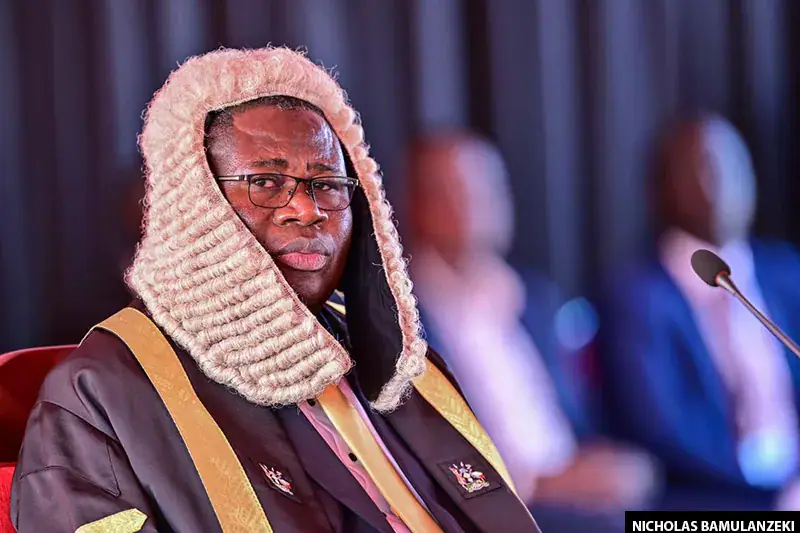
On Tuesday, Speaker of Parliament Jacob Oboth-Oboth ruled that matters of the military should not be discussed in plenary sessions. The decision came after chief opposition whip Paul Mwiru invoked Article 23 of the 1995 Constitution, citing the incommunicado detention of Maj Gen (Rtd) Abel Kandiho and Brig Gen (Rtd) Charles Bakahumura at an unauthorized location. Oboth-Oboth acknowledged that the minister of Defence could address concerns raised by the officers' families.
Kandiho and Bakahumura, both former heads of the Chieftaincy of Military Intelligence (CMI), were among 19 generals retired on August 20, 2026. They were detained in early September as part of a military investigation into alleged false intelligence reporting and related offences. The probe is linked to directives issued by Chief of Defence Forces (CDF) Gen Muhoozi Kainerugaba. Other senior intelligence officers have also been reportedly detained in connection with the same investigation.
On October 31, 2026, Muhoozi announced Bakahumura's release, citing efforts to repair strained relations. However, the status of Kandiho remained unclear at the time of Tuesday's parliamentary proceedings. Mwiru's submission relied on Article 23 of the Constitution, which guarantees personal liberty and sets out safeguards governing arrest and detention. These safeguards include the requirement that arrested persons be held in authorized places and informed of their rights.
The UPDF Act establishes a separate disciplinary and justice system for persons subject to military law. This system provides for military service offences, arrest, custody in military facilities, and trial before military courts. Amendments to the Act in 2025 further defined the scope of military jurisdiction and procedures governing such cases. Retired officers may remain subject to certain provisions of military law, depending on the allegations and when the alleged offences occurred.
Uganda's parliamentary practice has traditionally treated operational military and intelligence matters with caution during open plenary proceedings. However, ministers may still be called upon to respond to specific issues of public concern, including questions about the welfare of officers' families. Minister of Internal Affairs Ephraim Kamuntu undertook to make a statement on the arrests if the order of business on November 4 permits.
Human rights observers have previously called for greater transparency regarding the whereabouts, legal basis, and duration of detentions involving serving and retired military personnel. Security officials have maintained that confidentiality is necessary to protect ongoing investigations and military discipline. The distinct legal framework governing UPDF operations was cited as a reason for not debating the detention of Kandiho and Bakahumura in plenary.
The case has raised concerns about the balance between national security and individual rights. While the military investigation continues, the families of the detained officers and the public have been seeking clarity on the circumstances surrounding their detention. Key stakeholders, including parliamentarians and human rights advocates, will likely continue to push for more information on the detained generals and the ongoing investigation.
Key points
- The Speaker of Parliament barred MPs from debating the detention of two retired UPDF generals, citing the need to keep military matters out of plenary sessions.
- The detained generals, Maj Gen (Rtd) Abel Kandiho and Brig Gen (Rtd) Charles Bakahumura, were formerly heads of the Chieftaincy of Military Intelligence (CMI).
- The military investigation into alleged false intelligence reporting and related offences has led to the detention of several senior intelligence officers.