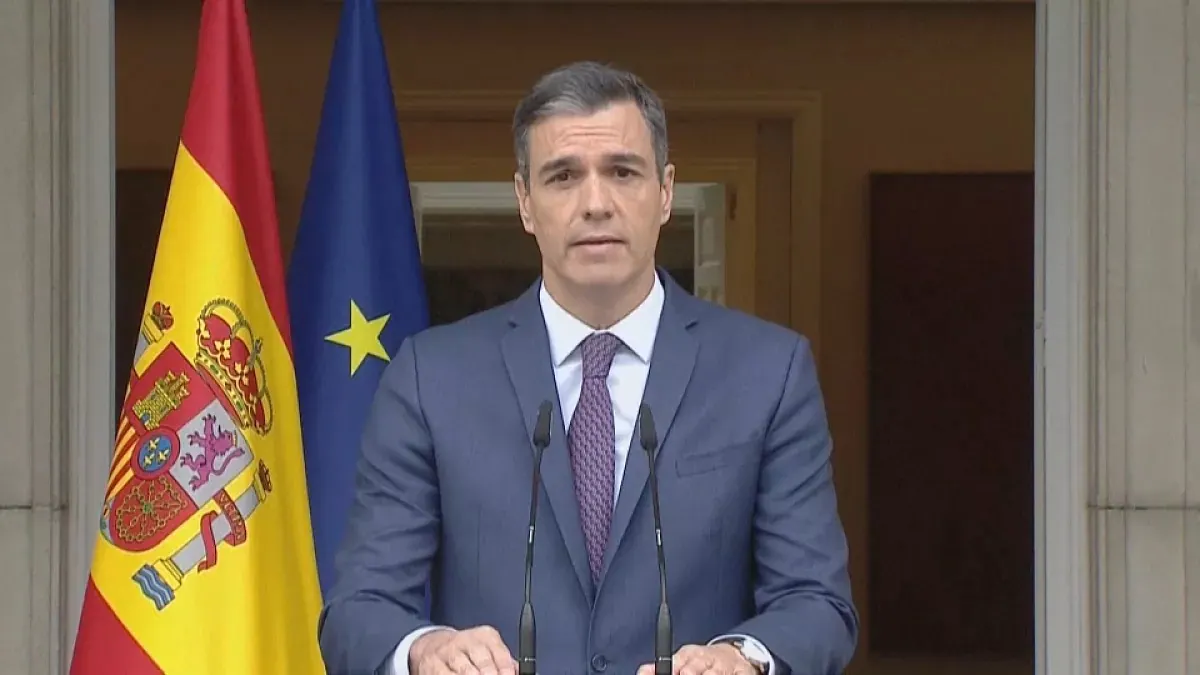
Spanish Prime Minister Pedro Sanchez has called for early general elections on November 29, despite initial plans for elections next year. The announcement came after his government's defeats in Congress, where two law decrees related to the housing crisis were rejected. Sanchez made the declaration during a press conference in Madrid, stating that deeper reforms require a stronger, more progressive majority.
Sanchez's decision follows a series of intense consultations with his ministers and leaders of the Spanish Socialist Workers' Party over the weekend. They discussed possible scenarios after the failure of recent negotiations with political forces to secure necessary votes for legislative passage. The coalition government has faced multiple crises and increasing political pressure in recent months, particularly in securing parliamentary majority.
The government's challenges have been compounded by issues of corruption and judicial proceedings against close figures in the ruling party. This has allowed the opposition to intensify criticism against the executive. Sanchez emphasized the need for a stronger majority to push through pending reforms, satisfy elites, and secure new social benefits.
The early elections have been necessitated by the inability of the current government to pass crucial legislation. Sanchez's government has struggled to achieve consensus on key policies, leading to a stalemate in Congress. The Prime Minister's announcement reflects an effort to regain momentum and ensure the passage of vital reforms.
The opposition has capitalized on the government's difficulties, seizing the opportunity to criticize the executive's handling of various issues. Sanchez's move is seen as an attempt to reassert control and push through policies that have stalled. The early elections will be a critical test for the ruling party and its ability to regain public support.
The decision to call early elections has significant implications for Spain's political landscape. It reflects the complexities and challenges of coalition governance, particularly in achieving consensus on key policies. The elections will provide insight into the public's perception of the government's performance and its vision for the country's future.
As Spain prepares for the early elections, various political forces are likely to intensify their campaigns. The outcome will determine the trajectory of the country's reforms and its ability to address pressing issues such as the housing crisis. The elections will be a crucial moment for Spain's democratic process, with the potential to shape the country's future direction.
Key points
- The Spanish Prime Minister has called for early general elections on November 29.
- The decision follows government defeats in Congress on key legislation.
- The early elections reflect challenges in achieving consensus and passing vital reforms.