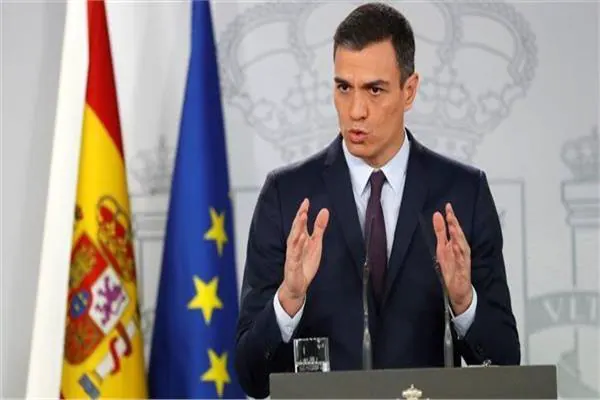
Spanish Prime Minister Pedro Sanchez has launched a scathing critique of Israel's war in Gaza, describing it as a "collective massacre" that continues unchecked. In a strongly worded statement, Sanchez expressed deep concern over the humanitarian crisis unfolding in Gaza, where Palestinian civilians are bearing the brunt of the conflict. He also called for a strengthening of the international system and reform of the UN Security Council.
Sanchez's comments come amid rising tensions in the region, with Israel's Prime Minister Benjamin Netanyahu facing intense scrutiny over his government's actions in Gaza. The Spanish leader's remarks were echoed by his government's stance on the conflict, which has been critical of Israel's military campaign. Sanchez also expressed concern over the erosion of the UN's role and the undermining of multilateral institutions by some governments.
The conflict in Gaza has resulted in significant human suffering, with thousands of Palestinian civilians killed or injured. Sanchez's call for reform of the UN Security Council reflects a growing recognition that the current international architecture is inadequate to address the complexities of modern conflicts. The Spanish leader's comments have sparked a diplomatic row, with some governments defending Israel's right to self-defense.
In a separate incident, the son of Israel's ambassador to Washington, Yehiel Laiter, was seriously injured in a ramming attack in the West Bank. The attacker, identified as Mahmoud Suleiman, was killed by Israeli forces. The incident has heightened tensions in the region, with both sides trading accusations over responsibility for the violence.
Sanchez's government has been vocal in its criticism of Israel's actions in Gaza, with the Spanish leader describing the situation as "unsustainable." He has called for an immediate ceasefire and a return to negotiations between Israel and the Palestinian Authority. The Spanish government's stance has been welcomed by some Arab and Muslim countries, which have long criticized Israel's policies in the occupied territories.
The conflict in Gaza has also raised questions about the role of the international community in preventing humanitarian crises. Sanchez's comments reflect a growing recognition that the current international system is inadequate to address the complexities of modern conflicts. The Spanish leader's call for reform of the UN Security Council has sparked a debate about the need for more effective global governance.
The crisis in Gaza has resulted in a significant escalation of tensions between Israel and its neighbors, with the conflict threatening to destabilize the entire region. Sanchez's government has called for restraint and a return to negotiations, warning that further violence will only exacerbate the humanitarian crisis. The international community remains deeply divided over the conflict, with some governments defending Israel's actions and others criticizing its policies.
Key points
- Sanchez criticizes Israel's Gaza war as a "collective massacre".
- Spanish PM calls for UN reform and strengthening of multilateral institutions.
- Conflict in Gaza results in significant human suffering and heightened tensions.