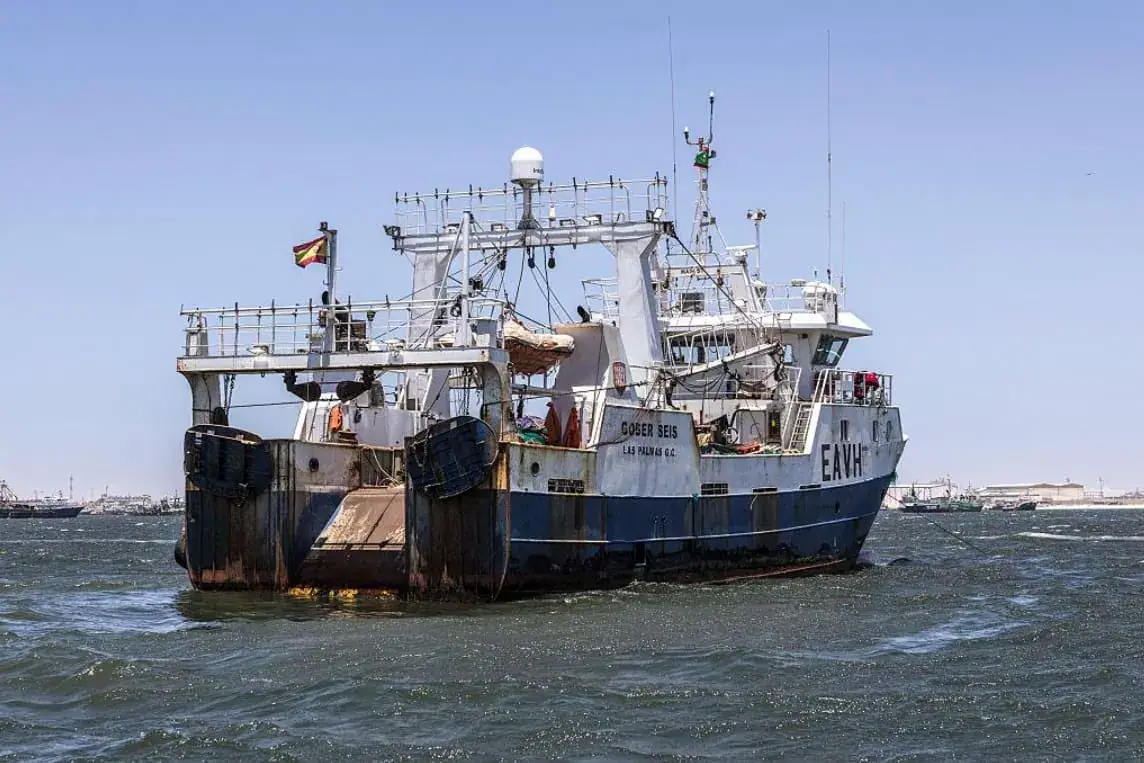
A significant number of Spanish fishing vessels, approximately 30, have started to exit Mauritanian waters. This development comes as the current fishing protocol between Mauritania and the European Union is set to expire at midnight on Saturday. The protocol allows European vessels to catch substantial quantities of tuna, shrimp, and squid in Mauritanian waters, totaling up to 280,000 tons.
When including vessels from all European Union countries, the total number of affected ships rises to around 60. The stalled negotiations are primarily attributed to disagreements over the financial compensation that the European Union must pay to Mauritania in exchange for fishing rights. Currently, the fees range from 150 to 450 euros per ton, depending on the type of fish.
According to Javier Garate, Secretary-General of the Spanish Fishing Federation, Mauritania is demanding higher payments, while the European Union is offering lower compensation due to reduced fishing capacities, particularly for countries like the Netherlands, Lithuania, and Poland. These countries must adhere to quotas that ensure the sustainability of surface fish stocks.
The impact of the potential fishing ban is significant, with shipowners in the Andalusia region expecting losses of around 50 million euros. The fishing industry provides approximately 500 direct and indirect job opportunities in the region. Furthermore, the Galicia region is advocating for guarantees that its ten vessels operating in Mauritanian waters can continue their activities or be provided with alternative fishing grounds.
In addition to the economic concerns, the European Union and Mauritania have engaged in four rounds of negotiations over the past six months. However, no agreement has been reached, despite requests from Spain, Portugal, the Netherlands, and Latvia for the European Commission to expedite the talks.
The history of cooperation between Mauritania and the European Union in the fishing sector dates back to 1987. The current protocol, which has been in effect for five years, is set to expire on Saturday. The failure to reach a new agreement may have significant implications for the fishing industries of European countries and the economy of Mauritania.
As the situation unfolds, stakeholders are closely monitoring the negotiations. The fishing sector is crucial to the economies of both Mauritania and the European countries involved. A new agreement is essential to ensure the continued sustainability of fish stocks and the livelihoods of those employed in the industry.
Key points
- The European Union and Mauritania have been unable to reach a new fishing agreement, leading to the exit of Spanish vessels from Mauritanian waters.
- The current protocol allows European vessels to catch up to 280,000 tons of fish in Mauritanian waters.
- The disagreement over financial compensation is a major obstacle to a new agreement.