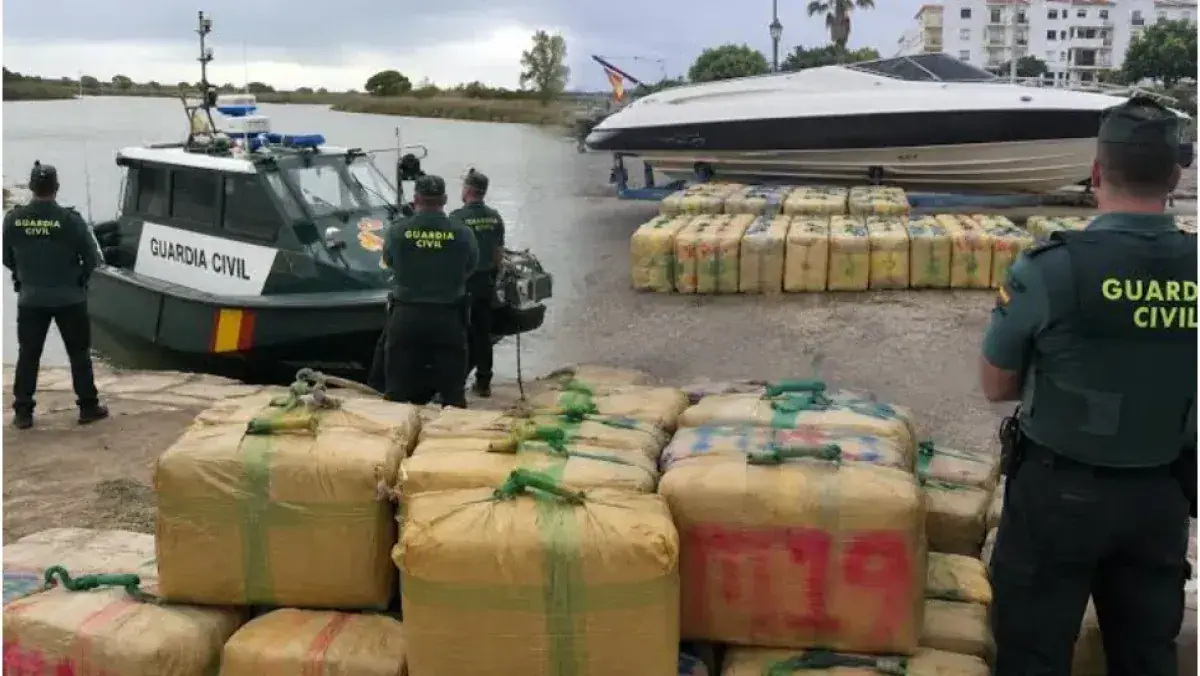
Spanish authorities have seized a significant quantity of hashish in two separate operations, underscoring the ongoing issue of drug trafficking in the region. The first operation took place in the province of Huelva, where the Civil Guard stopped a car on the highway after the driver attempted to evade a security checkpoint and flee. A search of the vehicle revealed approximately 800 kilograms of hashish, along with counterfeit license plates.
The driver of the vehicle was apprehended and the hashish was confiscated. In a separate operation, the Civil Guard intercepted a rubber boat arriving at a beach in the municipality of Antigua, on the island of Fuerteventura. A subsequent search of a 4x4 vehicle led to the seizure of 354 kilograms of hashish, divided into six large bundles and other packages. The driver was arrested and handed over to the judiciary, which ordered his pre-trial detention without bail.
The two operations demonstrate the continued flow of Moroccan hashish into Europe, with Morocco serving as a primary source of cannabis resin in the continent. European countries are grappling with the consequences of extensive smuggling networks that transport the drug through multiple routes. The significant quantities of hashish seized in these operations highlight the scope of the problem and the need for continued cooperation between law enforcement agencies.
The seizures also underscore Morocco's role as a major player in the hashish trade. The country's strategic location and extensive cannabis cultivation have made it a key supplier of hashish to European markets. The ongoing flow of hashish from Morocco has significant implications for European countries, which are struggling to combat the issue.
The Spanish authorities' efforts to combat hashish trafficking are ongoing, with the Civil Guard and other law enforcement agencies working to disrupt and dismantle smuggling networks. The two operations demonstrate the authorities' commitment to addressing the issue and highlight the importance of continued cooperation between European countries to tackle the problem.
The hashish trade has significant economic and social implications for Morocco and European countries. The country's economy is heavily reliant on cannabis cultivation, with many farmers depending on the crop for their livelihood. However, the trade also has significant negative consequences, including the fueling of organized crime and the impact on public health.
The Spanish authorities' seizures of hashish are a significant step in combating the issue, but more work needs to be done to address the root causes of the problem. The ongoing cooperation between law enforcement agencies and the continued efforts to disrupt and dismantle smuggling networks are crucial in reducing the flow of hashish into Europe.
Key points
- Moroccan hashish continues to flood European markets, with significant quantities seized in two separate operations in Spain.
- The seizures highlight Morocco's role as a primary source of cannabis resin in Europe.
- Spanish authorities are working to combat hashish trafficking, with ongoing cooperation between law enforcement agencies.