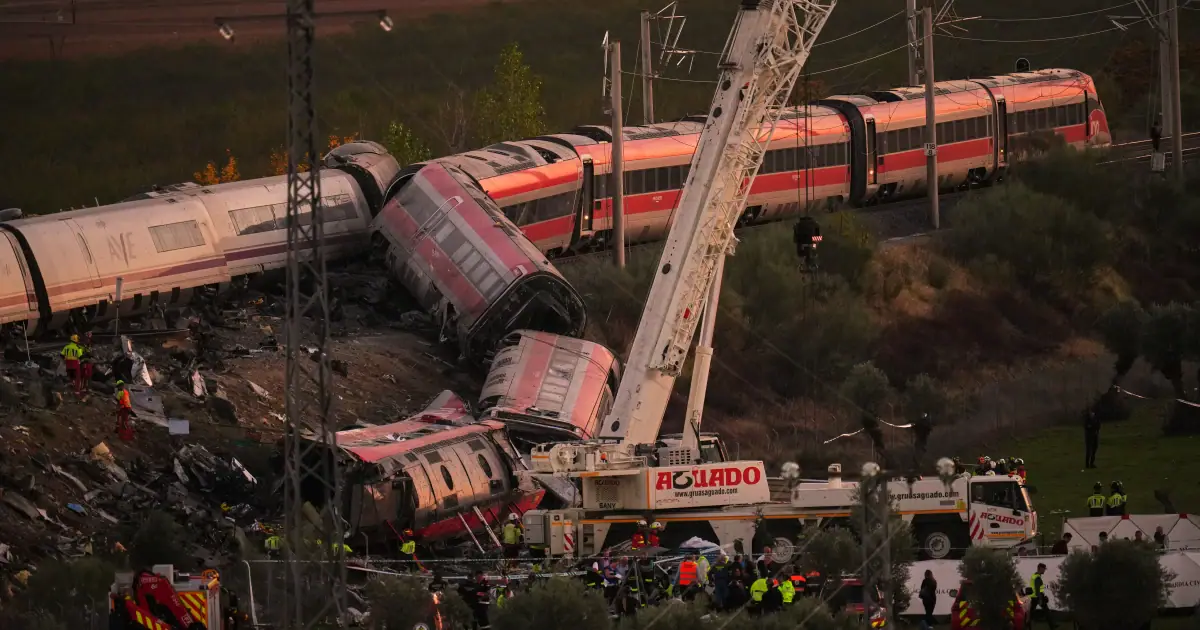
A devastating high-speed train crash in central Spain has resulted in 68 fatalities, sparking renewed concerns about the safety of the country's rail network. The collision occurred when one train struck another from behind on a stretch of rail lined with olive groves. This is Spain's second deadly high-speed rail disaster this year, with the previous incident in January claiming 46 lives.
Spanish Prime Minister Pedro Sánchez visited the crash site in the province of Toledo and pledged a thorough investigation into the incident. He also promised improvements to prevent another tragedy, stating that the country needs to reinforce the safety of its train service to rebuild trust. Sánchez's government has declared three days of mourning starting Thursday. The rail network, which carried 45 million travelers last year, has been considered one of Spain's crowning achievements.
The crash has significant political implications for Sánchez ahead of the national election. His Socialist party faces an uphill battle, with polls showing a challenging road ahead. The new rail disaster may hinder the party's prospects, as Sánchez had hoped to leverage discontent over housing costs and high rents to gain an advantage. Instead, he will have to address concerns over the state of Spain's rail service, along with attacks from right-wing parties over migration policies and corruption allegations.
The transport minister, Óscar Puente, attributed the crash to human error, specifically an "inexplicable" order from a central command center after a security system failure. He stated that the train engineers were not to blame. The security system on a 63-kilometer stretch of rail stopped working due to a computer malfunction, causing all trains to stop. However, the RENFE train was told to start running again without speed restrictions, ultimately colliding with the stationary IRYO train.
The leader of the Popular Party, Alberto Núñez Feijóo, demanded a full investigation into the crash and canceled his party's campaign events for the day out of respect for the victims. In contrast, the far-right Vox leader, Santiago Abascal, was more critical, accusing the government of being a "criminal organization" and vowing to work tirelessly to hold them accountable.
The crash has raised questions about the liberalization of Spain's high-speed rail service in 2021. Both trains involved in the crash were operated by state-owned RENFE and privately owned IRYO, which started service in 2022. The incident has sparked concerns about the safety and regulation of the rail network, particularly in the wake of two major accidents in the same year.
Emergency responders, including hundreds of workers, firefighters, police, and soldiers, worked tirelessly to rescue survivors and recover bodies. Cranes were used to move parts of the damaged trains late on Wednesday. The investigation into the crash is ongoing, with Sánchez's government facing pressure to provide answers and take action to prevent future tragedies.
Key points
- 68 people were killed in the high-speed train crash in central Spain.
- The crash has significant political implications for Prime Minister Pedro Sánchez ahead of the national election.
- The incident has raised concerns about the safety and regulation of Spain's high-speed rail network.