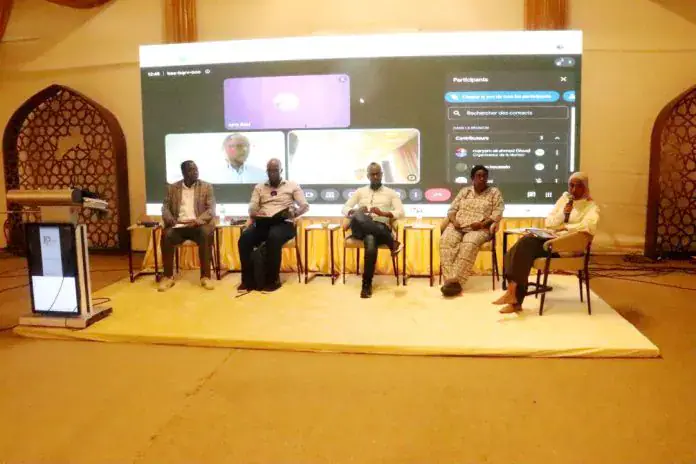
The Institut IRICA recently organized a three-day scientific forum in Djibouti, bringing together researchers, academics, experts, public decision-makers, and civil society actors. The event, held at the Sheraton Hotel, marked the institute's tenth anniversary and focused on themes crucial to Djibouti's development. Discussions revolved around health, environment, energy, education, governance, economy, and artificial intelligence. The forum provided a platform for participants to explore these topics in-depth.
During the forum, several government ministers addressed participants' questions and concerns. The Minister of Health, Mouna Osman Aden, responded to queries about the national healthcare system's challenges, providing clarity on the issues raised. Similarly, the Minister of Environment and Sustainable Development, Mohamed Ahmed Awaleh, and the Minister of Higher Education and Research, Dr. Nabil Mohamed Ahmed, shared insights from their respective sectors, enriching the discussions and shedding light on the country's challenges.
The forum featured panel discussions on two main themes: environment and energy, and human development. The environment segment covered Djibouti's climate vulnerability, waste management, and healthcare waste disposal. The energy segment examined the impact of renewable and non-renewable energy sources on sustainable development. Education was another key area of focus, with discussions on territorial inequalities, scientific baccalaureate success, and the role of work songs in education.
The second day of the forum emphasized human development and governance. Presentations covered topics such as the transition from university to the workforce, women's and men's performance in the public sector, and orthopedic immobilization. A sub-panel on health addressed various public health issues, including asthma in children, maternal knowledge and practices regarding infant diarrhea, male infertility, and cancer prevalence.
The third panel discussion centered on governance, the rule of law, accountability, and social cohesion. Experts highlighted the links between governance, political stability, and security in Africa, as well as the importance of constructing a Djiboutian citizen. The forum also featured a presentation on the legal framework for personal data protection, cybercrime, and cybersecurity, which sparked significant interest among participants.
On the final day, discussions focused on economic and technological issues, including the potential of tourism as a driver of growth and economic diversification. Participants emphasized Djibouti's strategic location as a major asset for attracting investment and promoting tourism. The forum concluded with a ceremony featuring a speech by IRICA President Zahra Youssouf Kayad, who thanked participants, researchers, and the CNSS Director-General for their contributions to the event's success.
The IRICA scientific forum demonstrated the importance of creating sustainable bridges between the research community and public decision-makers. Through multidisciplinary exchanges, the institute reaffirmed its commitment to using scientific knowledge as a lever for national development. The event marked a new stage in promoting dialogue between science, innovation, and public policy for the benefit of Djiboutian society.
Key points
- The IRICA scientific forum brought together experts and researchers to discuss development challenges in Djibouti.
- The event featured panel discussions on environment, energy, education, governance, and economic issues.
- The forum concluded with a ceremony highlighting the importance of scientific knowledge in national development.