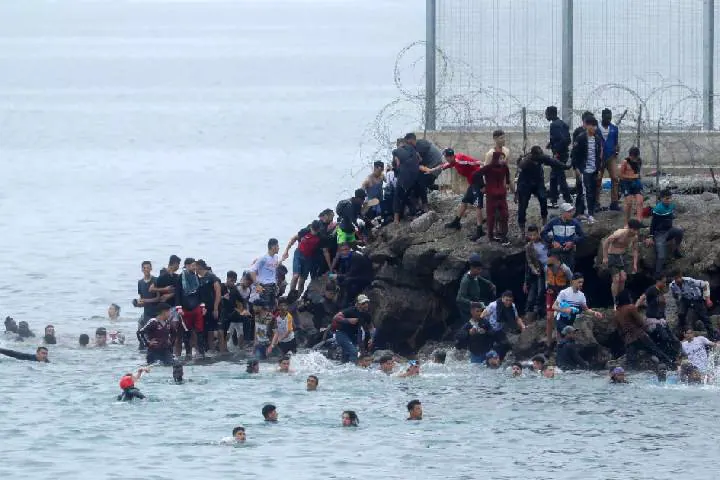
The Spanish government, led by Prime Minister Pedro Sanchez, is preparing to present a decree to the Council of Ministers on September 29. This decree aims to accelerate the process of returning Moroccans who entered Ceuta, particularly those who do not meet the conditions for international protection. The move comes after a significant influx of over 70,000 people from Morocco into Ceuta on July 30 and 31.
The decree is being prepared by the Ministry of Interior and is expected to reduce administrative and judicial deadlines related to pending files. The goal is to enable faster implementation of return decisions, while ensuring that the process remains within the framework of international protection law. The government has stated that it will differentiate between those who are eligible for protection and those who are not.
The proposed decree has sparked debate within Spain, with some parties expressing concerns that it may lead to the return of asylum seekers before their applications are fully processed. The government's move is seen as an effort to address the exceptional situation created by the mass influx of migrants into Ceuta. The city has been a point of contention between Spain and Morocco, with Morocco considering Ceuta and other enclaves as part of its territory.
The Spanish government has announced plans to enhance human and administrative resources in Ceuta to expedite the processing of files and returns. The decree is expected to focus on applications for asylum registered in Ceuta since the mass influx in July. The government aims to reduce the time it takes to process these applications and implement return decisions.
The opposition party, Sumar, has expressed concerns that the decree may lead to the return of asylum seekers before their applications are fully processed. The party has stated that it will not support the decree if it compromises the rights of those seeking protection. The government's move has also sparked concerns among human rights groups, who argue that the decree may violate international law.
The situation in Ceuta remains a challenge for the Spanish government, which is seeking to balance its obligations under international law with the need to manage the flow of migrants. The decree is seen as a step towards addressing the situation, but its implementation is likely to be closely watched by human rights groups and other stakeholders.
The Spanish government's move comes as the country seeks to strengthen its relations with Morocco. The two countries have a complex relationship, with Morocco considering Ceuta and other enclaves as part of its territory. The decree is expected to have significant implications for the management of migration flows between Morocco and Spain.
Key points
- The Spanish government is introducing a decree to speed up the return of Moroccans who entered Ceuta.