Spain commenced a period of national mourning on Thursday, following a devastating high-speed train collision that claimed the lives of 69 individuals and left numerous others injured. The incident, which occurred in the central region of Castilla-La Mancha, has sparked concerns regarding the safety of Spain's rail network. Prime Minister Pedro Sanchez, who is set to face a general election on November 29, pledged to thoroughly investigate the cause of the crash and implement measures to prevent such tragedies in the future.
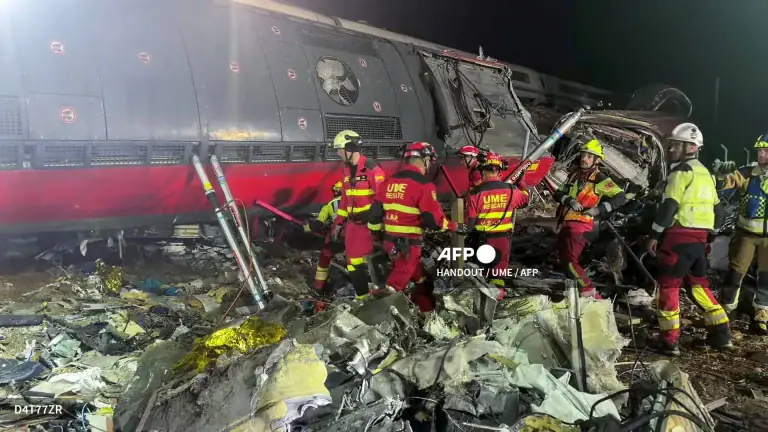
The collision occurred on Wednesday morning when a Renfe train ploughed into the rear of a stationary Iryo train on a key line connecting Madrid to Seville. Emergency services worked tirelessly to comb through the wreckage, deploying sniffer dogs and thermal drones to search for victims. The regional government confirmed that the death toll had risen to 69, with one survivor, Pablo Mejia, recounting his harrowing experience of narrowly escaping injury by changing seats at the last minute.
King Felipe VI and Queen Letizia are scheduled to visit train crash victims at a Toledo hospital on Thursday afternoon, as the nation comes to terms with the tragedy. A school in Urda, approximately 130 kilometres south of Madrid, has been designated as a centre for relatives to enquire about their loved ones. Red Cross workers are providing support to those affected, with psychologist Carmen Garcia warning that the grieving process will be complicated and prolonged.
Transport Minister Oscar Puente revealed that an automatic control system had malfunctioned on 69 kilometres of track, leading to the suspension of all trains in the area. However, the control centre opted to resume traffic under circumstances that Puente described as "inexplicable." The minister added that the control centre had sufficient time to rectify the error but failed to do so, ultimately contributing to the fatal collision.
This latest incident has raised fresh questions about the safety of Spain's rail network, particularly in light of a similar high-speed train collision in January that resulted in the deaths of 46 people. The investigation into that accident is ongoing, but the government has faced criticism over its management of the country's railways. In response to the latest tragedy, train drivers went on strike on Thursday to advocate for improved rail safety.
The Spanish government has faced intense scrutiny over its handling of the country's rail network, with many questioning the adequacy of safety measures in place. Prime Minister Sanchez has vowed to establish the cause of the crash and implement measures to prevent similar tragedies in the future. The nation remains in a state of shock, with flags flown at half-mast on public buildings and official ceremonies and public events cancelled or scaled back.
As the nation mourns, attention is turning to the investigation into the cause of the crash and the implementation of measures to prevent such tragedies in the future. The government has pledged to work tirelessly to support the victims' families and ensure that those responsible are held accountable. The incident serves as a stark reminder of the importance of prioritizing safety on the country's rail network.
Key points
- 69 people killed in high-speed train collision in Spain
- Spain begins 3 days of national mourning following the tragedy
- Investigation into cause of crash ongoing, with government pledging to implement safety measures