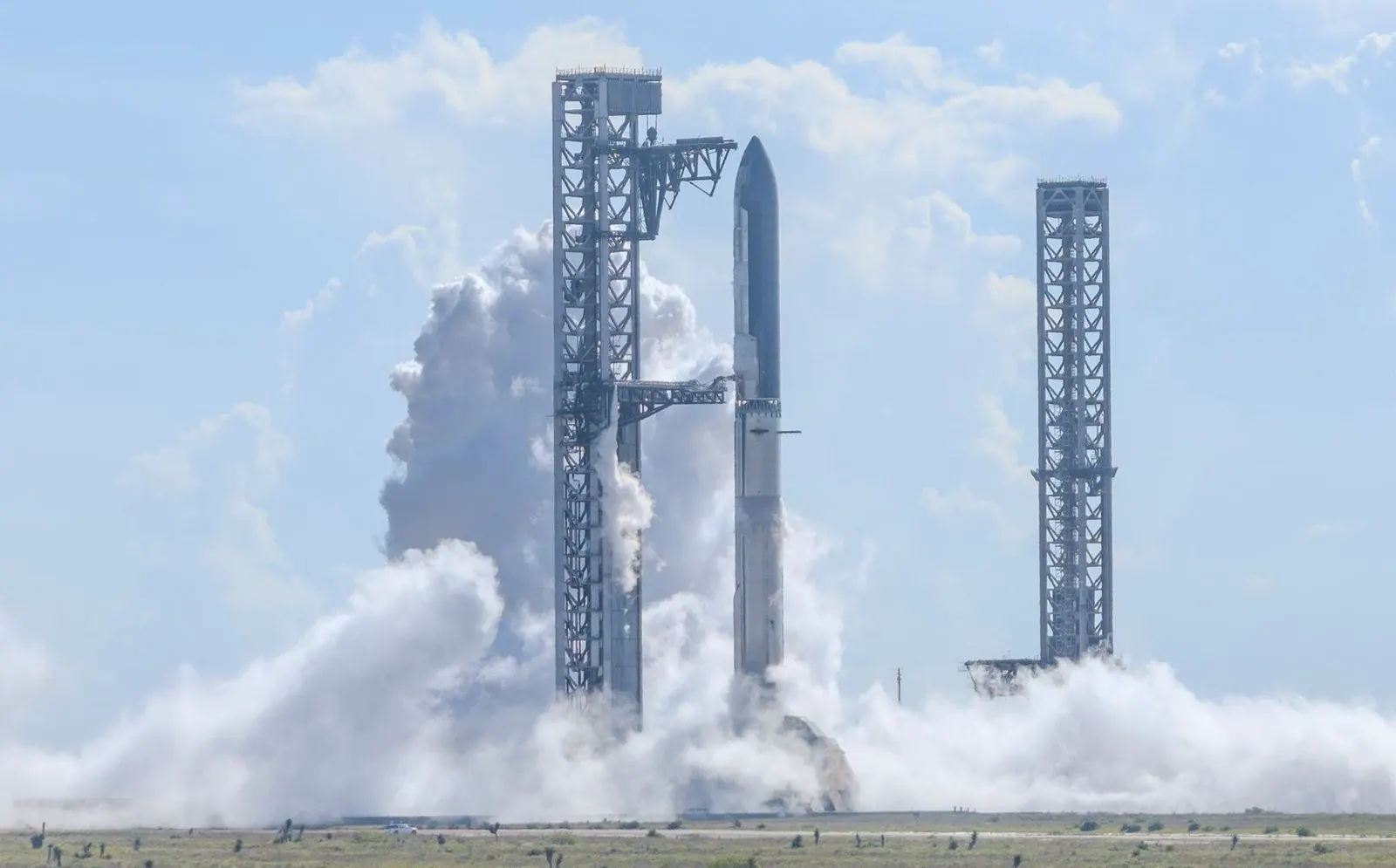
On September 28, SpaceX's Starship, the largest and most powerful rocket ever built, successfully reached Earth's orbit during a test flight. The rocket, designed by Elon Musk's SpaceX, achieved this feat approximately 25 minutes after launching from Texas. This marks a significant advancement for the company, which has been working on the project for over a decade. The successful test flight included the deployment of operational satellites for the first time.
The Starship rocket is intended for various purposes, including sending datacenters into space and conducting trips to the Moon and Mars. This test flight was the 14th attempt, with previous tests conducted on suborbital trajectories. SpaceX had to carefully evaluate and modify the rocket after each test. According to Jake Berkowitz, a SpaceX engineer, the company only proceeded with the orbital test when everything seemed to be in order.
The decision to push through with the orbital test was complex, as one of the upper-stage engines prematurely stopped during ascent. Despite initial concerns, the test continued, and the rocket successfully reached orbit. Reaching orbit requires significant force and resistance, making this achievement a notable one. The rocket aimed for a circular orbit approximately 275 km above the Earth's surface, requiring a speed of around 28,000 km/h.
During the test, the upper stage of the rocket deployed 26 new-generation Starlink satellites, which will enhance SpaceX's satellite internet constellation. The test was designed to last around 10 hours, with the rocket expected to complete six orbits around the Earth before landing in the Pacific. This successful test marks a new phase in the development of Starship, which includes attempts at refueling in orbit.
However, several technical challenges must be overcome before Starship can conduct commercial flights, deploy datacenters, or travel to the Moon or Mars. Elon Musk aims to make Starship fully reusable, which remains a significant hurdle. Despite these challenges, SpaceX continues to dominate the global launch market with its partially reusable Falcon rockets.
SpaceX's willingness to take risks has contributed to its success. The company is set to launch three more rockets in the same week, including one carrying astronauts to the International Space Station. The success of the Starship test flight is a significant milestone, but it also highlights the technical difficulties that lie ahead.
The development of Starship has been a long-term effort, with multiple test flights and setbacks. While the orbital test was successful, it is only one step towards achieving the company's ambitious goals. SpaceX must continue to address the technical challenges and demonstrate the rocket's capabilities before it can be used for commercial purposes.
Key points
- SpaceX's Starship successfully completes its first orbital flight, marking a significant milestone in its development.
- The test flight included the deployment of 26 new-generation Starlink satellites.
- The successful test paves the way for further development and potential commercial use of the Starship rocket.