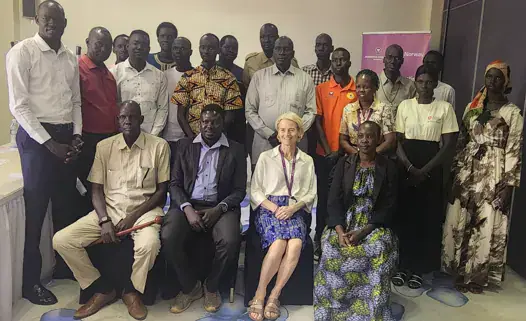
A five-day training programme for South Sudanese faith and community leaders commenced on Monday, November 9, 2026, in Juba City. The training, organized by religious leaders with support from the Norwegian Church Aid (NCA), aims to strengthen the role of religious and community leaders in combating gender-based violence (GBV). The programme brought together pastors, imams, and community leaders to address violence against women and girls.
Cathrine Seland, NCA's country director, emphasized the significant influence of religious and community leaders in their communities and their crucial role in changing attitudes towards gender-based violence. She noted that people experiencing difficulties often seek assistance from churches and mosques, making religious leaders important actors in addressing violence, particularly against women and girls.
Denis Elisha, a pastor at Rivers of Life Centre Ministries, said the training would help religious leaders use their positions to educate congregations about gender equality and discourage violence within families. He explained that the training is transformative and targets faith actors, religious leaders, and community leaders who are responsible for their local churches or mosques.
According to Elisha, pastors can help address domestic violence through counselling, sermons, and teachings that promote peaceful family relationships. He identified physical violence, including beatings within households, as one of the forms of abuse affecting communities. Elisha emphasized that religious leaders can help change attitudes through their teachings and challenge perceptions that women are inferior to men.
The training also seeks to promote the dignity and rights of women and girls by using religious teachings and scriptures. Seland said the organisation had developed a tool to help faith and community leaders understand how to promote peaceful coexistence and respect for human dignity. She expressed optimism that religious leaders can make a meaningful contribution to reducing violence in their communities.
Elisha warned that gender-based violence can have serious consequences for families, including psychological trauma, family breakdown, and separation of children from their parents. He called on South Sudanese to reject all forms of violence, saying the practice affects both women and men. The pastor emphasized that both genders are equal in the eyes of God.
The training programme aims to equip religious and community leaders with the knowledge and skills to address violence against women and girls. With the support of the Norwegian Church Aid, the programme seeks to promote peaceful coexistence and respect for human dignity in South Sudanese communities.
Key points
- Religious and community leaders in South Sudan are being trained to combat gender-based violence.
- The training programme aims to equip leaders with knowledge and skills to address violence against women and girls.
- The programme is organized by religious leaders with support from the Norwegian Church Aid.