On September 24, 2026, opposition leaders in South Sudan publicly challenged President Salva Kiir's recent caretaker appointments, questioning the decision to appoint officials from the dissolved government. Kornelio Kon Ngu, Chairperson of the National Alliance, expressed concerns that the appointed officials may not be capable of overseeing the country fairly during the electoral period. Kon emphasized the need for a more inclusive and neutral caretaker administration.
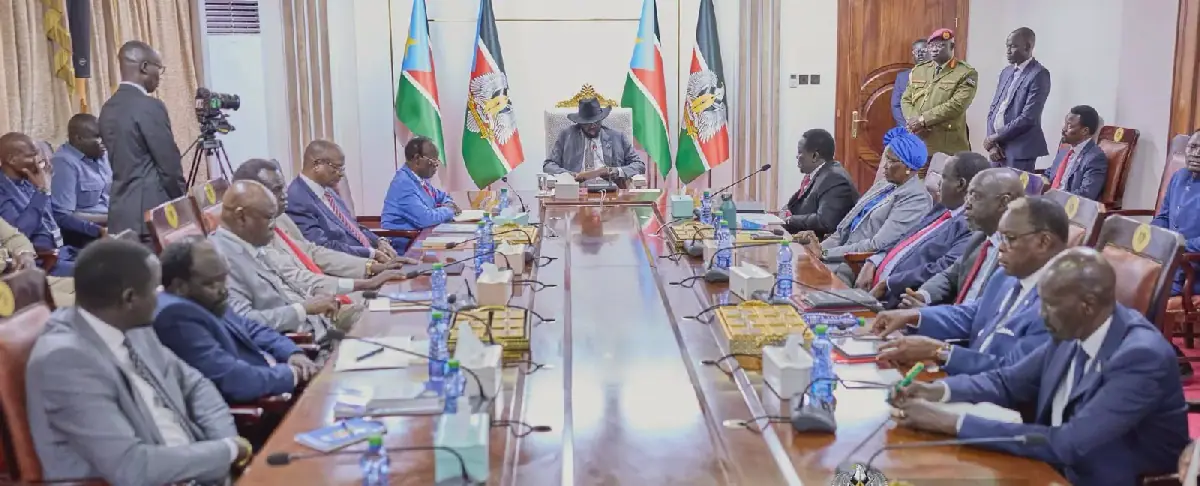
President Kiir dissolved the Transitional Government of National Unity on September 23, 2026, and appointed caretaker officials to run government affairs for three months ahead of elections. Kon Ngu argued that the appointments were made without proper consultation with other political parties, as previously agreed upon. He urged President Kiir to reconsider the appointments and include more capable and patriotic individuals.
Kon Ngu also defended the passage of the amended election law, stating that it was a national moral act aimed at providing the people of South Sudan with the opportunity to vote for their leaders. He clarified that the passage of the law should not be seen as a victory for the ruling Sudan People's Liberation Movement (SPLM). Kon emphasized the importance of reforms to ensure a fair electoral process.
Dr. Issa Muzamil Sebit Makelele, Chairperson of the National Patriotic Movement (NPM), also questioned the composition of the caretaker government. Muzamil noted that most of the appointed officials are members of the ruling SPLM, and no consultation was done with other registered political parties. He urged President Kiir to ensure that caretaker officials remain neutral and fair in exercising their duties.
Muzamil warned against the use of public resources for political campaigns, emphasizing that government resources should not be used to benefit the ruling party or individual political actors. He also raised concerns over the appointment of officials with records of corruption, stating that the caretaker government should comprise people capable of serving the country during the electoral period.
The opposition leaders' criticism highlights the challenges facing South Sudan as it prepares for elections. The country has a history of political tensions and conflicts, and the caretaker government's composition will play a crucial role in determining the fairness and legitimacy of the electoral process. President Kiir's administration has yet to respond to the opposition's concerns.
The situation underscores the need for inclusive and transparent decision-making processes in South Sudan's transition towards elections. The international community and civil society organizations have emphasized the importance of a fair and peaceful electoral process in the country. The caretaker government's performance will be closely monitored by various stakeholders.
Key points
- Opposition leaders challenge President Salva Kiir's caretaker appointments, citing lack of consultation and neutrality.
- Caretaker government's composition raises concerns about fairness and legitimacy of the electoral process.
- Opposition urges President Kiir to reconsider appointments and ensure inclusivity and neutrality.