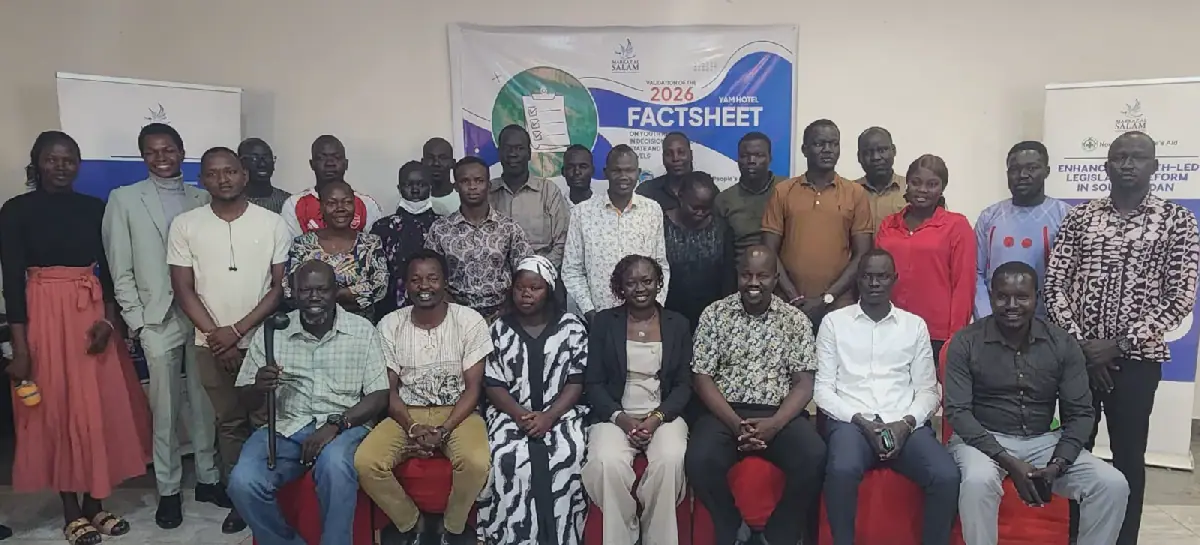
Youth-led organisations in South Sudan are calling for greater representation in government, citing underrepresentation in leadership and decision-making positions. According to Florence Agiba, executive director of Markaz Al-Salam, a recent assessment found little improvement in youth representation compared to last year. The assessment did not include members of parliament due to the country's current lack of legislature. Agiba noted that despite progress in some states, youth representation remains low.
The assessment found that some states, such as Unity State, have made progress in appointing young people to leadership positions. In Unity State, four young people were appointed as ministers. Central Equatoria State also recorded higher youth representation in last year's assessment. However, Agiba stated that overall, youth representation in leadership positions remains low. Markaz Al-Salam, with support from Norwegian People's Aid (NPA) and in collaboration with the National Youth Union, is preparing a simplified fact sheet to share the findings and support advocacy for increased youth participation.
Agiba urged young people to participate in the forthcoming elections and support candidates from their generation. She called for youth representation to reach at least 20%, saying young people should have a greater role in shaping the country's future. In the previous assessment, young people accounted for about 4.81% of parliamentarians, representing approximately 23 of the 550 members. Agiba encouraged young people to take up leadership roles and vote for candidates who share their interests.
Michael Gorjin Kuol, NPA's project manager, urged youth organisations to sustain advocacy efforts by engaging political parties and government institutions on the need for greater youth participation. He proposed a high-level dialogue involving young people, political parties, the Political Parties Council, and the National Elections Commission to discuss barriers to youth participation in leadership. Kuol also suggested that the assessment findings be simplified and disseminated through various media channels to ensure accessibility.
Counsel Izale Benjamin, popularly known as Yaba.com, identified limited awareness of the National Youth Policy as a factor preventing young people from demanding greater participation in decision-making. The policy provides for 20% youth representation at different levels of government, but many young people are unaware of the provision. Benjamin called for public awareness campaigns to educate young people about their rights and encourage them to participate in national development.
Benjamin urged young people to focus on nation-building, acquire vocational skills, and participate peacefully in politics rather than engage in communal conflicts. He emphasised the importance of youth organisations establishing mechanisms for regularly documenting and monitoring appointments of young people to government positions. This would help track progress and advocate for greater representation.
Youth organisations say greater representation in government is essential to ensuring young people contribute to decisions affecting South Sudan's future. The organisations are working to promote youth participation and advocate for policy changes to increase youth representation in leadership positions.
Key points
- Youth representation in leadership positions remains low in South Sudan, despite progress in some states.
- The National Youth Policy provides for 20% youth representation at different levels of government, but many young people are unaware of the provision.
- Youth organisations are advocating for greater representation in government and promoting youth participation in decision-making processes.
Reporting sources
- South Sudan youth groups call for greater representation · Radio Tamazuj