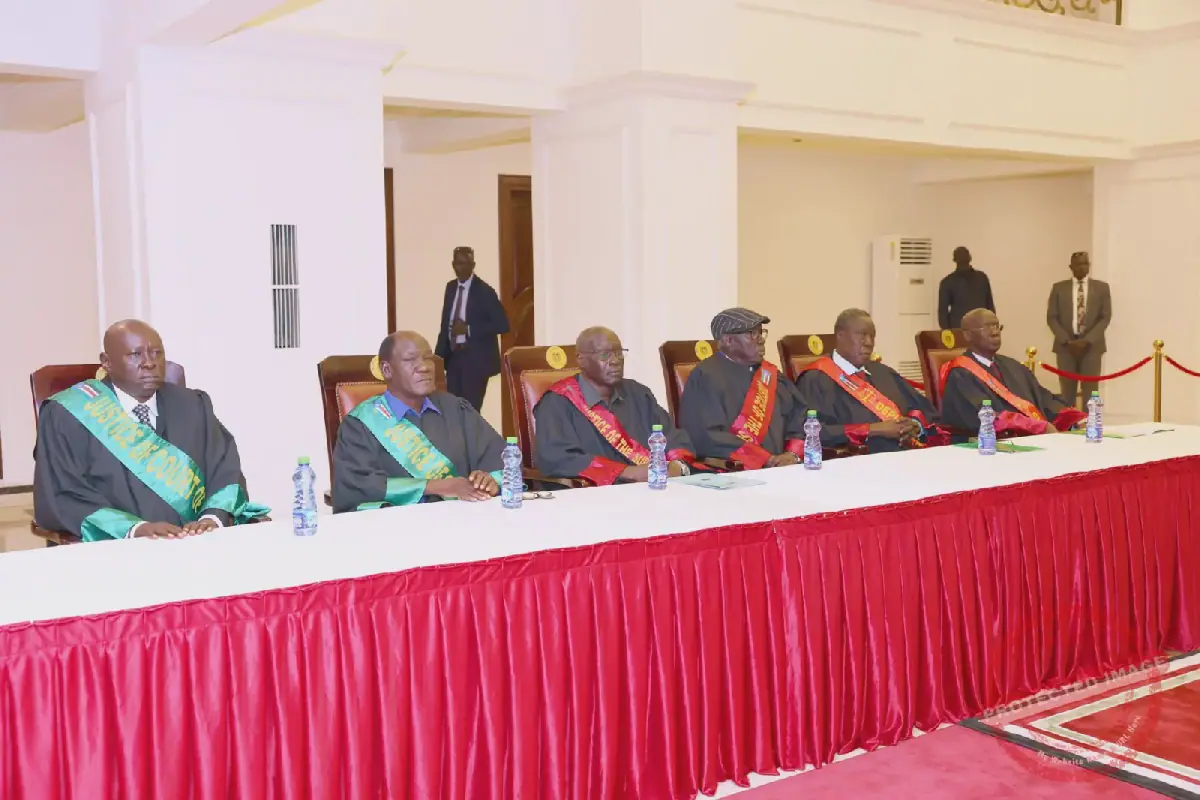
South Sudan's Supreme Court has made significant progress in disposing of cases, with 317 cases handled in the first 15 months of the Judiciary's new administration. Deputy Chief Justice Laku Tranquilo Nyombe announced this achievement during the launch of the country's first specialised Commercial Court in Juba. He attributed the success to the distribution of previously unassigned cases to judges and directives to lower courts to improve their case-handling processes.
The Judiciary has reactivated its quarterly judicial statistics system to monitor court performance and assess progress in disposing of cases. This move aims to improve judicial efficiency across the country. Despite this progress, Nyombe identified inadequate funding, a shortage of judges, and limited court infrastructure, particularly outside Juba, as major challenges facing the Judiciary. These challenges hinder the effective delivery of judicial services.
To address these challenges, the Judiciary's five-year strategic plan for 2025 to 2029 prioritises the construction of additional High Courts in states and administrative areas, as well as county courts. This expansion aims to bring judicial services closer to the population. The plan is expected to improve access to justice and enhance the overall efficiency of the judicial system.
Deputy Chief Justice Nyombe also appealed to the Governor of the Central Bank of South Sudan to address several months of outstanding salary payments for Judiciary employees. He stated that salary cheques had been pending at the Central Bank for several months, affecting employees across the Judiciary. This delay in salary payments creates an unconducive working environment and may impact the performance of judicial employees.
The Deputy Chief Justice warned that delayed salaries could affect the working environment and performance of staff at the Commercial Court, which was launched to handle commercial disputes. He emphasised that judicial and professional ethics prohibit judges and justice from engaging in commercial businesses. The Commercial Court aims to boost bank lending and improve loan recovery in South Sudan.
Despite these challenges, Nyombe reaffirmed the Judiciary's commitment to strengthening judicial independence, improving case management, and expanding access to justice across South Sudan. The launch of the Commercial Court is a significant step towards achieving these goals. The Judiciary will continue to work towards improving its efficiency and effectiveness in delivering justice to the people of South Sudan.
The judiciary's efforts to improve its performance and expand access to justice are crucial for the country's development. The Deputy Chief Justice's appeal to the Central Bank Governor highlights the need for cooperation between government institutions to address the challenges facing the Judiciary.
Key points
- The Supreme Court has disposed of 317 cases in 15 months.
- The Judiciary's five-year strategic plan prioritises the construction of additional High Courts and county courts.
- Deputy Chief Justice Nyombe appealed to the Central Bank Governor to address outstanding salary payments for Judiciary employees.