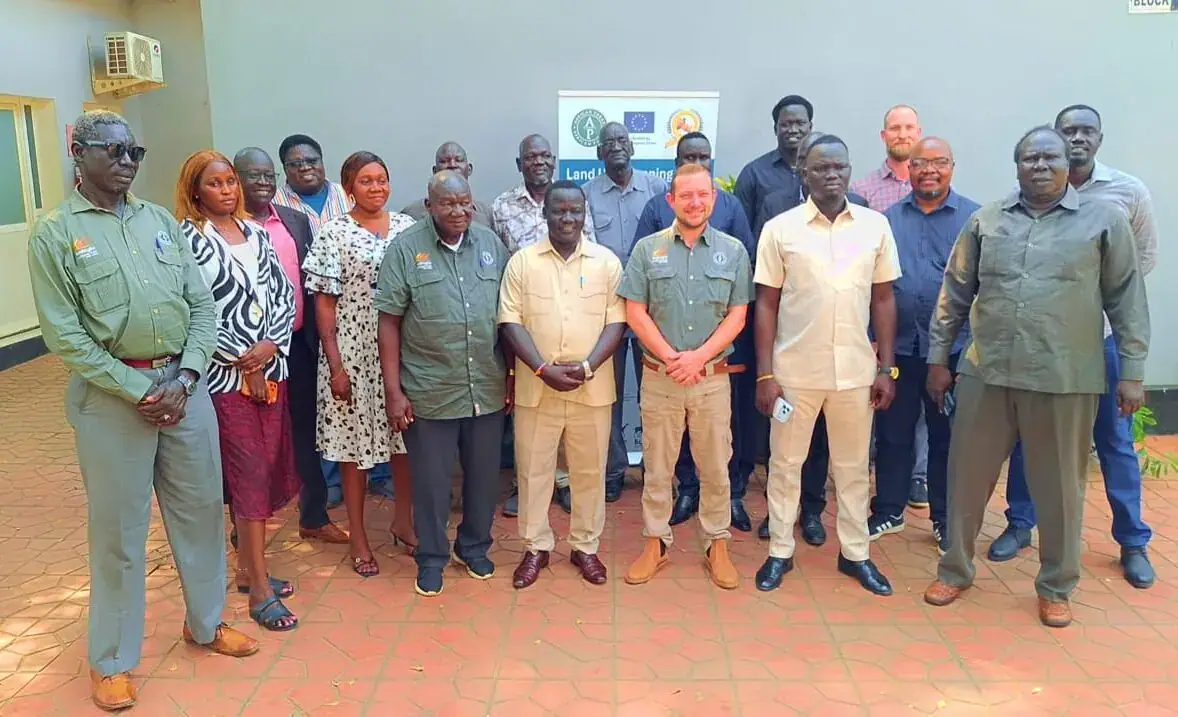
Stakeholders in South Sudan recently gathered to discuss ways to enhance the protection of conservation areas. The two-day External Technical Validation Workshop on Protected Area Demarcation, organised by the Ministry of Wildlife Conservation and Tourism, aimed to review proposed national guidelines for demarcating protected areas. The initiative seeks to address encroachment, reduce land-use conflicts, and strengthen long-term protection of South Sudan's wildlife and natural resources.
The workshop focused on three key areas: stakeholder engagement and institutional coordination, physical demarcation procedures, and mechanisms for handling community grievances and resolving disputes. Participants examined the proposed guidelines using government expertise, regional experiences, ecological evidence, and stakeholder perspectives to improve the framework. This approach is expected to promote a coordinated approach to protecting conservation boundaries while encouraging cooperation between government institutions, conservation partners, and local communities.
Assistant Director General for Administration at the Ministry of Wildlife, Lt. Gen. Martin Ring Malek, highlighted the importance of public awareness and community engagement in conservation efforts. He stated that these efforts would help people understand the importance of respecting conservation boundaries and discourage encroachment on national parks and other protected areas. This engagement had strengthened stakeholders' capacity to reach the wider public on conservation issues.
Joseph Kulang, Director of Research at the Ministry of Environment and Forestry, emphasised the need for joint efforts among institutions in promoting land conservation and protecting wildlife habitats. He urged members of the public to work with government institutions and conservation partners to prevent encroachment and safeguard protected areas. This would help consolidate conservation efforts and ensure the long-term protection of South Sudan's natural resources.
David Geng Kech, Coordinator of the Land Reform Unit at the Ministry of Land, Housing and Urban Development, noted that the workshop had strengthened coordination among institutions involved in land management and conservation. He added that the discussions had improved participants' understanding of land-use planning and approaches to engaging communities on responsible land use and wildlife protection. This coordination is crucial for effective conservation management.
The proposed guidance is expected to promote a coordinated approach to protecting conservation boundaries while encouraging cooperation between government institutions, conservation partners, and local communities. The initiative aims to address encroachment, reduce land-use conflicts, and strengthen long-term protection of South Sudan's wildlife and natural resources. African Parks supported the workshop, which brought together stakeholders to review the ministry's proposed national guidelines.
The discussions and proposed guidelines are a significant step towards enhancing conservation efforts in South Sudan. The workshop's outcomes are expected to improve conservation management and promote cooperation among stakeholders. Key aspects of the proposed guidelines include stakeholder engagement, physical demarcation procedures, and mechanisms for handling community grievances and resolving disputes.
Key points
- The workshop focused on stakeholder engagement, physical demarcation procedures, and mechanisms for handling community grievances.