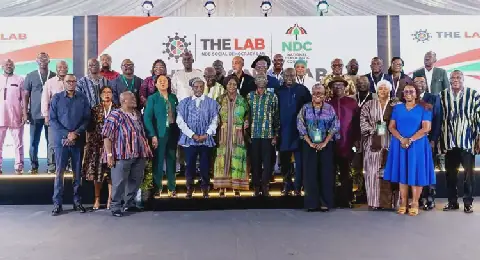
South Sudan's ruling Sudan People's Liberation Movement (SPLM) party has used an open queue voting system during its primaries in Duk County, where supporters lined up behind their preferred candidates instead of casting secret ballots. This system, also known as Mlolongo in Kenya and Bereka Mwana in Zimbabwe, was intended to make the voting process more transparent. However, it has raised concerns about privacy and the possibility of people being pressured to follow the crowd. One candidate was seen with only a handful of voters behind him, highlighting the potential drawbacks of this system.
The open-queue voting system was last used in Kenya during the infamous Kanu elections of 1988. It became unpopular when, in some cases, the candidate with the shortest queue was declared the winner. The SPLM received 848 nomination applications between October 5 and 9, including 133 gubernatorial aspirants, 23 chief administrator hopefuls, 417 MPs, 114 party-list candidates, and 161 women candidates. The party has moved forward with internal restructuring and candidate selection processes, including local primaries and committee-led vetting to discourage independent candidacies.
Before the SPLM preliminaries, the ruling party warned members against running as independent candidates if they lost. "No member of the SPLM is allowed to contest as an independent candidate," said Akol Paul Kordit, SPLM's secretary-general. Kordit said aspirants must sign loyalty pledges, respect internal election results, and support candidates selected by the party. This move is seen as an effort to maintain party unity and control over the electoral process.
Despite the SPLM's efforts to move forward with its internal processes, concerns remain about the overall preparedness for the elections. South Sudan is scheduled to hold elections on December 22, amid concerns over preparations for credible and inclusive polls. President Kiir has stated that the polls would be held "by all means," brushing aside concerns over logistical delays and visible gaps in preparations. The National Elections Commission (NEC) requires $250 million to successfully run the elections, but it has received only $27 million so far.
The NEC is yet to publish a comprehensive timetable for completing registration and other key stages before the December 22 polls. Voter registration has not begun, and there are insufficient funds to buy voter registration materials, ballot papers, and logistical arrangements for the December polls. The severe financial deficit has stalled civic education and logistical rollouts, adding to the concerns about the credibility of the elections.
Opposition figures have raised concerns about the continued detention of opposition leader Dr. Riek Machar and restrictions on political activities ahead of the elections. Since Machar's arrest, President Kiir has made several reshuffles in the Revitalised Transitional Government of National Unity, contrary to the power-sharing provisions of the 2018 agreement. The administration has purged Machar's wing of the Sudan People's Liberation Movement/Army-in-Opposition (SPLM/A-IO) from government and replaced it with members of Peace Building Minister Stephen Par Kuol's SPLM/A-IO splinter faction.
The UN Commission on Human Rights in South Sudan has expressed deep concern that renewed violence, political tensions, shrinking civic space, entrenched corruption, and persistent impunity continue to place civilians and the country's political transition at risk. The commission's Commissioner, Barney Afako, stated that South Sudanese have a right to vote, and that right must be protected by ensuring they can participate freely, compete fairly, and resolve any electoral disputes through credible adjudication.
Key points
- The SPLM party's use of an open queue voting system has raised concerns about privacy and pressure on voters.
- The National Elections Commission faces a severe financial deficit, having received only $27 million of the required $250 million.
- Opposition figures have raised concerns about the detention of opposition leader Dr. Riek Machar and restrictions on political activities ahead of the elections.