Professor Godfred A. Bokpin, an economist and finance lecturer at the University of Ghana Business School, has emphasised the need for Ghana to develop a clear national strategy to benefit from a potential partnership with the BRICS bloc. He believes such a partnership could create opportunities for Ghana to expand trade and attract investment. However, Prof. Bokpin stresses that the country's progress depends largely on its own policies and commitment to local enterprise.
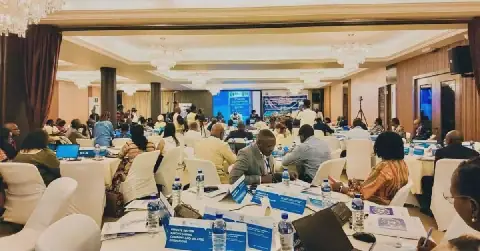
Prof. Bokpin made these remarks at a policy dialogue organised by Wisconsin International University in Accra. He urged the government to prioritise indigenous businesses, irrespective of their owners' political or religious affiliations. According to him, the global economic order is increasingly shifting towards Brazil, Russia, India, China, and South Africa (BRICS), which account for nearly 40 per cent of global gross domestic product (GDP).
The BRICS bloc's growing economic influence offers Ghana opportunities to deepen trade and attract investment. However, Prof. Bokpin warns that the country needs to position itself strategically to benefit from the changing global economic landscape. He notes that BRICS member countries are expected to account for an increasing share of the world's largest economies in the coming decades, with China projected to become the world's biggest economy by 2050.
Despite the potential benefits, Prof. Bokpin cautions against the expectation that joining international institutions or economic blocs would automatically transform the economy. He stresses that Ghana must take charge of its own development by strengthening indigenous businesses and implementing policies that would enable it to maximise the benefits of international economic partnerships.
The Chief Executive Officer of Dalex Finance, Mr Joe Jackson, also emphasises the need for Ghana to develop a clear economic strategy to maximise the benefits of engaging with BRICS. He warns that without a deliberate plan to protect and advance its national interests, Ghana risks missing out on potential economic gains. Mr Jackson notes that Ghana has joined several international organisations but needs to assess how effectively it has used those memberships to achieve its development objectives.
Mr Jackson observes that BRICS comprises major economic powers with considerable financial and commercial influence, making it essential for Ghana to approach any partnership with a well-defined strategy. He agrees with Prof. Bokpin that Ghana should not join the bloc simply to add another international association to its membership. Instead, the country should focus on using such partnerships to achieve its development objectives.
In conclusion, Prof. Bokpin and Mr Jackson stress that Ghana must be proactive in its approach to international partnerships. They emphasise the need for a clear national strategy that prioritises indigenous businesses and protects Ghana's national interests. By doing so, Ghana can maximise the benefits of its engagement with BRICS and other international economic blocs.
Key points
- Ghana needs a clear national strategy to benefit from a potential partnership with the BRICS bloc.
- The country's progress depends largely on its own policies and commitment to local enterprise.
- Ghana should prioritise indigenous businesses and protect its national interests in any international partnership.