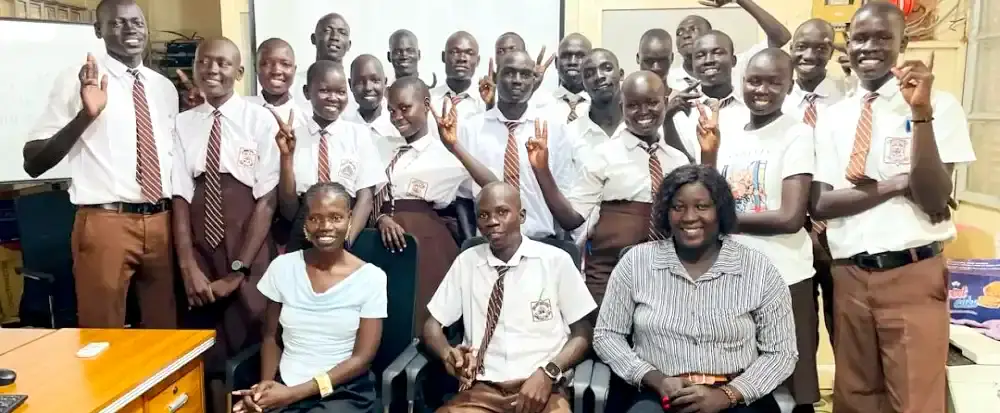
In a bid to equip young people with essential digital skills, the Media and Information Literacy (MIL) Centre in South Sudan has been making waves since its establishment in 2024. The centre, a collaboration between UNESCO, the Central Equatoria State Ministry of General Education and Instruction, and Juba Day Secondary School, has been providing students with hands-on experience with computers and the internet. For students like 19-year-old Gabriel Yugu, the centre has been a game-changer, offering his first opportunity to use a computer and learn basic digital skills.
Gabriel, a student at Juba Day secondary school, had never used a computer before visiting the MIL Centre. With no prior experience, he was both nervous and excited to start learning. The centre's trainers have been working with students like Gabriel to develop their digital literacy, enabling them to navigate the online world responsibly. This is particularly crucial in South Sudan, where access to computers and digital skills training is limited for many young people. The centre's efforts aim to bridge this gap and empower students with the skills they need to succeed in the digital age.
The MIL Centre has already made a significant impact, with an estimated 500 students, teachers, and community members benefiting from its activities since its inception. The centre's head teacher, George Kenyi, reports that learners from neighboring schools have also been participating in the centre's programs, including students from Supiri, Rajaf, Juba Christian Center, and others. The centre's reach extends beyond Juba Day Secondary School, providing opportunities for students from various schools to develop their digital skills.
For students like 18-year-old New Paulino Matip, the MIL Centre has been a confidence booster, enabling him to explore the potential of technology in addressing community challenges. Through initiatives like the Go-Girls ICT, a youth-led non-profit digital initiative, students have been developing concepts for digital applications to tackle community issues. The centre provides a platform for students to put their skills into practice, with Paulino and his friends developing a concept called Lifeline, aimed at addressing emergency situations like accidents.
The MIL Centre's impact extends beyond digital skills training, as it also focuses on media and information literacy. Students are learning to critically evaluate the information they encounter online, which is particularly important in South Sudan, where misinformation and disinformation can spread rapidly. By developing these skills, young people can better understand the role of media in shaping public understanding and participation.
The centre's collaboration with initiatives like Go-Girls ICT has enabled students to develop practical solutions to community challenges. The exhibition, where students presented their ideas to parents, demonstrates the centre's commitment to providing students with hands-on experience and real-world applications. By working with partners like UNESCO and the Central Equatoria State Ministry of General Education and Instruction, the centre is ensuring that students receive comprehensive training and support.
As the MIL Centre continues to make a positive impact on students' lives, it is clear that its work is only just beginning. With plans to expand its reach and provide more opportunities for young people to develop their digital skills, the centre is poised to play a critical role in shaping the future of South Sudan's digital landscape. By empowering young people with the skills they need to navigate the digital world responsibly, the MIL Centre is helping to build a brighter future for the country.
Key points
- The MIL Centre has provided digital skills training to an estimated 500 students, teachers, and community members since its establishment in 2024.