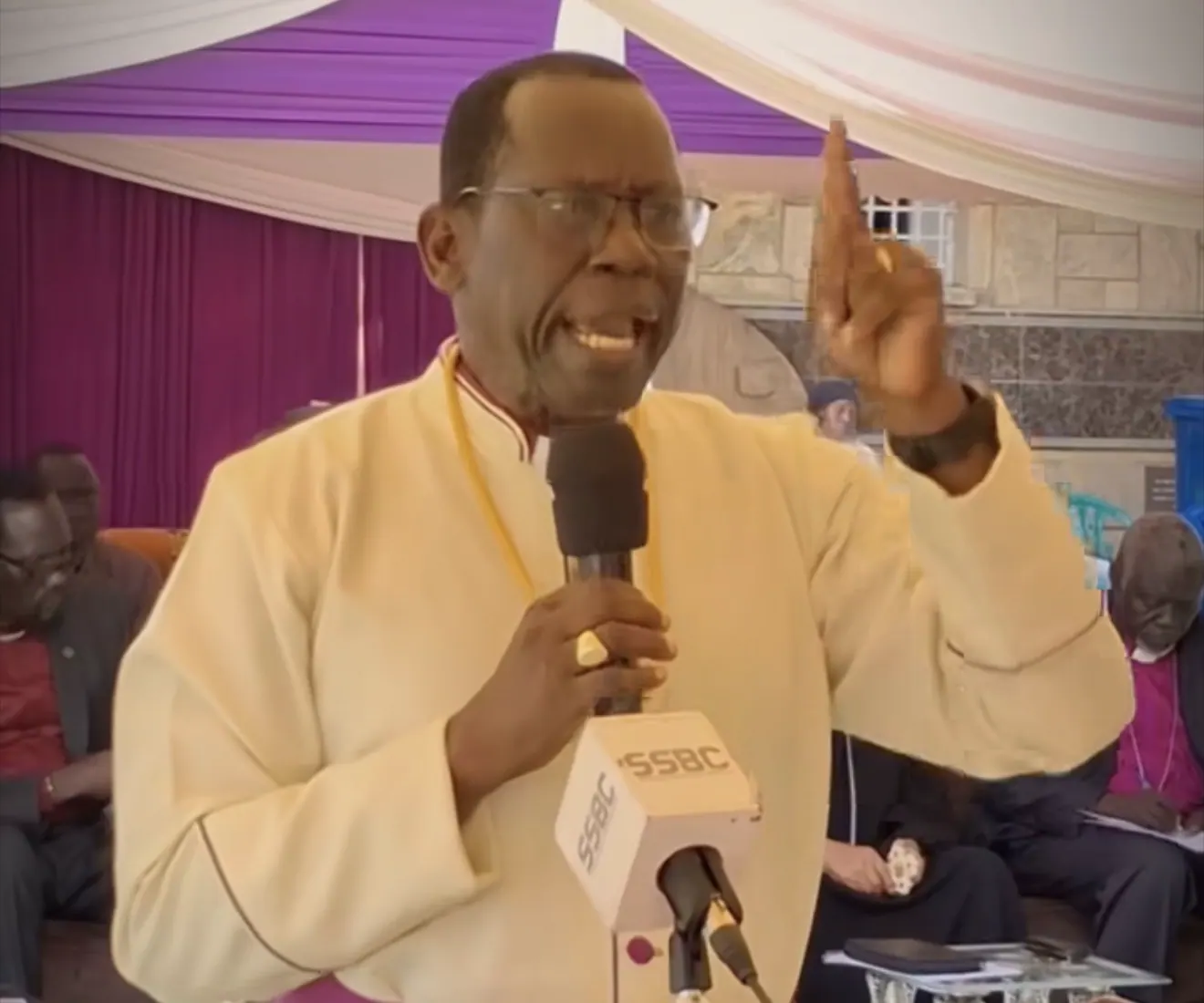
Hundreds of faith leaders, government officials, and citizens gathered at All Saints Cathedral in Juba for a national prayer and fasting event calling for peace, reconciliation, and an end to violence in South Sudan. The event, organized by the South Sudan Council of Churches (SSCC), brought together Christians from different denominations to pray for the country amid continued political tensions and insecurity. The gathering focused on peace, reconciliation, unity, and the need for South Sudan's leaders and citizens to resolve political differences through dialogue rather than violence.
The Chairperson of the ICC Equatoria Region of the South Sudan Council of Churches, Jackson Aripa George, appealed to political leaders to end violence, respect ceasefire commitments, and remain committed to the peace agreement. George urged leaders to prioritize dialogue and reconciliation, putting the interests of the country and its people above political differences. He also called on parties to the peace agreement to respect their commitments and create conditions for South Sudanese to live in peace and participate in political processes without fear of renewed violence.
The national prayers come as South Sudan faces renewed political and security challenges ahead of the country's planned general elections in December 2026. The 2018 Revitalized Agreement on the Resolution of the Conflict in South Sudan (R-ARCSS) remains the main framework for the country's transitional political arrangements. However, implementation of several provisions has been delayed, and political divisions among parties to the agreement have deepened.
The United Nations has reported that the detention of First Vice President Riek Machar and the subsequent fragmentation of the SPLM/A-IO have further weakened the power-sharing arrangements established under the peace agreement. The UN has also reported continued fighting in parts of the country since 2025. The peace process has faced delays in implementing key provisions, including security arrangements and other reforms linked to the transition.
The Reconstituted Joint Monitoring and Evaluation Commission has warned that the political and security impasse has weakened trust among parties and slowed implementation of the agreement. South Sudan is scheduled to hold general elections on December 22, 2026, following repeated extensions of the transitional period. The government has maintained that elections should proceed, while some opposition groups have raised concerns about whether the political, security, and institutional conditions are sufficient for a peaceful and credible electoral process.
A faction of the SPLM-IO loyal to Machar has questioned the election timetable, arguing that outstanding provisions of the peace agreement should be addressed before the vote. The election debate has coincided with discussions in Parliament over amendments to the electoral legal framework, further intensifying political disagreements over the country's transition. Against this backdrop, the Council of Churches has continued to call for dialogue, reconciliation, and peaceful resolution of political disputes.
The national prayer at All Saints Cathedral reflects the long-standing involvement of South Sudan's churches in peacebuilding and reconciliation efforts. The churches are calling on political leaders, armed groups, and citizens to reject violence and work toward a peaceful political transition. For many participants, the prayers were not only a religious observance but also a call for South Sudan's leaders to recommit themselves to peace, dialogue, and reconciliation as the country approaches another critical stage of its political transition.
Key points
- The national prayer and fasting event was organized by the South Sudan Council of Churches (SSCC) and brought together Christians from different denominations.
- The event aimed to promote peace, reconciliation, and an end to violence in South Sudan amid continued political tensions and insecurity.
- The country's planned general elections are scheduled for December 22, 2026, amid concerns about the political, security, and institutional conditions.