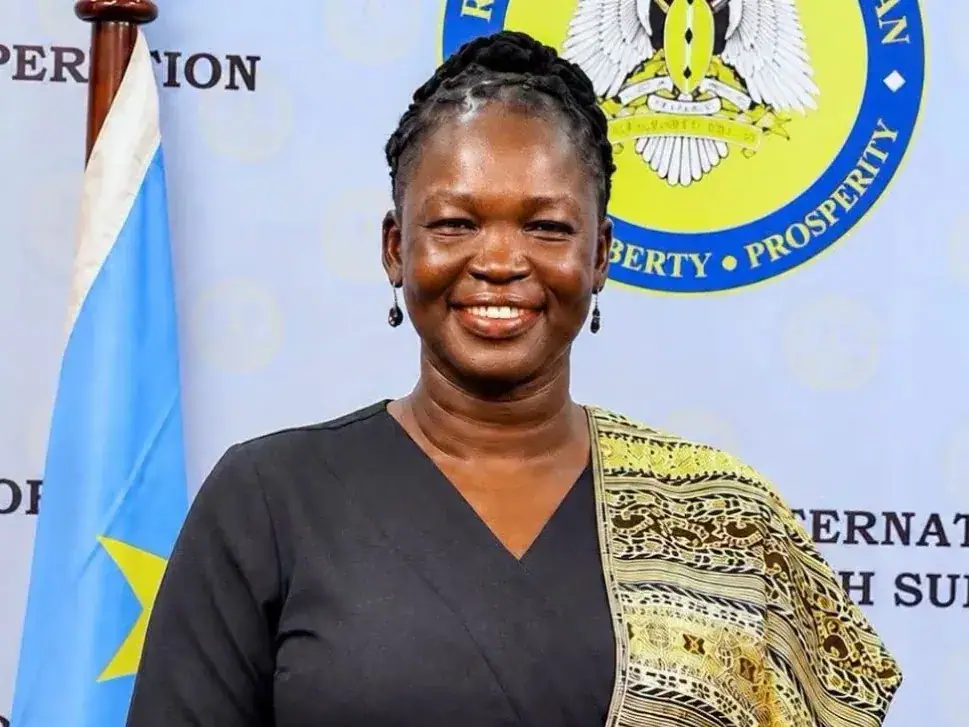
The Government of South Sudan has renewed its call for respect for existing agreements with Sudan, protection of civilians, and peaceful resolution of outstanding issues in the disputed Abyei region. This comes amid mounting humanitarian pressures, renewed security concerns, and disagreements over Abyei's participation in South Sudan's forthcoming elections. The government's position was reiterated by Ministry spokesperson Apuk Mayen during the Ministry of Foreign Affairs and International Cooperation's weekly media briefing.
Apuk Mayen emphasized that South Sudan remains committed to resolving outstanding issues through established bilateral and international mechanisms. She cautioned against unilateral actions that could heighten tensions, stating that both governments have commitments to honour. Mayen stressed that outstanding issues between the two countries must be addressed through dialogue, mutual respect, and established mechanisms.
The Abyei region featured prominently in a November 5 briefing by the UN Secretary-General's Special Envoy for the Horn of Africa, Guang Cong, to the United Nations Security Council. The briefing addressed the unresolved status of Abyei, its participation in South Sudan's forthcoming elections, security challenges, and the humanitarian situation in the area. Sudan has objected to Abyei's inclusion in South Sudan's electoral constituencies, while South Sudan maintains that the rights and interests of the nine Ngok Dinka chiefdoms must be respected pending a final settlement of the territory's status.
The government remains firm that the rights and interests of the affected communities must be safeguarded as diplomatic efforts towards a lasting settlement continue. Mayen said the question of Abyei remains an important outstanding issue between South Sudan and Sudan. The rights and interests of the nine Ngok Dinka chiefdoms must be respected pending a final resolution of the status of the area.
Security concerns have intensified following the October 19 attacks on Amiet Market, which were raised during the UN briefing. The Special Envoy called for an independent investigation into the attacks, respect for Abyei's demilitarised status, and measures to protect civilians. The humanitarian situation remains pressing, with over 50,000 returnees, refugees, and asylum seekers having crossed into South Sudan through Abyei.
Mayen stressed that civilian protection must remain central to all diplomatic and security efforts concerning the territory. She said that beyond the political disagreements, the protection of human life must remain a priority. Civilians should not bear the consequences of unresolved political disputes. The government supports efforts to ensure accountability, maintain security, and protect vulnerable communities.
Diplomatic efforts are expected to gain momentum as the Joint Political and Security Mechanism is scheduled to convene from November 8 to 10. The United Nations Security Council is also expected to consider the mandate of the United Nations Interim Security Force for Abyei (UNISFA), which expires on November 15. The government continues to engage with the United Nations on South Sudan's political transition, humanitarian needs, and preparations for forthcoming elections.
Key points
- The government of South Sudan calls for respect for existing agreements with Sudan and protection of civilians in the disputed Abyei region.
- The UN Secretary-General's Special Envoy for the Horn of Africa, Guang Cong, addressed the unresolved status of Abyei and security challenges in the region.
- Diplomatic efforts are expected to intensify as the Joint Political and Security Mechanism convenes and the UN Security Council considers the mandate of UNISFA.