The government of South Sudan has taken proactive measures to enhance its preparedness for a potential Bundibugyo virus disease (BVD) outbreak. This move comes in response to the declaration of a BVD outbreak in neighboring Democratic Republic of the Congo on May 15, 2026. To assess its readiness, South Sudan conducted four successive national readiness self-assessments in 2026 using a World Health Organization (WHO) tool.
The self-assessments revealed a significant improvement in the country's readiness score, which increased from 29% in May 2026 to 72.5% in October 2026. The assessments identified gaps in preparedness, particularly in surveillance, screening, isolation, and referral. These findings informed efforts to improve the country's response to a potential outbreak. A sub-national risk assessment was also conducted to identify high-risk counties.
The sub-national risk assessment identified 15 high-risk counties, prioritizing areas based on proximity to affected regions in the Democratic Republic of the Congo, population movements, border crossings, surveillance gaps, and local vulnerabilities. The WHO African Region's artificial intelligence-enabled Preparedness Data Exchange (PDX) supported this analysis. The data exchange integrates preparedness and risk data to inform early, evidence-based decisions across the region.
In June 2026, South Sudan conducted a scenario-based table-top simulation exercise to test its BVD preparedness and readiness plan. The exercise involved 50 national public health institute workers, supported by 20 national and international partner agencies. The simulation aimed to assess the completeness and comprehensiveness of the country's preparedness plan.
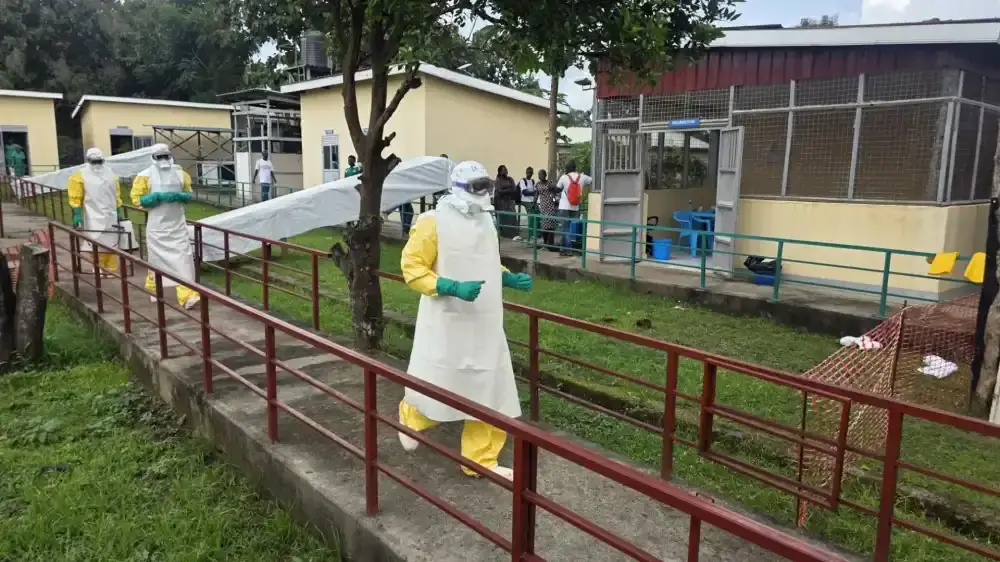
Health authorities also conducted drills at newly established isolation facilities and the National Public Health Laboratories between July and September. A specific infection prevention and control drill was organized to improve the skills of national rapid response team members and their implementing partners. These drills focused on the use of personal protective equipment, chlorine preparation, and disinfection of potentially infectious materials.
A full-scale simulation exercise was conducted from October 19 to 24, 2026, to test South Sudan's emergency response systems during a potential BVD outbreak. The exercise brought together 93 participants from the Ministry of Health, government institutions, WHO, United Nations agencies, and implementing partners. The simulation allowed teams to assess the functional status of response areas and their coordination.
According to Honourable Dak Duop Bichiok, Caretaker National Minister of Health of South Sudan, the simulation exercise helped identify strengths, best practices, and gaps, and define priorities to improve national capabilities. With support from WHO, the Ministry of Health activated its Public Health Emergency Operations Centre (PHEOC) to coordinate preparedness activities and bring together response teams and partners.
Key points
- South Sudan's readiness score increased from 29% to 72.5% between May and October 2026.
- The country identified 15 high-risk counties through a sub-national risk assessment.
- A full-scale simulation exercise was conducted to test emergency response systems during a potential BVD outbreak.