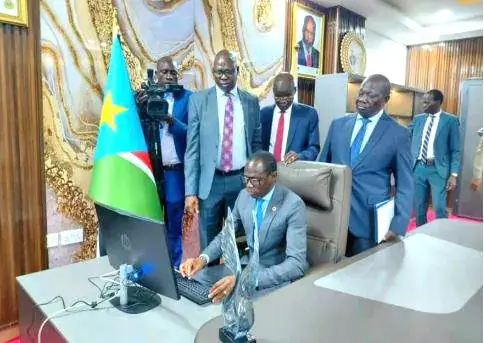
The Ministry of Finance and Planning and the Central Bank of South Sudan are preparing to launch the Real-Time Gross Settlement (RTGS) system. This marks a significant step towards modernising the country's financial transactions and replacing manual banking processes with digital payments. The RTGS system will enable government institutions and financial entities to process payments electronically. Transactions will be settled directly between banks in real time, improving efficiency, speed, transparency, and security in financial transactions.
As part of the transition to the RTGS system, physical cheques will be discontinued and replaced by electronic payment transactions. This change aims to reduce paperwork and reliance on traditional cheque-based banking. The initiative is being driven by key officials, including Malual Tap Dieu, First Undersecretary at the Ministry of Finance and Planning. He is working closely with the Central Bank to advance the integration process and ensure a smooth transition to digital banking.
Malual Tap Dieu described the transformation as a collective responsibility, emphasising the need for a hands-on approach and a forward-thinking mindset. The RTGS system is expected to have a positive impact on the country's economy. It will improve the efficiency and speed of financial transactions, reducing the risk of errors and increasing transparency. The system will also enhance security in financial transactions, reducing the risk of fraud and other financial crimes.
David Akum Sabaker, Director of the National Payment Systems Department at the Central Bank, is overseeing the initiative. He expressed optimism about successfully completing the integration process. Sabaker noted that most countries around the world have successfully transitioned to digital financial systems. He added that South Sudan is taking an important step towards embracing modern banking and digital financial services.
The launch of the RTGS system is a significant milestone in South Sudan's efforts to modernise its financial sector. The system will provide a secure and efficient platform for financial transactions. It will also improve the business environment, making it easier for companies to operate and for individuals to access financial services. The RTGS system will help to promote economic growth and development in the country.
The Ministry of Finance and Planning and the Central Bank are working together to ensure a smooth transition to the RTGS system. They are providing support and guidance to financial institutions and other stakeholders. The authorities are also working to raise awareness about the benefits of the RTGS system and the changes it will bring to the financial sector.
The introduction of the RTGS system is expected to have a positive impact on South Sudan's economy. It will improve the efficiency and speed of financial transactions, reducing the risk of errors and increasing transparency. The system will also enhance security in financial transactions, reducing the risk of fraud and other financial crimes.
Key points
- The RTGS system will improve efficiency, speed, transparency, and security in financial transactions.
- Physical cheques will be discontinued and replaced by electronic payment transactions.
- The launch of the RTGS system marks a significant step towards modernising South Sudan's financial transactions.
Reporting sources
- ECONOMY: Finance Ministry, Central Bank advance digital banking · No.1 Citizens