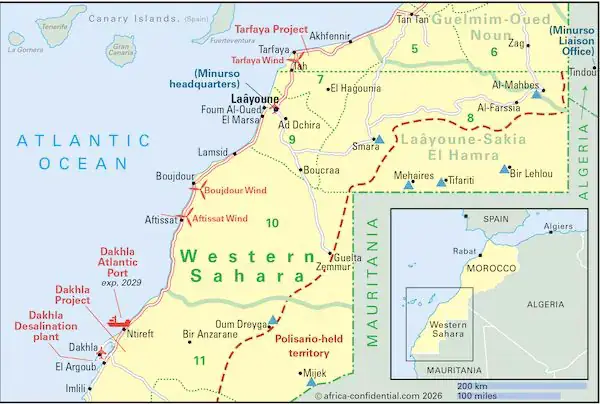
The United Nations Mission for the Referendum in Western Sahara (Minurso) has ended its 35-year peacekeeping operation in the region after a US-Russian veto collision in New York. The mission's mandate lapsed on October 31, following Russia's veto of a US text that would have restructured Minurso around Morocco's autonomy plan. This development has handed Morocco a strategic prize, with Rabat emerging as the winner and Algiers left exposed.
The Polisario Front and Algeria had defended the referendum framework since 1991, but the mission's exit has paved the way for Morocco to assert its control over Western Sahara. King Mohammed VI has ordered the Interior Ministry to speed up the UN's exit, while promising that Morocco's ceasefire commitment would outlast the blue helmets. This move is seen as a significant victory for Morocco, which has long claimed sovereignty over the disputed territory.
The UN peacekeeping mission was established in 1991 to oversee a ceasefire between Morocco and the Polisario Front, which had been fighting for independence in Western Sahara. The mission's mandate was to facilitate a referendum on the territory's future, but it has been repeatedly delayed due to disagreements between Morocco and the Polisario Front. The US-Russian veto has effectively ended the referendum framework, leaving the future of Western Sahara uncertain.
Algeria, a long-time ally of the Polisario Front, had opposed Morocco's autonomy plan, seeing it as a threat to the territory's independence. Russia's veto of the US text was seen as a favour to Algeria, but it ultimately had the opposite effect. The exit of the UN mission has left Algeria exposed, with limited options to influence the situation in Western Sahara.
Morocco's autonomy plan for Western Sahara has been widely seen as a way to consolidate its control over the territory. The plan, which was first proposed in 2007, offers a degree of autonomy to Western Sahara while maintaining Moroccan sovereignty. The Polisario Front and Algeria have rejected the plan, arguing that it does not go far enough to address the territory's independence aspirations.
The UN exit from Western Sahara has significant implications for the region, with Morocco emerging as the dominant player. The situation remains uncertain, with the future of Western Sahara and the rights of its people still unclear. The international community has called for a peaceful resolution to the conflict, but it remains to be seen how Morocco will manage the territory and address the concerns of the Polisario Front and Algeria.
The end of the UN peacekeeping mission in Western Sahara marks a significant shift in the region's dynamics, with Morocco now in a position to assert its control over the territory. The situation will continue to be closely watched by the international community, with many hoping for a peaceful and sustainable resolution to the conflict.
Key points
- Morocco gains strategic control over Western Sahara after UN exit
- Algeria left exposed after Russia's veto of US text
- Future of Western Sahara and its people remains uncertain
Reporting sources
- UN exit from Western Sahara hands Morocco a strategic prize · Africa Confidential