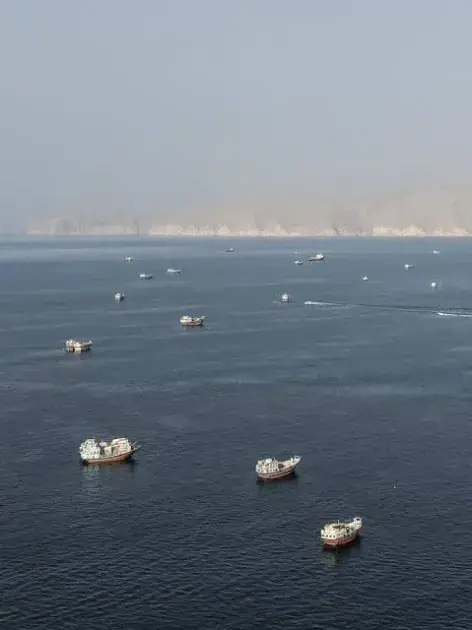
South Korea's defence ministry has announced plans to expand its Cheonghae anti-piracy unit to include a destroyer, P-8 aircraft, and an explosive ordnance disposal (EOD) team near the Strait of Hormuz. The move aims to protect commercial shipping in the strategic waterway, a key conduit for roughly one-fifth of global oil supplies. The expanded deployment will also comprise unmanned surface and underwater vessels, and remotely operated vehicles for underwater work.
The Cheonghae unit's current remit is limited to operating in the Gulf of Aden, but the defence ministry's announcement marks a significant expansion of its operations. According to Yonhap News Agency, the unit's mandate will be extended to cover the Strait of Hormuz, with the goal of keeping the waterway open for commercial traffic. The defence ministry's decision comes amid growing concerns about the security dynamics in the region.
A defence ministry official, speaking anonymously, emphasized that the reinforcement is intended solely to protect South Korean citizens and the nation's economic interests. The official added that operations will be limited to open waters south of Oman, with patrol aircraft prohibited from targeting or monitoring Iranian territory or the interior of the strait. This clarification comes after Iran warned Seoul against any deployment that could affect the security dynamics of the strait.
The extension of the Cheonghae unit's mandate will need approval from South Korea's parliament before it can be implemented. President Lee Jae Myung reiterated in September that South Korea will not deploy troops in a manner that could lead to direct military intervention, emphasizing a policy of non-involvement in the regional conflict. The president's comments were seen as an effort to reassure Iran and other regional players about South Korea's intentions.
The expanded deployment will include a range of assets, including a destroyer, a P-8 maritime patrol aircraft, and an EOD team. The EOD team will be equipped to handle explosive ordnance and other threats to commercial shipping. The unmanned surface and underwater vessels, and remotely operated vehicles, will provide additional capabilities for surveillance and inspection.
South Korea's decision to expand its military presence in the region comes as the country seeks to balance its economic interests with its security commitments. The Strait of Hormuz is a critical waterway for global oil supplies, and South Korea's economy is heavily reliant on imports of oil and other energy resources. By deploying its Cheonghae unit to the region, South Korea aims to protect its economic interests while avoiding entanglement in regional conflicts.
The international community has been watching South Korea's moves closely, as the country seeks to navigate a complex web of alliances and rivalries in the region. With its expanded deployment to the Strait of Hormuz, South Korea aims to demonstrate its commitment to regional security while maintaining its policy of non-involvement in the regional conflict. Key points include:
Key points
- South Korea expands Cheonghae anti-piracy unit to protect commercial shipping near Strait of Hormuz
- Deployment includes destroyer, P-8 aircraft, and EOD team to operate in open waters south of Oman
- Move aims to protect South Korean citizens and economic interests while avoiding entanglement in regional conflicts