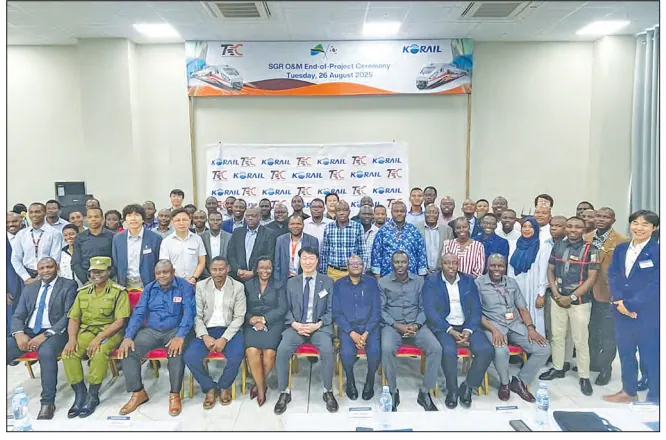
Tanzania is undergoing a historic overhaul of its national transportation and trade architecture through a bilateral alliance with South Korea, led by Korea Railroad Corporation (KORAIL). This partnership aims to modernize and make the Tanzania Railways Corporation (TRC) technically self-reliant. The alliance focuses on the Central Corridor Standard Gauge Railway (SGR) project, linking the Indian Ocean coast to the Great Lakes Region.
The SGR project, launched in July 2026, has introduced a precision-engineered operational framework, increasing domestic and cross-border trade efficiency. KORAIL, leading an international consortium, is deploying high-capacity Electric Multiple Unit (EMU) locomotives and electric freight operations. The new electric cargo trains can carry up to 10,000 tons of freight, equivalent to removing 500 heavy cargo trucks from the road network.
The South Korea-backed operational system has boosted transit traffic through Tanzanian lake ports to neighboring states, including Burundi, the Democratic Republic of Congo (DRC), and Zambia. The seamless rail connection addresses growing trade demands of the DRC, the largest regional importer of Tanzanian food products and construction materials. This has drastically slashed regional logistics costs and bolstered market competitiveness.
Within the first six months of initial service, the SGR network safely transported 1.17 million passengers and generated over 30bn/- in revenue. The partnership has delivered immediate, historic milestones, including an on-time performance rate exceeding 85 percent. This has enabled TRC to break a multi-year chronic deficit structure and achieve complete financial independence from government subsidies for the first time in 13 years.
South Korea's engagement in Tanzania focuses on technology transfer and genuine institutional independence. KORAIL utilizes the same Electric Multiple Unit (EMU) train configurations deployed by TRC, creating an ideal framework for transferring operational protocols and maintenance methodologies. Korean experts have drafted and established TRC's core internal regulations, general operating rules, and sophisticated maintenance manuals.
The partnership includes an aggressive workforce development strategy for TRC, with intensive training programs executed in South Korea from 2022 to 2024. These programs provided specialized education across critical domain areas, including railway administration, financial auditing, and advanced locomotive engineering. Korean railway authorities have also established academic exchange partnerships with leading South Korean universities.
To secure long-term sustainability, the partnership leverages South Korean government financing mechanisms, including Economic Development Co-operation Fund (EDCF) loans and grant-based Official Development Assistance (ODA). The cooperation aims to establish a state-of-the-art facility and guarantee Tanzania's total rail sovereignty.
Key points
- South Korea and Tanzania have structured a bilateral alliance to drive infrastructure autonomy.
- The partnership focuses on the Central Corridor Standard Gauge Railway (SGR) project.
- The cooperation includes technology transfer, workforce development, and financial mechanisms for long-term sustainability.