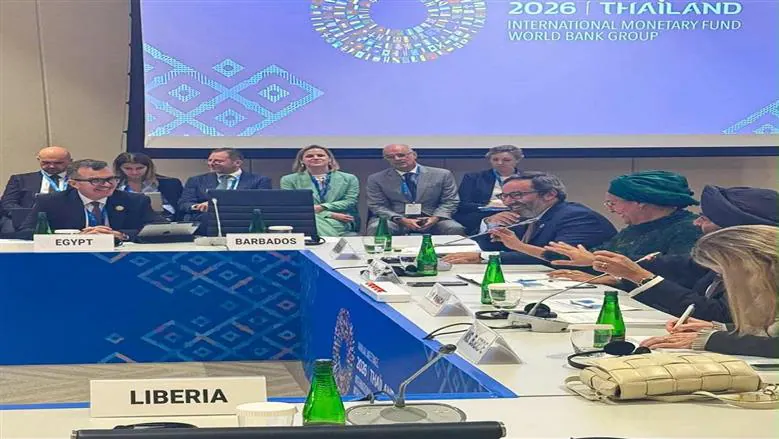
Egypt's Planning Minister, Dr. Ahmed Rustom, and Foreign Minister, Dr. Bader Abd al-Atti, recently participated in a high-level ministerial meeting on food security and vital sea routes, organized by the World Bank and the United Nations Office for Project Services (UNOPS) in Bangkok, Thailand. The meeting brought together leaders from governments, businesses, and international institutions to discuss the current state of the global economy amidst rising geopolitical tensions.
Minister Rustom expressed gratitude to the World Bank and UNOPS for organizing the event, which he believes is crucial given the current global situation. He emphasized that the ongoing geopolitical tensions and disturbances in vital sea routes necessitate urgent and coordinated international action to protect emerging economies that are more vulnerable to these crises.
The minister highlighted that disruptions in supply chains due to tensions in sea routes, particularly the Strait of Hormuz, affect prices in various countries. He noted that the continuous increase in energy prices negatively impacts import bills, and the rising costs of transportation and logistics further exacerbate the issue.
Minister Rustom called for non-traditional solutions to address the crisis, including the establishment of a specialized commodity exchange to manage current risks. He also suggested sharing risks to insure shipping operations for food commodities in countries most affected by the crisis and helping emerging economies absorb financial shocks resulting from fluctuations in basic commodity prices.
Regarding Egypt's economy, Minister Rustom reported that despite regional and geopolitical shocks, the economy maintained its growth momentum, achieving a 5.1% growth rate in the past fiscal year, surpassing the average growth rate of the previous five years. He expressed optimism about the current fiscal year's prospects, citing improvements in the external situation, including increased foreign exchange reserves and higher foreign assets.
The minister attributed the improvement in Egypt's external situation to a notable increase in foreign exchange sources, particularly from remittances by Egyptian expatriates, tourism revenues, and direct foreign investment. He emphasized that Egypt is pursuing a policy of fiscal discipline, which underscores the government's efforts to enhance fiscal sustainability and improve the economy's resilience to challenges.
Minister Rustom also mentioned that the government is taking measures to secure strategic energy needs and mitigate the impact of global price fluctuations. He highlighted the state's commitment to providing a stable environment for foreign investors, particularly in the oil and gas sector, and noted that efforts are underway to address inflation rates and achieve the targets set by the Central Bank.
Key points
- Egypt's economy achieved 5.1% growth in the past fiscal year.
- The government is taking measures to secure strategic energy needs and mitigate the impact of global price fluctuations.
- Egypt is pursuing a policy of fiscal discipline to enhance fiscal sustainability and improve the economy's resilience to challenges.