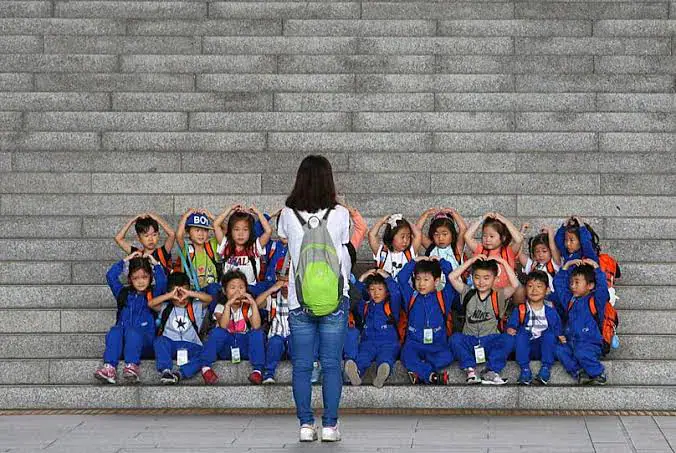
South Korea is facing a significant decline in elementary school enrollment, with the number of new students expected to drop below 300,000. According to data from the Korean Statistical Information Service and the Korea Institute for Educational Development, the number of children born in 2020 who will enter elementary school in 2027 is projected to be around 300,000. This marks a substantial decrease from 400,000 just three years prior.
The decline in birth rates is cited as the main reason for the decrease in enrollment. In 2020, South Korea recorded 272,337 births, a 10% decrease from the previous year. This trend is expected to continue, with projections indicating that the number of new elementary school students will continue to decline. The country's birth rate has been steadily decreasing, leading to concerns about the impact on the education system.
The current enrollment numbers are already at a historic low. In 2022, 301,442 students entered elementary school, the lowest number since records began in 1964. This represents a significant drop from 1968, when over 1.05 million students entered elementary school. The decline in enrollment is expected to have far-reaching consequences, including the potential closure of schools, particularly in rural areas.
The decrease in enrollment is also expected to exacerbate existing educational inequalities. As schools in rural areas face declining enrollment, they may be forced to close, leaving students with limited educational options. This could widen the gap in educational opportunities between urban and rural areas. The government will need to address these challenges to ensure equal access to quality education for all students.
Despite the projected decline in enrollment, experts predict that the numbers will remain above 200,000 until 2030. This is due to a slight improvement in birth rates, with 238,317 births recorded in 2024 and 254,341 in 2025. However, the overall trend indicates a continued decline in enrollment, which will require the education system to adapt to changing demographics.
The decline in elementary school enrollment is a pressing issue in South Korea, with significant implications for the education system and society as a whole. As the country grapples with an aging population and declining birth rates, it will need to find innovative solutions to address the challenges facing its education system. This may involve rethinking the way schools are organized and funded.
The government will need to consider the long-term consequences of declining enrollment and develop strategies to mitigate its impact. This may involve investing in programs that support rural schools, promoting equal access to education, and developing new models for education delivery. By addressing these challenges, South Korea can work towards ensuring that all students have access to quality education, regardless of their location or background.
Key points
- South Korea's elementary school enrollment is expected to drop below 300,000 new students, a historic low, due to declining birth rates.