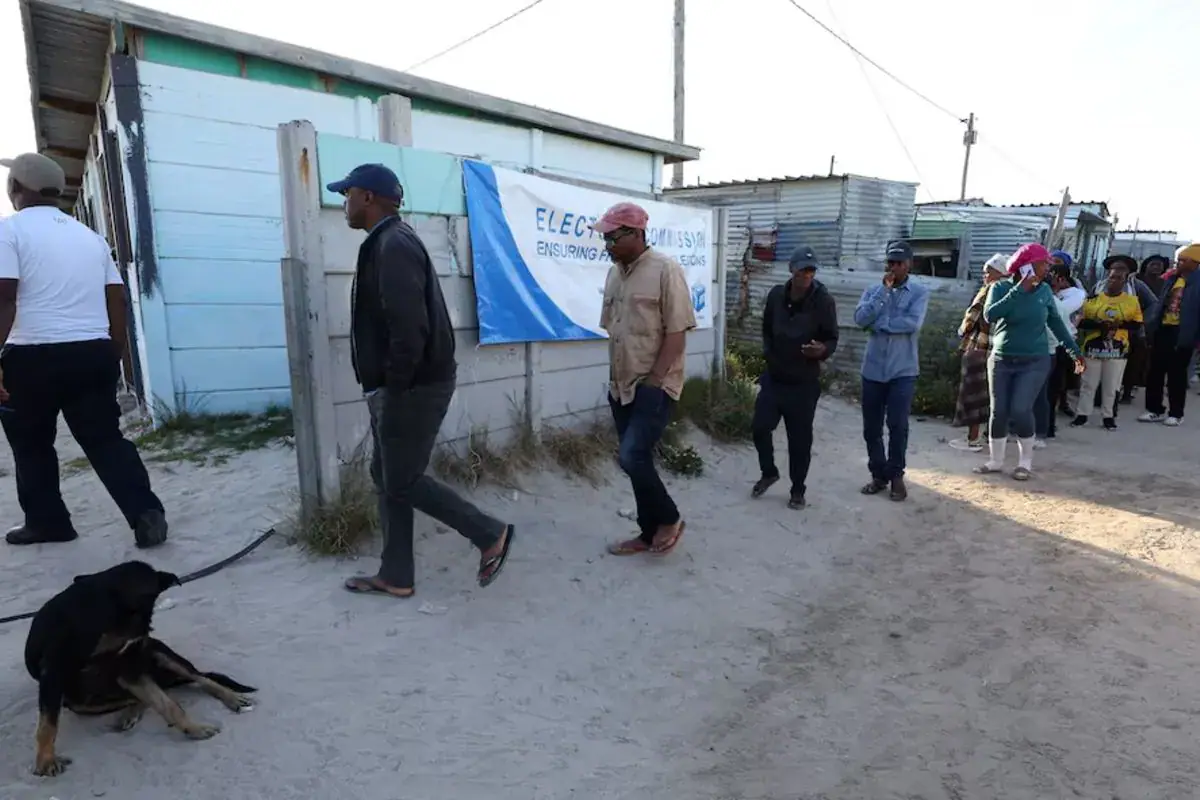
South Africans began voting in municipal elections on Wednesday, with many citizens expressing frustration over the country's failing public services. Long queues formed outside polling stations in the Lawley informal settlement south of Johannesburg, as voters waited to cast their ballots. The African National Congress (ANC), which has been in power since the end of apartheid, is facing a significant challenge to its dominance.
The ANC's support has been declining in recent years, with the party falling below 50 percent support for the first time in municipal elections in 2021. Opinion polls suggest that the party's support could drop below 40 percent in these elections. This decline in support is attributed to the party's failure to deliver basic services such as water and electricity, as well as high unemployment and crime rates.
The outcome of these elections will have significant implications for the country's future, particularly in terms of the ANC's role in shaping the national agenda. The party's performance in these elections will also influence the succession battle within the ANC, as President Cyril Ramaphosa nears the end of his term as party leader in 2027. Ramaphosa has acknowledged the party's failures but expressed optimism that it will regain support.
One of the key prizes in these elections is control of Johannesburg, South Africa's commercial hub. The Democratic Alliance (DA) candidate, Helen Zille, has been campaigning energetically for mayor and is projected to win the most votes but fall short of a majority. Other metro areas to watch include Tshwane, home to the administrative capital Pretoria, and eThekwini, which includes the port city of Durban.
The DA is heavily favoured to retain control of Cape Town, but the ANC's performance in other areas will be closely watched. Local governance has been a weak point for the ANC, which was forced into a coalition with the DA and smaller parties after it lost its national majority in 2024. This has led to concerns about the party's ability to deliver basic services.
Voters have cited unreliable water and electricity supplies, unemployment, crime, and a lack of affordable housing as their biggest concerns ahead of the election. Many citizens are frustrated with the ANC's failure to address these issues, despite its role in ending apartheid. The party's loyalty from some voters is being tested by its recent performance.
The elections are also significant because they will help shape the political landscape ahead of the 2029 national election. The ANC's performance will be closely watched, particularly in terms of its ability to regain support and address the country's pressing issues. President Ramaphosa has noted that municipal failures have contributed to declining public trust and confidence in democratic governance.
Key points
- The ANC's support is at risk due to anger over corruption, crime, and failing public services.
- The party's performance in these elections will influence the succession battle within the ANC.
- Control of Johannesburg, South Africa's commercial hub, is a key prize in these elections.