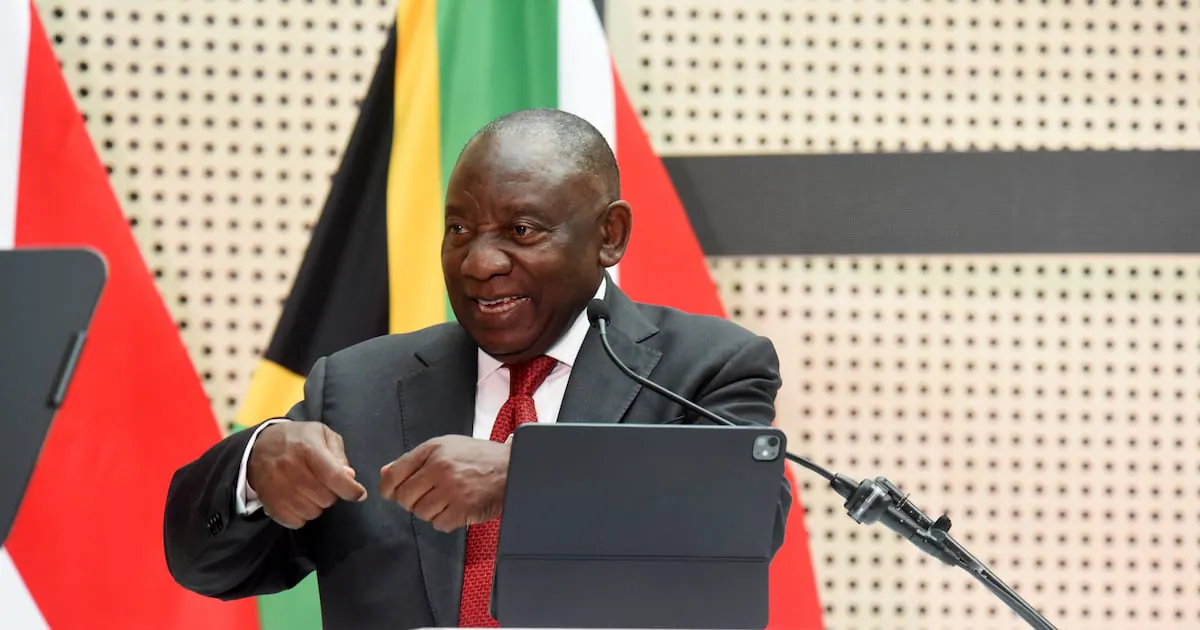
President Cyril Ramaphosa recently announced that over 7 million trees have been planted across South Africa since April as part of the Presidential One Billion Trees Campaign. The campaign aims to plant over 1 billion trees in the next five years. Ramaphosa highlighted the progress made in various provinces, including the Western Cape, Gauteng, and KwaZulu-Natal. The campaign's goal is to address inequality, food security, job creation, and economic empowerment.
The announcement drew criticism on social media, with some users arguing that the government should focus on pressing issues like unemployment, crime, poverty, and the rising cost of living. Faith Msomi expressed frustration, saying, "Please tell us about something that is helpful. SA is drowning and you're not providing any solution except for telling us about trees." Others, like Mpho Moepshe and Noluthando Zondo, echoed similar sentiments, questioning the priority of the tree-planting campaign.
Ramaphosa defended the campaign, stating that it is not just about planting trees but also about addressing socioeconomic challenges. He argued that greening programmes can help address spatial inequality created by apartheid-era planning. The campaign can also contribute to food security, rural development, and the economic empowerment of women. Ramaphosa emphasized that most of the trees being planted are indigenous and have been selected according to local conditions.
The campaign includes planting fruit trees, such as citrus, avocado, and grape varieties, which can contribute to household food security and support community and school food gardens. The department of forestry, fisheries, and the environment has signed a memorandum of understanding with the department of human settlements to plant a fruit tree alongside every new subsidized house. This initiative aims to provide an income for households and support community development.
The Expanded Public Works Programme (EPWP) is playing a key role in the campaign, with workers assisting with land preparation, transporting trees to planting sites, and horticultural maintenance. Skills acquired through the programme can help young people find work or establish businesses in areas like landscaping, tree maintenance, and plant production. Ramaphosa highlighted the potential for job creation and skills development through the campaign.
Ramaphosa also emphasized the importance of removing invasive alien species, which can threaten indigenous vegetation and increase the risk of wildfires. He noted that large parts of urban and rural South Africa are covered by dense canopies of non-indigenous trees planted by former colonial authorities. The removal of invasive species can become an economic activity, with cleared alien vegetation being used for biomass and other industrial applications.
Ramaphosa called on South Africans, businesses, schools, and community organizations to participate in the campaign. He highlighted successful projects, such as the She Evolves project in the Free State and the Innesfree Park urban garden in Sandton. The President encouraged citizens to support the campaign, which he believes can contribute to the country's socioeconomic development and environmental sustainability.
Key points
- President Cyril Ramaphosa's tree-planting campaign faces backlash from some South Africans who question its priority amid socioeconomic challenges.
- The campaign aims to plant over 1 billion trees in the next five years and address inequality, food security, job creation, and economic empowerment.
- The initiative has the potential to create employment and skills-development opportunities through the Expanded Public Works Programme.