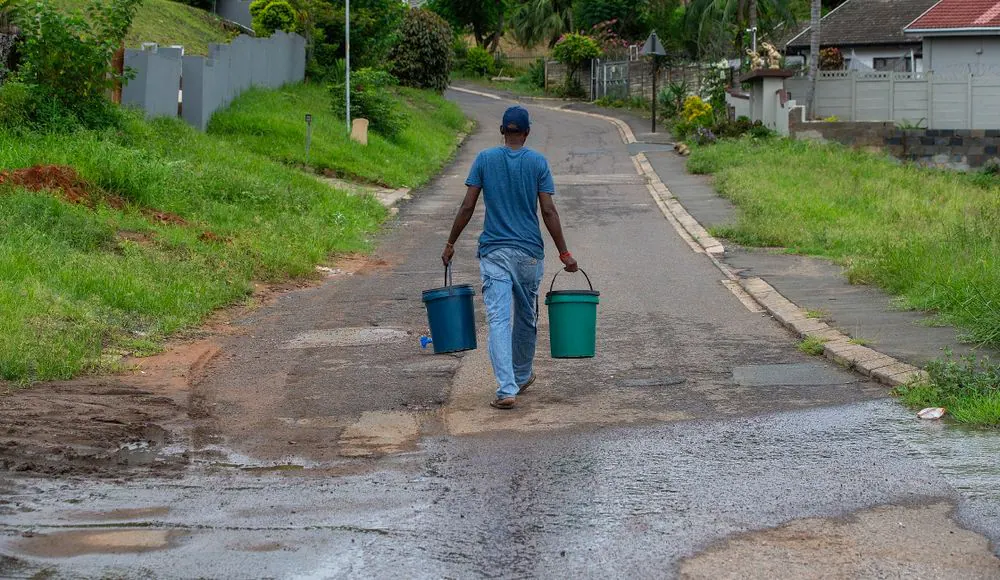
The South African Parliament's public hearings on the Water Services Amendment Bill have given rise to a growing debate over who should bear the legal costs of municipal managers facing personal accountability for water and sanitation failures. The hearings, which took place between August 14 and 30, form part of Parliament's consideration of the Bill, which aims to strengthen compliance and enforcement, introduce additional offences and penalties, and provide for liability involving directors and municipal managers.
Communities across Mpumalanga, North West, and Limpopo have called for stronger accountability and consequences for persistent service delivery failures, with many expressing frustration over unreliable water supplies, ageing infrastructure, poor water quality, sanitation failures, corruption, weak oversight, and poor contract management. Portfolio Committee on Water and Sanitation chairperson Leon Basson noted that the hearings showed strong public support for consequence management, but stressed that the final position on legal fees would depend on the wording of the legislation and the applicable legal framework.
Basson emphasized that where liability is ultimately imposed on an official in their personal capacity, there must be a clear distinction between the municipality acting in its institutional capacity and an individual official defending personal wrongdoing or personal non-compliance. He stated that public funds should not be used to shield an individual from the consequences of personal misconduct or liability. However, the precise legal mechanism regulating whether, and under what circumstances, an official would have to personally fund legal proceedings will depend on the final wording of the legislation and the applicable legal framework.
The issue of legal costs has sharpened the political debate around accountability, with some arguing that officials facing personal accountability should not be able to rely on municipal funds to finance their defence. MK Party member of the portfolio committee Visvin Reddy argued that officials facing personal accountability should not be able to use municipal funds to finance their defence, stating that the municipality is failing residents and that residents' money should not be used to finance the defence against accountability.
Reddy said the MK Party supported legislation that would prohibit rates and taxes from being used to fund the legal defence of officials accused of incompetence or corruption. He argued that such officials should pay for their own defence and seek reimbursement if they are ultimately cleared. However, Reddy also warned against allowing politicians to use municipal officials as scapegoats for failures that are ultimately political.
Labour lawyer and DA MP Michael Bagraim noted that court cases had placed significant responsibility for water delivery failures on management and argued that holding managers accountable had already begun making a difference. Bagraim's comments suggest that the debate over municipal managers' legal costs is not only about accountability but also about the effectiveness of current measures in addressing water and sanitation failures.
The public hearings have highlighted the need for stronger accountability, enforceable consequences, and effective action against persistent non-performance. Communities have also called for additional boreholes, reservoirs, pipeline extensions, treatment facilities, and household connections, with Basson saying they wanted more reliable water supplies, better-maintained infrastructure, improved water quality, and stronger accountability when institutions or officials fail to perform.
Key points
- Municipal managers facing personal accountability for water and sanitation failures may have to personally fund their legal defence.
- The debate over municipal managers' legal costs has sharpened the political debate around accountability in South Africa.
- Communities are calling for stronger accountability, enforceable consequences, and effective action against persistent non-performance in the water and sanitation sector.